A compliance officer is reviewing the company's internal guidelines and schedules an annual review of all policies and procedures. Why is it essential for an organization to periodically revise and update its written policies and procedures rather than treating them as static documents?
Select an answer to reveal the explanation.
Short Explanation and Infographic
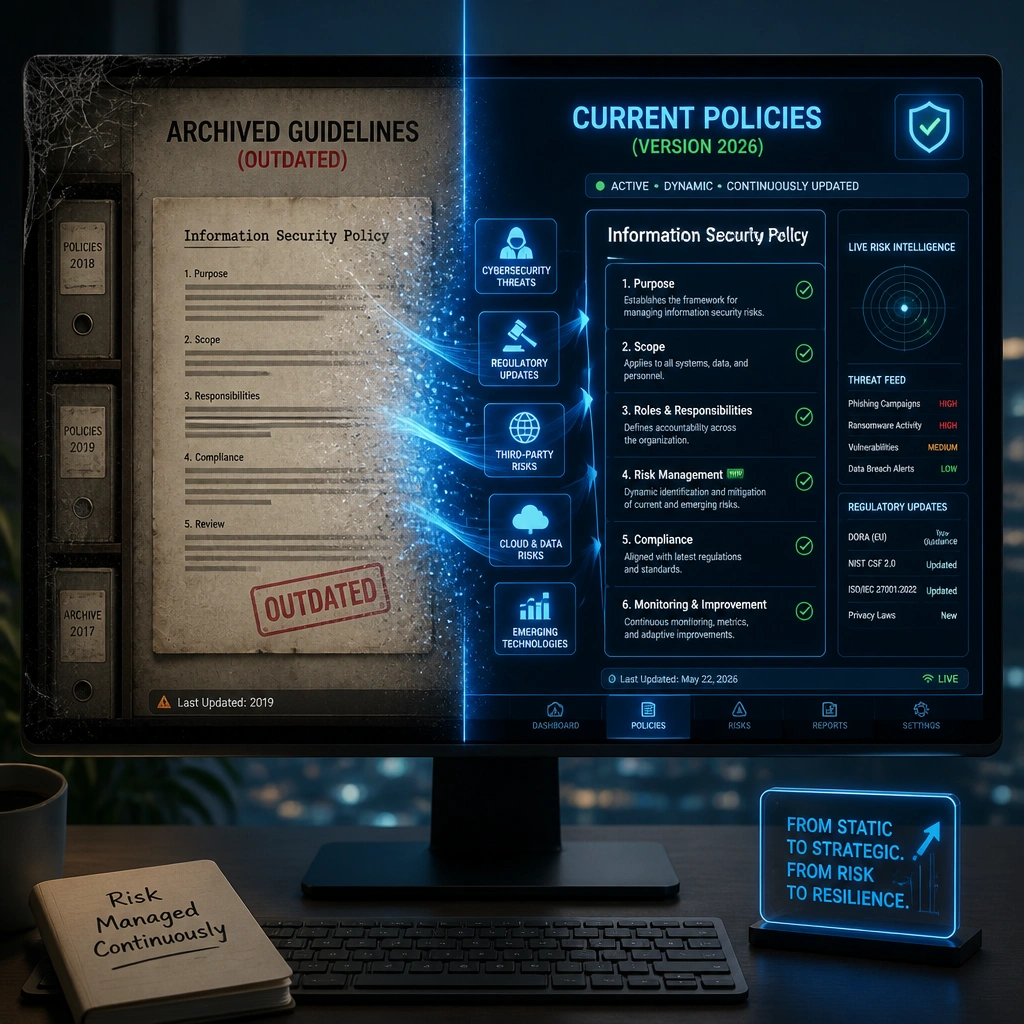
Think of your company's policies and procedures like the antivirus software on your laptop. If you never update the virus definitions, what happens? You get hacked by the newest malware! In compliance, the regulatory landscape and operational threats are constantly changing. If you write your policy manual once and let it sit on a shelf gathering dust, it becomes useless. You've got to regularly review and update those documents to address new risks and changing laws. Trust me, keeping your policies dynamic and updated is how you protect your organization. Go with B!
Full explanation below image
Full Explanation
Policies and procedures serve as the operational guidelines of a corporate compliance program. However, they cannot remain static if they are to remain effective. Organizations operate in dynamic environments characterized by evolving laws, regulatory updates, technological advancements, and shifts in business operations. Consequently, a policy written five years ago may not cover modern threats like remote-work security vulnerabilities or new anti-money laundering regulations. Periodic reviews and updates ensure that policies remain aligned with the organization's current risk profile and regulatory obligations.
Let's analyze why the other options are incorrect: - Option A is incorrect because adding unnecessary length and complexity makes policies harder for employees to read, understand, and implement. The goal is clarity and effectiveness, not voluminous, dense text. - Option C is incorrect because updating policies does not eliminate the need for a compliance officer. In fact, a compliance officer is the key figure responsible for driving the policy review and update process. - Option D is incorrect because the mere existence of updated policies does not prove that a company is actually compliant. A company can have pristine written policies on paper but still fail to operationalize them. Regulators evaluate whether policies are actively enforced, not just written.
Therefore, updating policies keeps them relevant to emerging risks, ensuring the compliance program is proactive rather than reactive.