
An international corporation implements a comprehensive compliance policy, but senior executives frequently bypass internal approval processes for high-value transactions, stating that speed is critical. What is the most significant organizational risk resulting from this lack of visible leadership support?
Select an answer to reveal the explanation.
Short Explanation
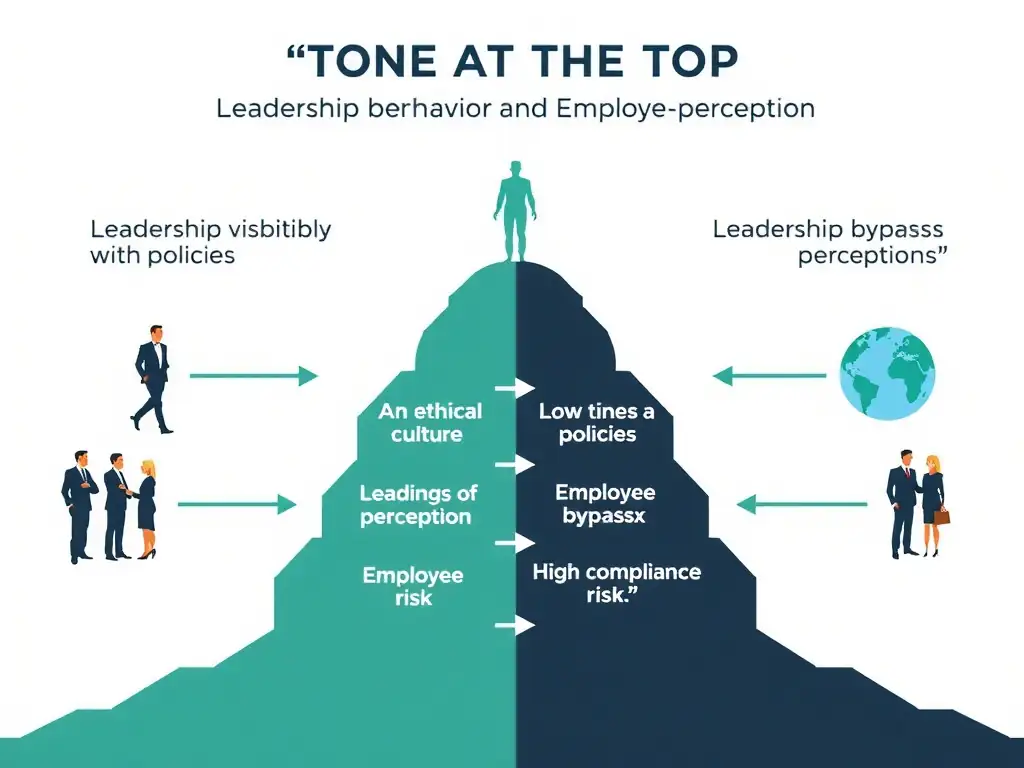
If leadership speeds through compliance red lights, you can bet employees will treat the rules as suggestions. That weak tone at the top turns the program into a paper tiger, so people ignore policies when pressure hits.
Full Explanation
In the field of corporate compliance, the concept of "tone at the top" represents the ethical atmosphere created by an organization's leadership. When executive management fails to actively and visibly support the compliance program, it sends a clear signal to employees that compliance is secondary to operational expediency or financial gain. As a result, the program is reduced to a "paper compliance" program—a formal set of rules that exist on paper but are ignored in practice. Regulators, such as the U.S. Department of Justice and international anti-bribery authorities, closely scrutinize whether a compliance program is implemented in good faith or is merely a bureaucratic shield.
The answer stating that employees will perceive the compliance program as a mere check-the-box bureaucratic exercise and ignore policies when under pressure is correct because the lack of visible leadership support directly undermines the program's credibility, leading employees to view it as a check-the-box exercise that can be disregarded when convenient. This cultural failure is often the root cause of systemic compliance breaches.
The answer stating that the compliance program will automatically lose its legally binding status under international regulatory frameworks is incorrect because a compliance program's legal status is not automatically invalidated; rather, its effectiveness and credibility are severely compromised. Policies are still legally binding on employees, but they lack enforcement efficacy.
The answer stating that the cost of administering the program will increase exponentially due to inefficient oversight processes is incorrect because while a poor compliance culture can lead to costly scandals and fines, the direct administration cost of the program itself does not necessarily increase due to a lack of leadership support.
The answer stating that the compliance program will be deemed structurally invalid during external audits due to a lack of written leadership signatures is incorrect because structural validity in audits is determined by design and implementation metrics, not solely by the presence of written leadership signatures, though leadership engagement is a critical factor in overall program evaluation.