What is the main objective of a compliance training program?
Select an answer to reveal the explanation.
Short Explanation and Infographic
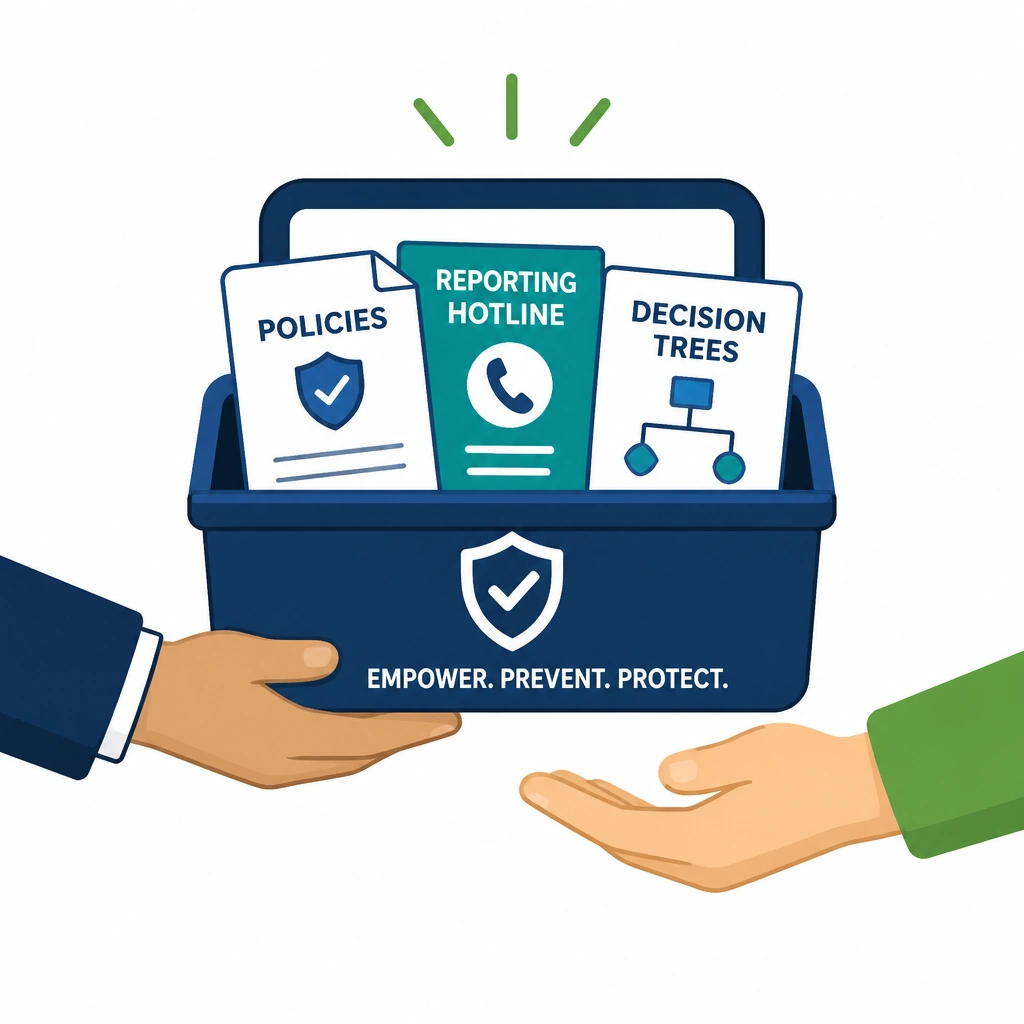
If you give your employees a 100-page policy manual and tell them to read it, do you think they'll actually understand how to apply it when a high-pressure situation pops up? No chance! Real compliance training isn't about ticking a box for regulators or having a stick to beat employees with when they make a mistake. The goal is to give your team the actual tools and knowledge they need to spot red flags and handle them correctly. It's about empowering them to make the right decisions in their day-to-day work. When your people know what to look for and how to respond, your company's risk drops dramatically. Got it? Let's keep rolling!
Full explanation below image
Full Explanation
The ultimate purpose of a compliance training program is to foster a culture of integrity and ensure that employees understand their legal and ethical responsibilities. An effective training program translates complex laws, regulations, and corporate policies into practical, actionable guidance that employees can apply to their daily tasks. By doing so, the organization minimizes the risk of compliance failures, fraud, and operational disruptions. Ticking a regulatory box represents a "paper program"; regulators explicitly evaluate whether training is effective and tailored. While accountability is necessary, the primary goal of training is proactive prevention and education, not creating a paper trail for discipline. Showing regulators that the company has a training program to improve public relations focuses on optics rather than risk reduction. Therefore, interactive, risk-tailored training is a fundamental requirement for preventing corporate misconduct and protecting the organization's reputation.