
A company's board of directors needs to verify that the organization's compliance program is actually effective, rather than just a "paper program." What is the most effective approach for the board to fulfill this oversight responsibility?
Select an answer to reveal the explanation.
Short Explanation
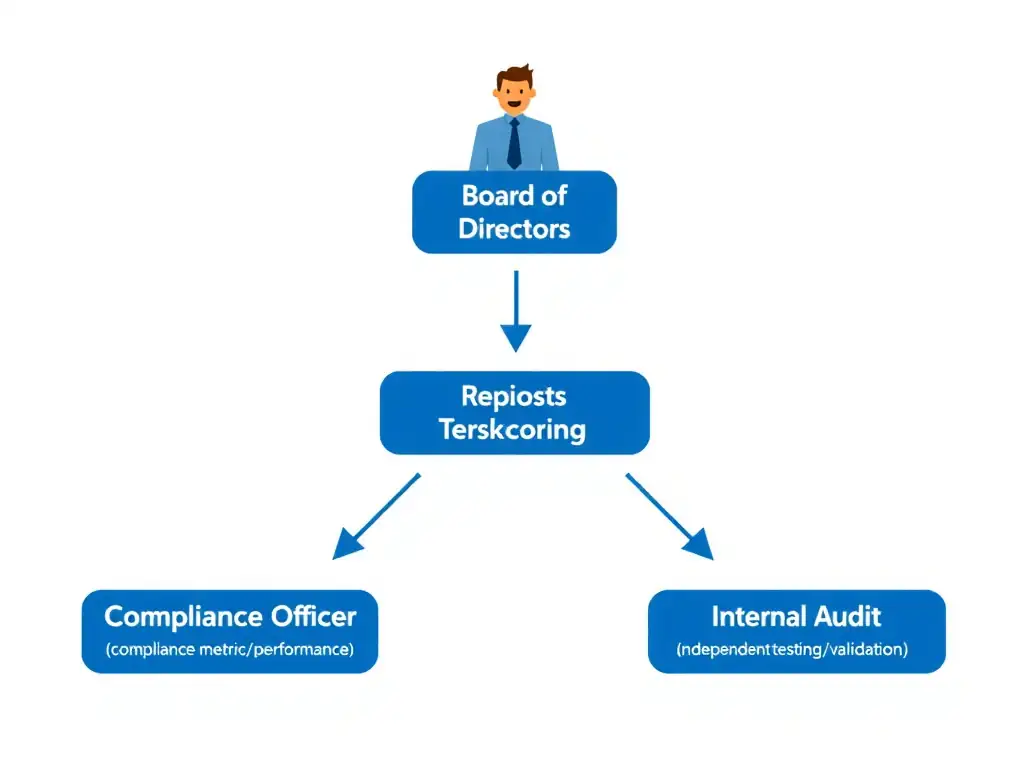
Here's the deal: you can't just set up compliance and hope for the best. The board needs regular, structured talks with the Chief Compliance Officer and Internal Audit to see real risks, audit findings, and key indicators. That's how you get true oversight without drowning in trivia.
Full Explanation
The correct approach is engaging in regular, structured dialogues with both the Chief Compliance Officer and Internal Audit to review program performance, audit findings, and key risk indicators. Fiduciary and regulatory expectations, such as those outlined in the United States Sentencing Guidelines and Department of Justice compliance guidance, require the board of directors to exercise reasonable oversight regarding the implementation and effectiveness of the compliance program. The most effective way to achieve this is through regular, meaningful engagement with the Chief Compliance Officer and the Internal Audit function. These discussions allow the board to assess risk metrics, program resources, audit results, and management's responsiveness to compliance issues. The approach requiring the Chief Compliance Officer to attend every operational and sales team meeting is incorrect because it is operationally impractical, inefficient, and blurs the line between management and oversight, and it would dilute the compliance officer's strategic focus. The approach mandating the annual replacement of the compliance manager is incorrect because it destroys program continuity, prevents the development of deep institutional knowledge, and disrupts relationships built on trust between compliance and business units. The approach reviewing a comprehensive list of every single minor employee infraction and corrective action on a weekly basis is incorrect because it drowns the board in operational noise and administrative trivia, preventing them from focusing on high-level systemic risks, governance, and strategic program performance.