
During a compliance review, the board asks for examples of corrective controls implemented over the past fiscal year. Which of the following activities represents a corrective compliance control?
Select an answer to reveal the explanation.
Short Explanation
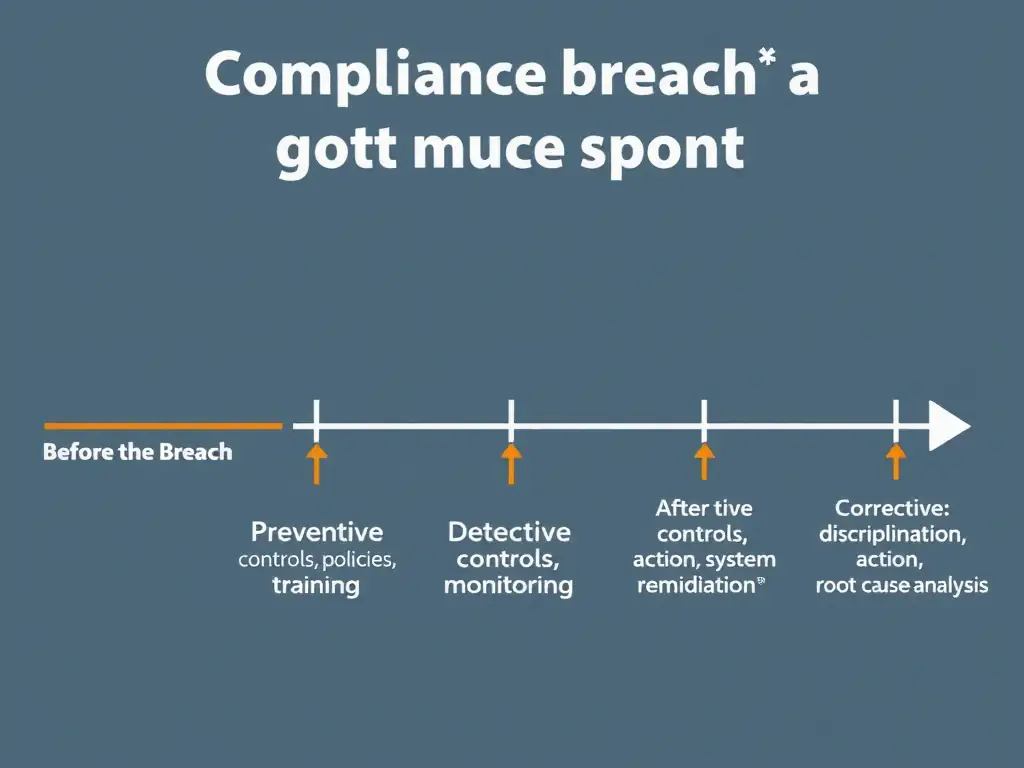
Think of corrective controls as the clean-up crew after a wreck. Preventive controls keep the car on the road, detective controls flash a warning light, and disciplinary action fixes the damage after a rule is broken. You're correcting behavior and showing the company the rules have teeth.
Full Explanation
Compliance controls are mapped into three functional categories based on their operational timing: preventive controls are intended to deter or block non-compliant acts before they occur; detective controls are intended to identify and alert personnel to violations or anomalies that have occurred; and corrective controls are intended to remediate, correct, or mitigate the impact of a detected violation and prevent recurrence. Executing formal disciplinary measures against a supervisor who bypassed safety protocols is a corrective control because it occurs after a violation has been detected. It aims to rectify the behavior, enforce accountability, and deter future infractions by demonstrating that policy breaches carry consequences. The pre-clearance workflow for all foreign government official interactions and requiring all third-party intermediaries to undergo automated screening before onboarding are preventive controls designed to block unauthorized or risky actions before they occur. Real-time transaction screening for transactions involving high-risk jurisdictions is a detective control designed to identify anomalies within ongoing activities.