
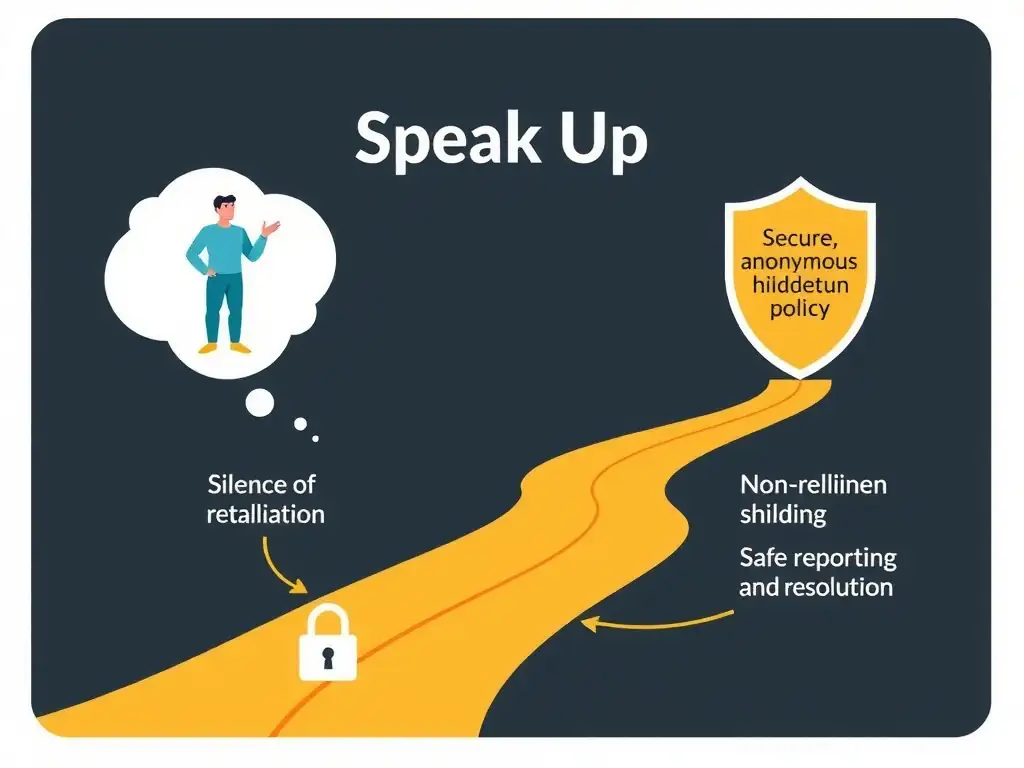
An employee discovers a significant financial fraud scheme being carried out by their supervisor. Although the employee handbook mandates that all staff must report misconduct, the company lacks a confidential reporting hotline, and the CEO is known for dismissing whistleblowers. Fearing the loss of their job, the employee decides to remain silent. This scenario demonstrates a critical failure in which of the following compliance program elements?
Select an answer to reveal the explanation.
Short Explanation
Think of it like this: you tell your kids they must report fires, but you lock the extinguishers and threaten to ground them. They won't tell you when the kitchen smokes. That's why you need accessible anonymous reporting channels and robust non-retaliation protections.
Full Explanation
The correct compliance element is the implementation of accessible anonymous reporting channels and robust non-retaliation protections. The scenario describes a classic breakdown in the reporting infrastructure of a compliance program. An effective compliance program must not only establish a duty to report misconduct but also provide the practical means to do so safely and confidentially. Under federal sentencing guidelines and Department of Justice evaluation guidelines, organizations are expected to maintain public, publicized reporting mechanisms, such as anonymous hotlines or web portals, and enforce a strict policy against retaliation. If employees fear losing their jobs or facing professional marginalization, they will stay silent, leaving the organization blind to internal risks and violations.
The enforcement of consistent disciplinary standards and corrective actions is not the primary failure because the issue is not how the company administers discipline after a violation is found, but rather the initial failure to receive the report due to fear and lack of channels. The execution of proactive compliance auditing and transactional monitoring is not the primary failure because auditing and monitoring are proactive, detective controls managed by compliance or internal audit, such as data analysis and transaction testing, whereas this issue concerns the employee reporting pipeline. The delivery of regular compliance training and organizational communication is not the primary failure because the employee was already aware of their obligation to report, meaning training and communication occurred, but was prevented from doing so by structural fear and the absence of anonymous reporting channels. To prevent this, organizations must actively promote a speak-up culture, backed by clear non-retaliation policies and independent, third-party managed hotlines.