
An ethics and compliance officer is drafting a detailed organizational chart that explicitly outlines the reporting lines, roles, and responsibilities for everyone in the compliance department. What is the primary benefit of documenting this structure?
Select an answer to reveal the explanation.
Short Explanation
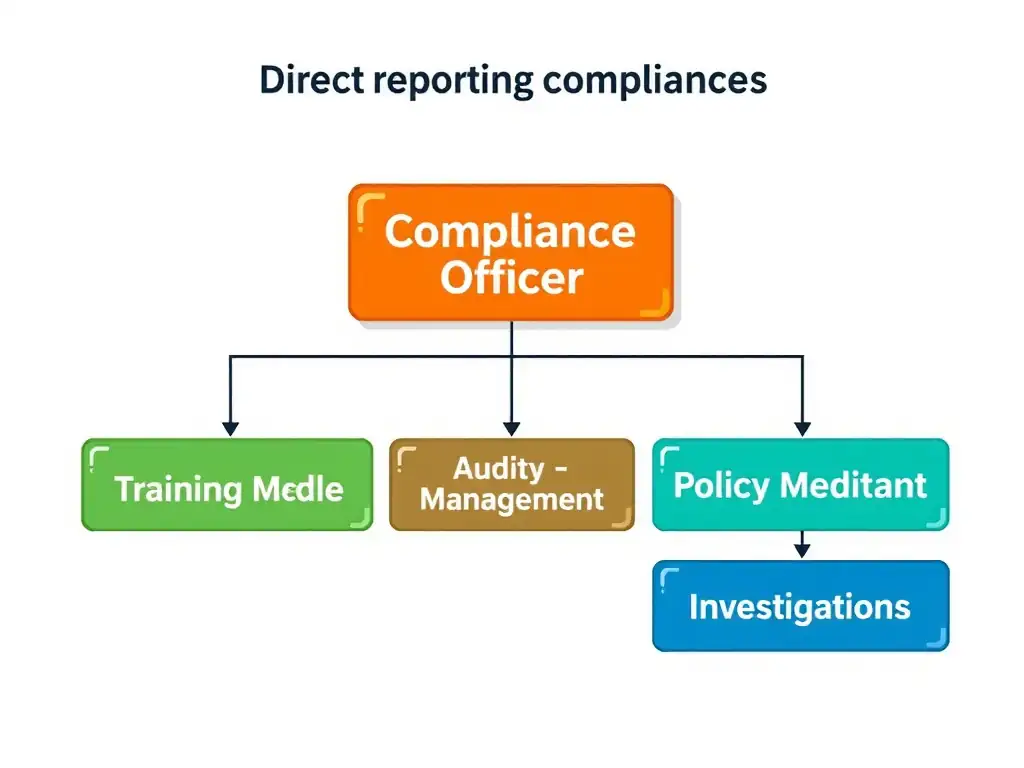
Here's the deal: if everyone owns compliance, no one does. A clear org chart stops finger-pointing by showing who owns training, hotline, and board reporting. Keep those roles defined, and you'll keep the program on track!
Full Explanation
The correct answer is the one that says documenting the structure ensures structural accountability and removes ambiguity regarding who is responsible for managing, executing, and auditing various aspects of the program. Documenting and communicating a clear compliance organizational chart is essential for establishing accountability and clarity. An effective compliance program must define who is responsible for its various components—such as risk assessments, policy management, training delivery, hotline monitoring, and investigations. By defining these roles and reporting lines, the organization prevents critical compliance tasks from falling through the cracks and ensures that individual personnel can be held accountable for their specific areas of oversight. Establishing clear reporting relationships also ensures that the compliance officer has a direct line to senior leadership and the board of directors, which is a critical criterion for evaluating a program's effectiveness.
The claim that this satisfies a universal statutory legal obligation requiring every registered business to publish compliance reporting hierarchies is incorrect because, while regulatory standards such as the FSGO or DOJ guidance evaluate whether an organization has defined roles and oversight, there is no universal statutory law requiring all businesses of every size to maintain a formal compliance organizational chart. The claim that the chart serves as a branding mechanism to make the organization appear more sophisticated and professional to prospective clients is incorrect because professional appearance is only a secondary benefit; the fundamental goal of compliance documentation is risk mitigation and effective program execution, not marketing or public relations. The claim that the chart guarantees the presence of the chart itself will deter all employees from ever committing policy violations is incorrect because a chart is an administrative tool; it cannot guarantee that employees will never violate policies. Compliance programs aim to reduce the likelihood and severity of violations, but absolute prevention of all misconduct is impossible.