
An anonymous report is submitted through the compliance hotline alleging that a senior director is accepting kickbacks. What is the compliance manager's immediate priority upon receiving this intake?
Select an answer to reveal the explanation.
Short Explanation
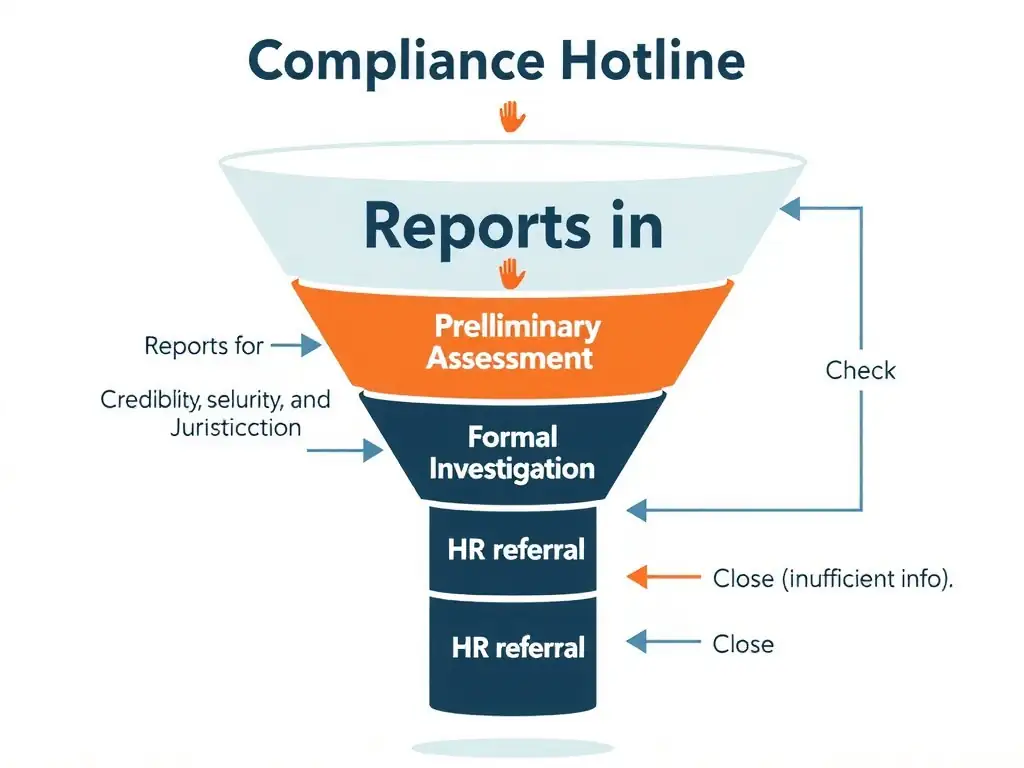
When an anonymous hotline tip alleges kickbacks, your immediate priority is triage: assess credibility, specificity, and severity before escalating. You don't launch a full forensic raid, wait for executive validation, or announce it company-wide until you know what you're dealing with.
Full Explanation
The correct choice is the preliminary assessment to evaluate credibility, specificity, and severity. When a compliance report is received, the first stage in the investigation lifecycle is intake triage or preliminary assessment. The compliance manager must evaluate the report to determine: 1) whether the allegation, if true, constitutes a violation of law or company policy; 2) whether the information is sufficiently specific and credible to warrant a formal investigation; and 3) the potential severity and risk level of the issue. This initial screening determines whether a formal investigation is necessary, what resources are required, and who should lead the review.
The external forensic audit team searching the director's office and personal electronic devices is incorrect because jumping straight into a full-scale forensic investigation without a preliminary assessment is an inefficient use of resources and can cause unnecessary disruption, panic, and potential privacy issues. Waiting to take action until a senior executive validates the claims in writing is incorrect because compliance departments must operate independently. Waiting for senior executive validation before acting on a report would compromise the integrity of the process, particularly if the executives themselves are involved or have a conflict of interest. Announcing the receipt of the report during the next company-wide meeting to demonstrate transparency is incorrect because investigations must be kept confidential to protect the integrity of the evidence, shield the reporter from retaliation, and protect the accused from reputational damage before facts are established.
By conducting a prompt, objective preliminary assessment, compliance managers ensure that high-priority allegations are escalated quickly while low-risk or non-compliance issues (such as general HR grievances) are routed to the appropriate departments.