
Following the completion of an internal compliance investigation, what is the primary purpose of conducting a formal "lessons learned" or root-cause review?
Select an answer to reveal the explanation.
Short Explanation
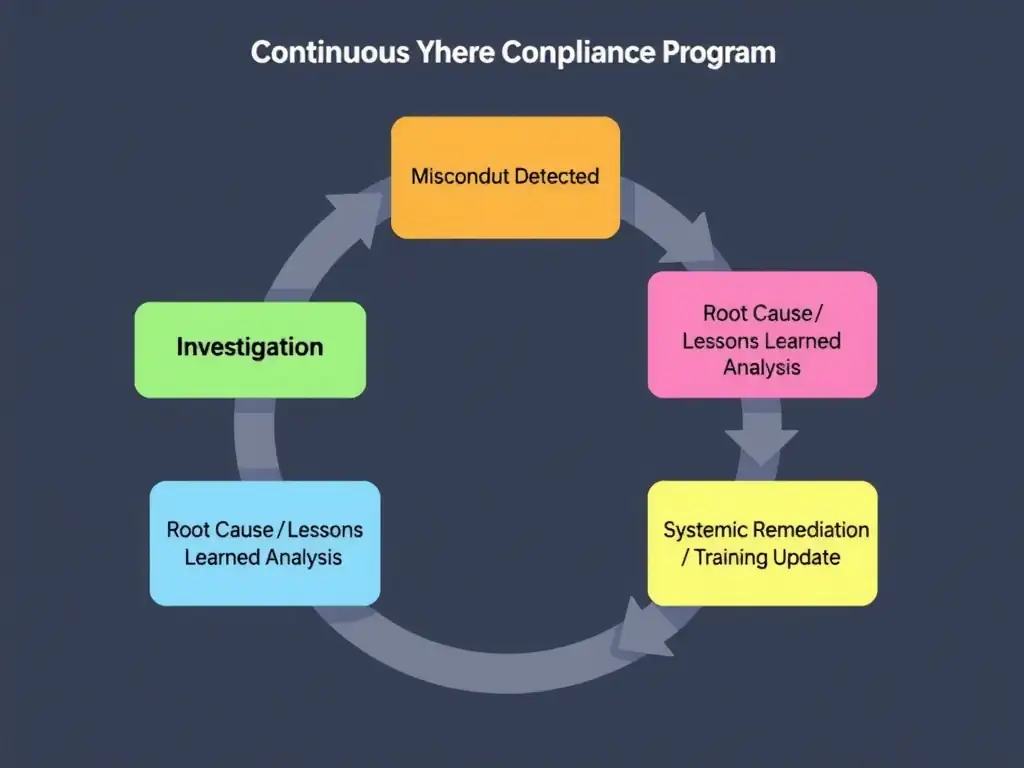
After an internal investigation, you don't just clean up the mess—you find out why it happened. A lessons learned review looks for control gaps, failed training, or overridden controls so you can fix the system and stop it happening again.
Full Explanation
The 'lessons learned' or root-cause review is a critical corrective action phase of the investigation lifecycle. When misconduct is uncovered and investigated, resolving the immediate issue, such as disciplining the bad actor, is only the first step. To ensure long-term organizational integrity, compliance officers must analyze the systemic factors that allowed the misconduct to occur or go undetected.
The correct purpose is to identify underlying control deficiencies and strengthen the compliance program to prevent future occurrences. This review focuses on prevention and continuous improvement by identifying gaps in internal controls, updating policies, revising employee training, and enhancing monitoring so similar violations are less likely to happen again.
The choice about hosting a public meeting where the names of employees involved in the misconduct are exposed is wrong because public humiliation of employees violates privacy standards, damages employee morale, and discourages future reporting. Investigations and their post-mortems must be handled with appropriate confidentiality.
The choice about evaluating the marketing performance of the law firms involved in the investigation is wrong because evaluating which law firm to hire is a procurement or legal administrative decision, not the main purpose of an internal compliance remediation process.
The choice about enforcing immediate termination of any employee who was interviewed during the investigative process is wrong because the purpose of a lessons learned review is systems improvement, not employee termination. Terminating witnesses or individuals who cooperated with an investigation would also constitute illegal retaliation.