
What is the primary objective of implementing a structured Third-Party Risk Management (TPRM) program within a corporate compliance framework?
Select an answer to reveal the explanation.
Short Explanation
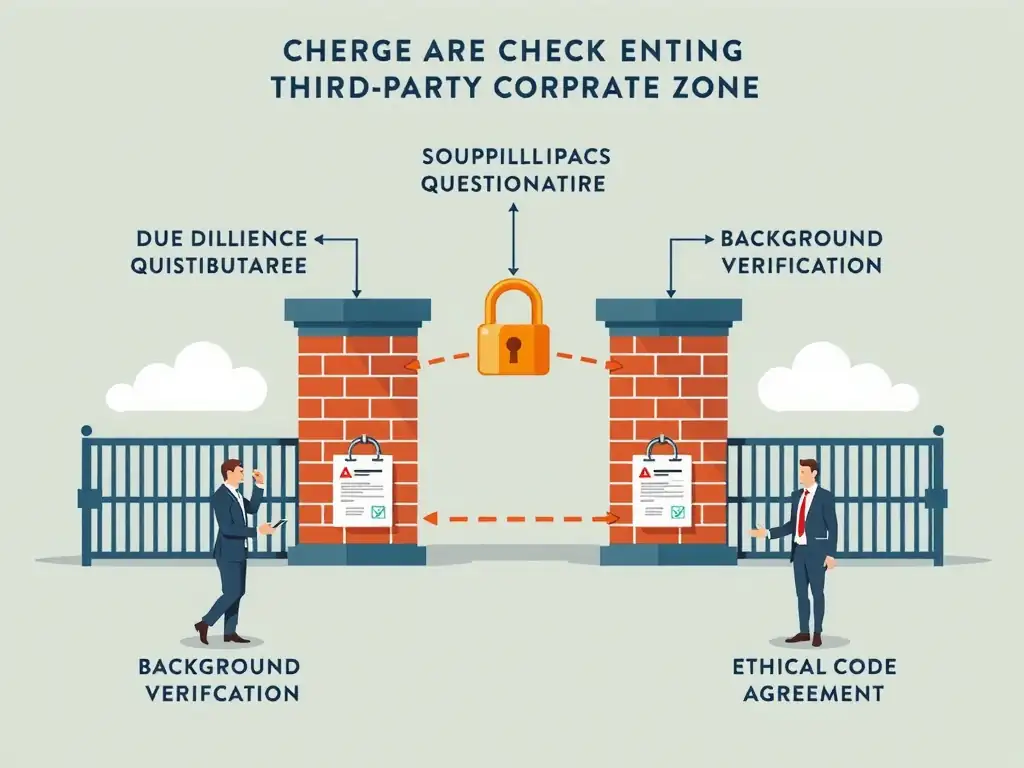
Here's the deal: you can have a bulletproof compliance program inside your own walls, but if a third-party distributor pays bribes to get your products through customs, your company can still be on the hook. That's why you use TPRM to vet vendors, suppliers, and partners and make sure they follow your compliance and ethical rules. If they don't, they're a ticking time bomb for your business.
Full Explanation
Third-Party Risk Management (TPRM) is an essential component of a corporate compliance program designed to identify, assess, and mitigate risks associated with outsourcing activities to third parties (such as vendors, suppliers, distributors, agents, and consultants). Under laws like the U.S. Foreign Corrupt Practices Act (FCPA) and the UK Bribery Act, corporations can be held legally liable for the corrupt actions of their third-party representatives. The primary objective is to verify that external business partners, vendors, and agents adhere to the organization's compliance and ethical standards. That objective is right because the main goal of a TPRM program is to perform due diligence, monitor activities, and establish contractual obligations to ensure third parties operate in compliance with applicable laws and the company's ethical guidelines. The choice about offering complimentary legal defense services to suppliers facing regulatory investigations is wrong because companies do not provide free legal counsel to their third-party providers; third parties are independent entities responsible for their own legal representation. The choice about taking complete operational control of all logistics, product development, and pricing at vendor facilities is wrong because TPRM focuses specifically on risk, compliance, and governance. It does not manage every operational detail of a supplier relationship, which is typically handled by procurement or contract management teams. The choice about systematically driving down the procurement costs of all outsourced services regardless of risk is wrong because while cost reduction is a business goal for procurement, it is not the objective of a compliance-oriented risk management program. In fact, robust compliance screening may occasionally increase short-term procurement costs to mitigate long-term risk.