Following an internal investigation that revealed a systematic failure in trade compliance controls, the compliance committee drafts a formal Corrective Action Plan (CAP). What is the primary purpose of this plan?
Select an answer to reveal the explanation.
Short Explanation and Infographic
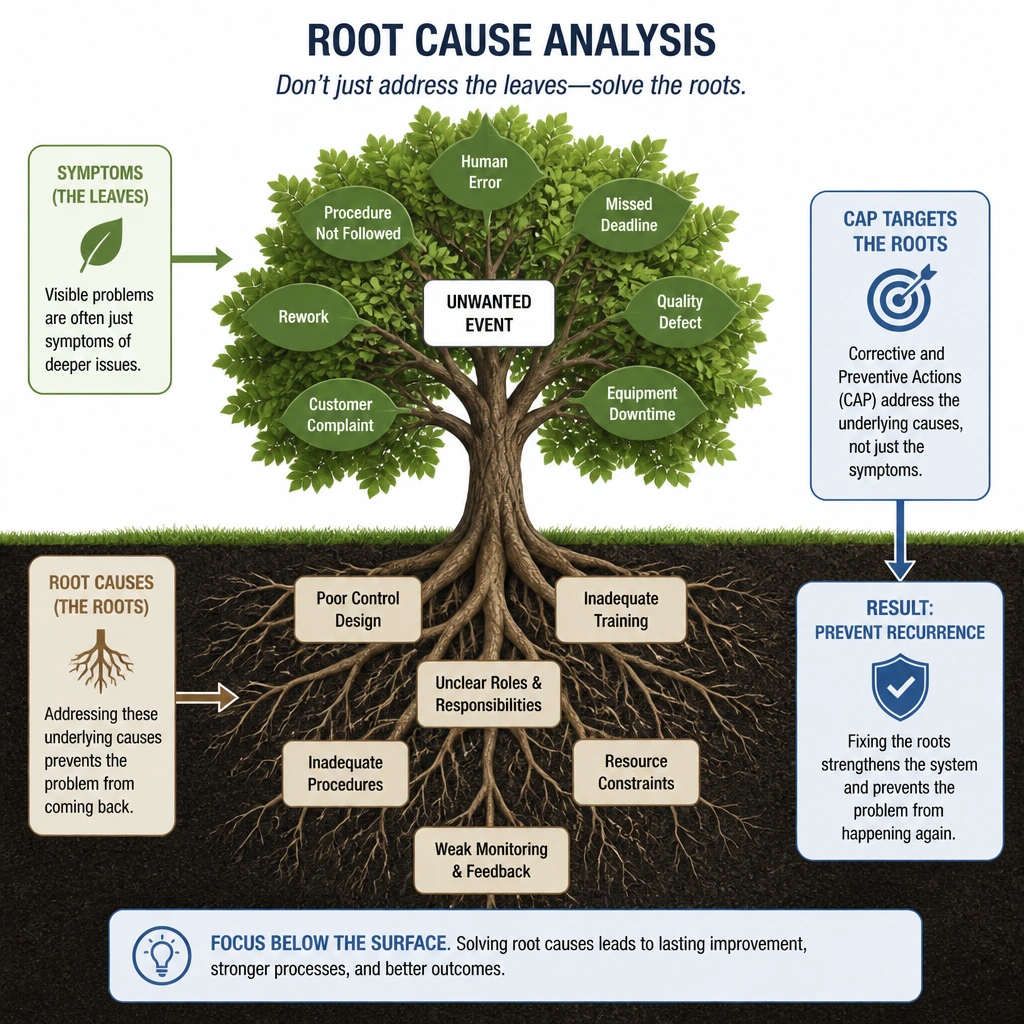
Here's the deal: if you have a leak in your roof, you don't just put a bucket under it and call it a day. You find the hole and patch it! That's what a Corrective Action Plan (CAP) is all about. When a compliance failure happens, you can't just punish someone and move on. You have to figure out why it happened. Was it a lack of training? Was a software system broken? Were the controls too weak? A CAP is your roadmap to fix the underlying root cause so the same issue doesn't come back to bite you next week. It's not about marketing (Option A), adjusting balance sheets (Option B), or personal career planning (Option C). It's about fixing the machine. Got it? Sweet.
Full explanation below image
Full Explanation
A Corrective Action Plan (CAP) is a structured, step-by-step program designed to address a compliance violation, audit finding, or control failure. Regulators, including the DOJ, evaluate whether a company has a process for analyzing the root causes of misconduct and implementing systemic modifications to prevent recurrence. A superficial response that only addresses immediate symptoms is considered a compliance failure.
Let’s contrast the options: - Option D is correct because the primary objective of a CAP is root cause analysis and remediation. The plan should outline the specific actions to be taken (e.g., revising policies, updating IT controls, conducting targeted retraining), assign responsibility, set clear deadlines, and define how the effectiveness of the corrections will be monitored and verified over time. This systematic approach ensures long-term operational integrity. - Option A is incorrect because marketing strategies are commercial endeavors focused on customer acquisition and brand management, not the remediation of internal compliance control failures. - Option B is incorrect because financial statement presentation is governed by accounting standards (like GAAP or IFRS) and managed by finance and accounting teams, not compliance corrective action planning. - Option C is incorrect because while whistleblower protection and career growth are important, a CAP’s focus is on fixing the systemic organizational failure, not managing individual career development plans.
An effective CAP demonstrates to stakeholders and regulators that the organization takes compliance issues seriously and is committed to continuous self-correction.