During negotiations with a foreign business partner in a high-risk jurisdiction, which of the following scenarios should be treated as a significant regulatory 'red flag' for corruption or bribery?
Select an answer to reveal the explanation.
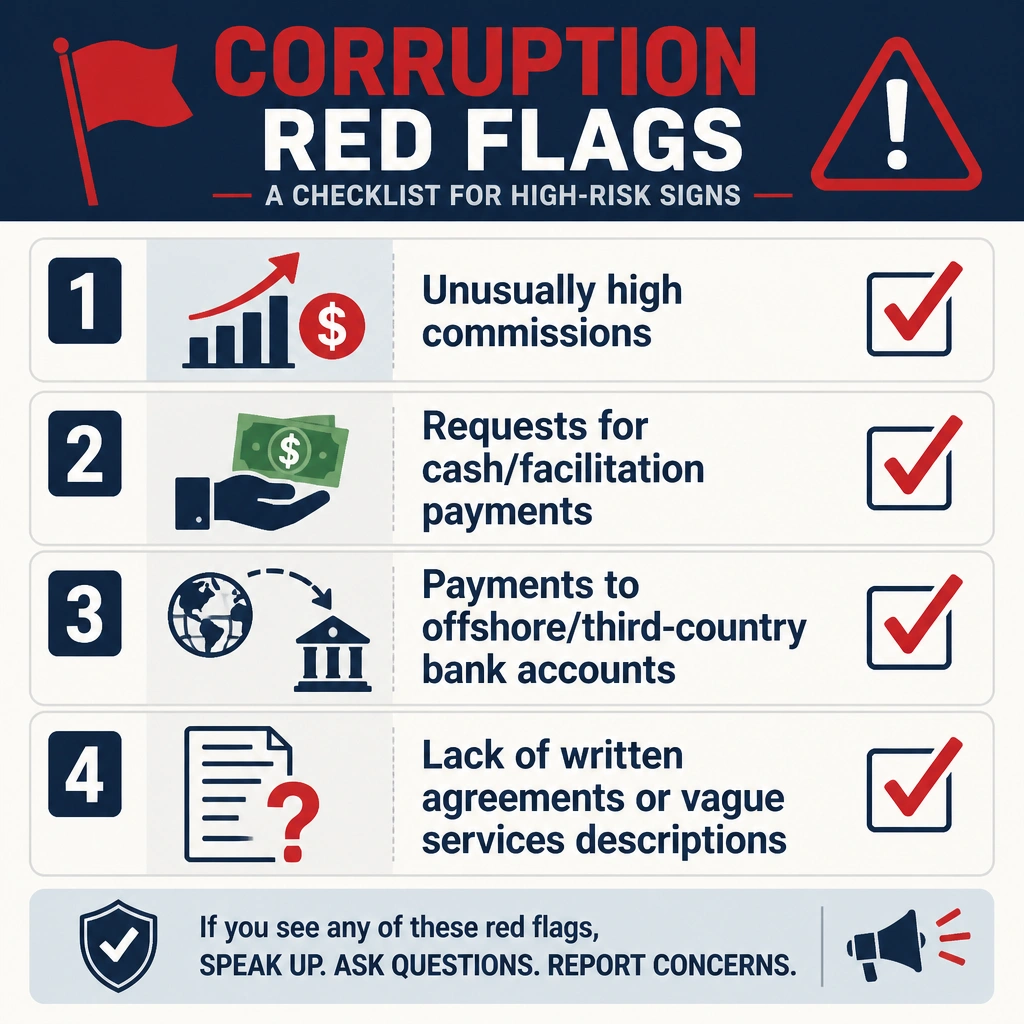
Short Explanation and Infographic
Pay close attention here, because this one bites people in production and on the job all the time. When you're dealing in international trade, you have to keep your eyes open for shady transactions. If an agent or intermediary asks for a massive commission that doesn't make sense, or wants an undocumented "facilitation" payment to "grease the wheels" with local officials, alarm bells should be ringing! Think of it like a suspicious packet on your network that bypasses your firewall—it's a massive security risk. Those requests are classic red flags for bribery. Using a solid law firm (Option B), keeping things transparent (Option C), or having clean receipts (Option D) are standard, healthy business practices. But high, unexplained fees? That's a trap. Never ignore it!
Full explanation below image
Full Explanation
In the context of international trade and anti-corruption compliance (such as enforcement of the FCPA), organizations must train employees to recognize "red flags"—circumstances that suggest a high probability of illegal activity, specifically bribery or corruption. Intermediaries, agents, and distributors are frequently used as conduits for bribes paid to foreign officials.
Let’s examine the options to see why Option A is the correct answer: - Option A is correct because requests for unusually high commissions, success fees that exceed market rates, payments to offshore bank accounts, or requests for cash "facilitation payments" to secure government action are classic indicators of potential corruption. Facilitation payments (often called "grease payments") are illegal under most domestic laws (like the UK Bribery Act) and present severe compliance risks under the FCPA. When these red flags appear, they must be formally investigated and resolved before proceeding. - Option B is incorrect because retaining a reputable, independent law firm to draft contracts is a standard risk-mitigation practice that enhances transaction transparency, not a red flag. - Option C is incorrect because transparency and documentation are the exact opposites of corruption. A documented negotiation process is a key control in preventing bribery. - Option D is incorrect because well-documented, legitimate, policy-compliant expenses do not suggest improper influence or under-the-table payments.
Failing to investigate and address known red flags can lead to corporate liability, as regulators interpret deliberate ignorance as a form of intent.