Before retaining an international business development consultant, an organization's compliance team conducts a rigorous due diligence investigation. What is the main objective of this process?
Select an answer to reveal the explanation.
Short Explanation and Infographic
Pay close attention here, because this one bites people in production and on the job all the time. When you're dealing in international trade, you have to keep your eyes open for shady transactions. If an agent or intermediary asks for a massive commission that doesn't make sense, or wants an undocumented "facilitation" payment to "grease the wheels" with local officials, alarm bells should be ringing! Think of it like a suspicious packet on your network that bypasses your firewall—it's a massive security risk. Those requests are classic red flags for bribery. Using a solid law firm (Option B), keeping things transparent (Option C), or having clean receipts (Option D) are standard, healthy business practices. But high, unexplained fees? That's a trap. Never ignore it!
Full explanation below image
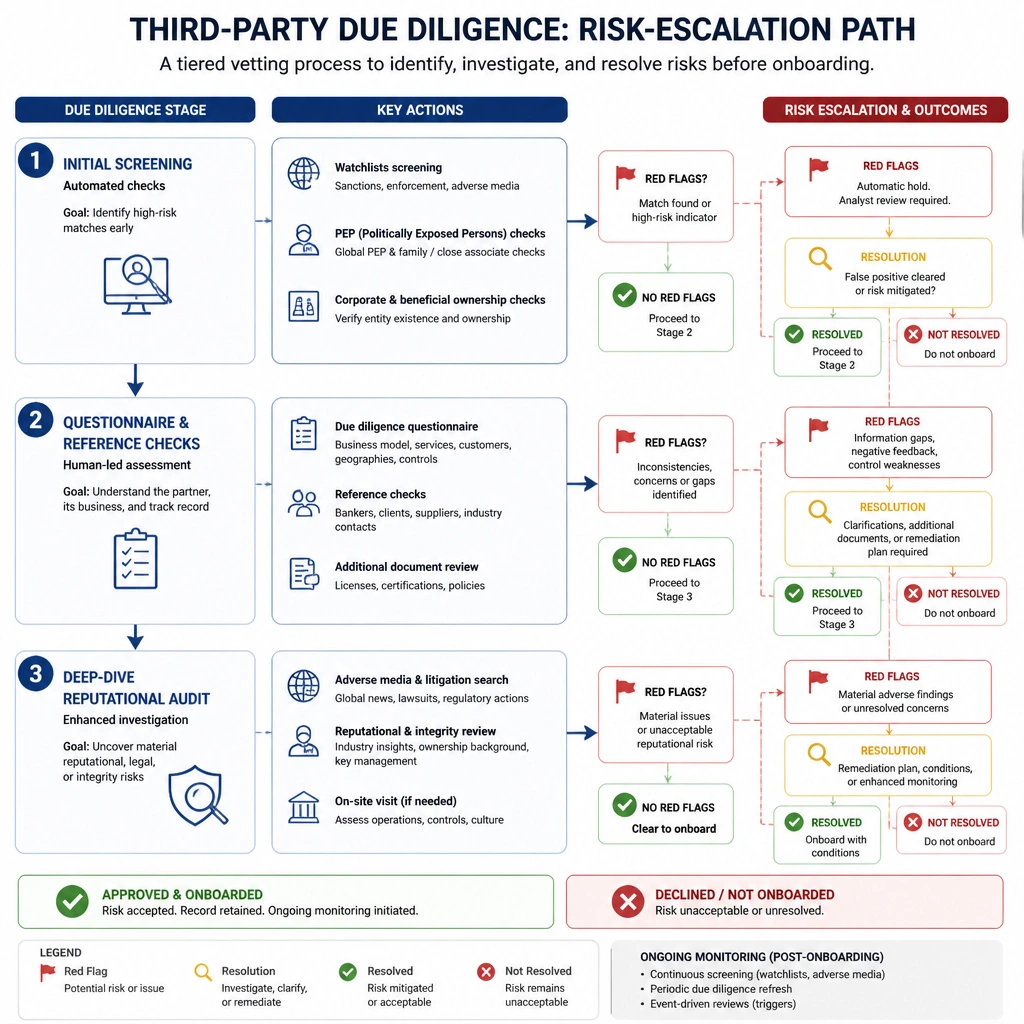
Full Explanation
Third-party relationships represent one of the most significant sources of legal and regulatory risk for organizations, particularly under anti-corruption frameworks like the Foreign Corrupt Practices Act (FCPA) and the UK Bribery Act. Under these laws, companies can be held civilly and criminally liable for bribes paid or corrupt acts committed by agents, consultants, or intermediaries acting on their behalf.
Let’s review why the other choices fail to capture the true compliance objective: - Option A is correct because due diligence is the primary mechanism used to identify, assess, and mitigate these risks before entering a business relationship. A proper due diligence check investigates the third party’s beneficial ownership, reputation, history of legal compliance, relationship with government officials (to identify Politically Exposed Persons, or PEPs), and the commercial rationale for their hiring. - Option B is incorrect because fee negotiation is a function of procurement and commercial management, not the risk-based focus of compliance due diligence. While unusual fee structures (like success fees) can be a compliance red flag, the due diligence process itself is not designed to force down costs. - Option C is incorrect because standard personal licenses, such as a driving license, are operational matters unrelated to systemic compliance, corruption, or anti-bribery risk assessments. - Option D is incorrect because no due diligence check can guarantee perfect performance or eliminate ordinary operational errors. The focus is on legal compliance and ethical conduct, not operational perfection.
Implementing a risk-based due diligence framework helps organizations defend themselves by demonstrating that they took reasonable, proactive steps to prevent corruption.