
An organization has designed and implemented a comprehensive set of compliance policies and training modules. However, the Chief Compliance Officer insists on scheduling ongoing monitoring and auditing activities. What is the primary business and regulatory justification for this requirement?
Select an answer to reveal the explanation.
Short Explanation
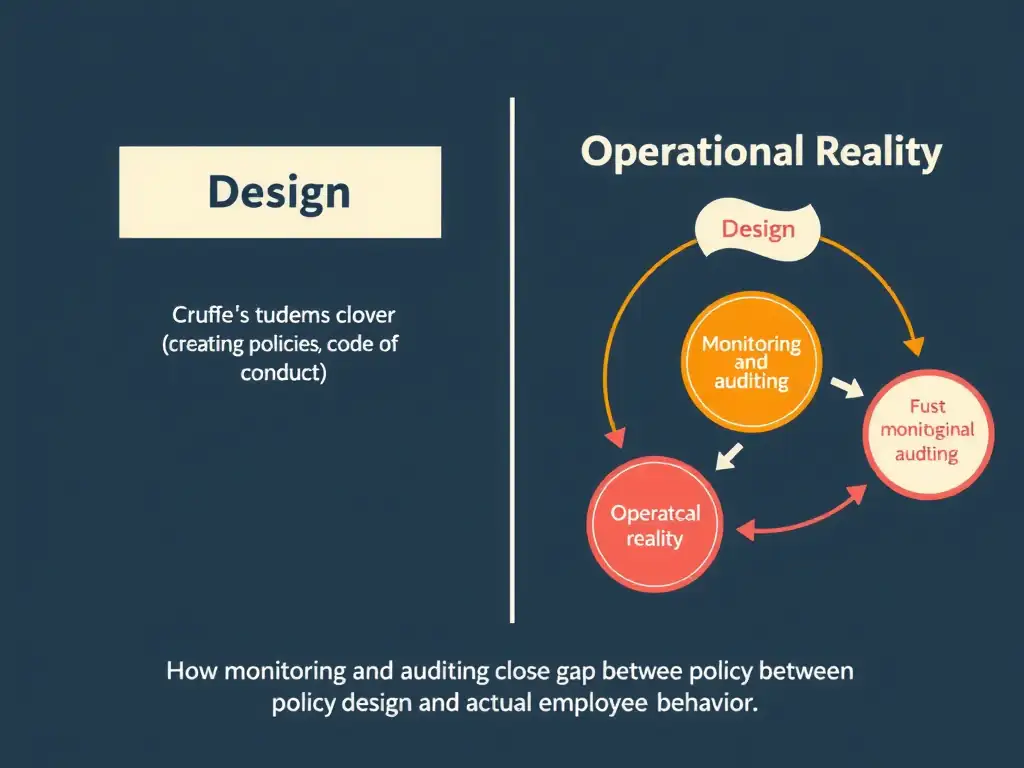
Here's the deal: you can write the most beautiful compliance policies in the world, but if nobody's actually following them, they're just expensive paperweights. Monitoring and auditing are like network diagnostics: they tell you whether controls are working, where gaps are, and what to patch before a regulator knocks on your door.
Full Explanation
Designing a compliance program is only the first step; ensuring its operational effectiveness requires continuous oversight. Regulators, including the United States Department of Justice in its guidance on the 'Evaluation of Corporate Compliance Programs,' evaluate whether a program is implemented in good faith and whether it actually works in practice. This determination cannot be made without robust, structured monitoring and auditing mechanisms.
The correct justification is that monitoring and auditing evaluate the operational design and effectiveness of controls while identifying gaps and emerging regulatory risks. Monitoring refers to real-time, ongoing checks of day-to-day operations, for example tracking training completion rates or hotline reports, while auditing is a retrospective, independent review designed to assess the adequacy and compliance of specific business units or processes. Together, they allow the organization to identify control failures, adapt to emerging regulatory threats, and implement timely corrective actions.
The idea of shifting operational control of the organization's financial systems to external consulting firms is incorrect because third-party management of internal finances is a governance model decision, not the purpose of compliance monitoring or auditing. Compliance functions oversee compliance with rules, rather than outsourcing corporate financial management.
The idea of inflating corporate overhead expenses to satisfy local regulatory spending requirements is incorrect because compliance auditing is designed to protect organizational value and prevent legal liabilities, not to artificially increase operational overhead or turnover.
The idea of guaranteeing a high volume of billable hours for external legal and compliance consultants is incorrect because while external consultants may be leveraged for independent audits, the objective of the program is self-correction and risk mitigation, not generating billable hours for third parties.
Regular audits verify that the organization's ethical culture is strong and that policies are being adhered to across all levels of the enterprise.