What is the fundamental objective of a compliance and ethics communication plan within an organization?
Select an answer to reveal the explanation.
Short Explanation and Infographic
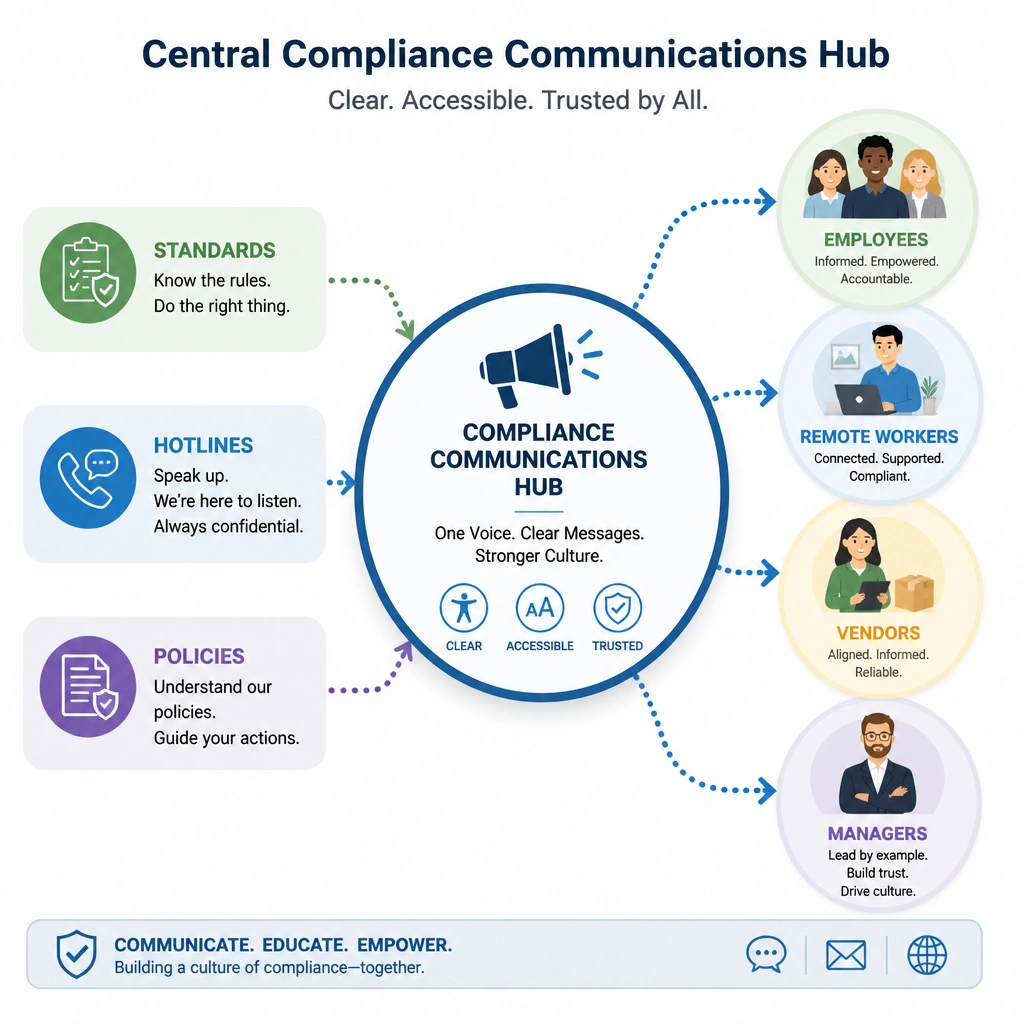
Imagine writing a great set of playbooks for a football team, but then locking them in a drawer and never telling the players the plays. You're going to lose the game, period. A compliance communications plan is all about making sure everyone—from the executive suite to the factory floor, and even your vendors—knows the rules and knows how to report a problem if they see one. You've got to broadcast this stuff clearly and regularly. It's not about hiding behind legal counsel, and it's definitely not a PR stunt. It's about building a shared understanding of how we do business.
Full explanation below image
Full Explanation
An effective compliance and ethics program must communicate its standards, policies, and procedures to all employees and, where appropriate, to third-party partners (such as agents, distributors, and vendors). Option B is correct because the goal of a communications plan is to foster a culture of compliance by ensuring that everyone understands the organization's ethical expectations and knows how to access compliance resources, such as hotlines or help desks. This is emphasized by regulators who look for active compliance training and communication rather than just a 'paper program.' Communication must be clear, accessible, and repeated over time to remain effective. Option A is incorrect because restricting communication to in-house counsel would defeat the purpose of training and educating the broader workforce. Compliance principles must be widely understood to be effective, and keeping them secret defeats their preventative purpose. Option C is incorrect because product promotion is the domain of marketing and sales, not the compliance department. Compliance communications are internally focused or directed at third-party conduct standards. Option D is incorrect because media relations and publicizing corporate goodwill are public relations functions, whereas compliance communications focus on internal training, policy dissemination, and reporting awareness. While good compliance can enhance brand image, that is a secondary byproduct, not the primary objective of the program's communication plan. Additionally, a compliance communication plan should use multiple channels, such as email newsletters, town hall meetings, digital dashboards, and interactive training modules, to reach employees at all levels. It should also be tailored to different audiences; for example, high-risk sales teams may need different compliance messages than warehouse staff, ensuring that the communication is relevant and actionable.