Why do compliance and ethics programs place significant emphasis on identifying and managing conflicts of interest?
Select an answer to reveal the explanation.
Short Explanation and Infographic
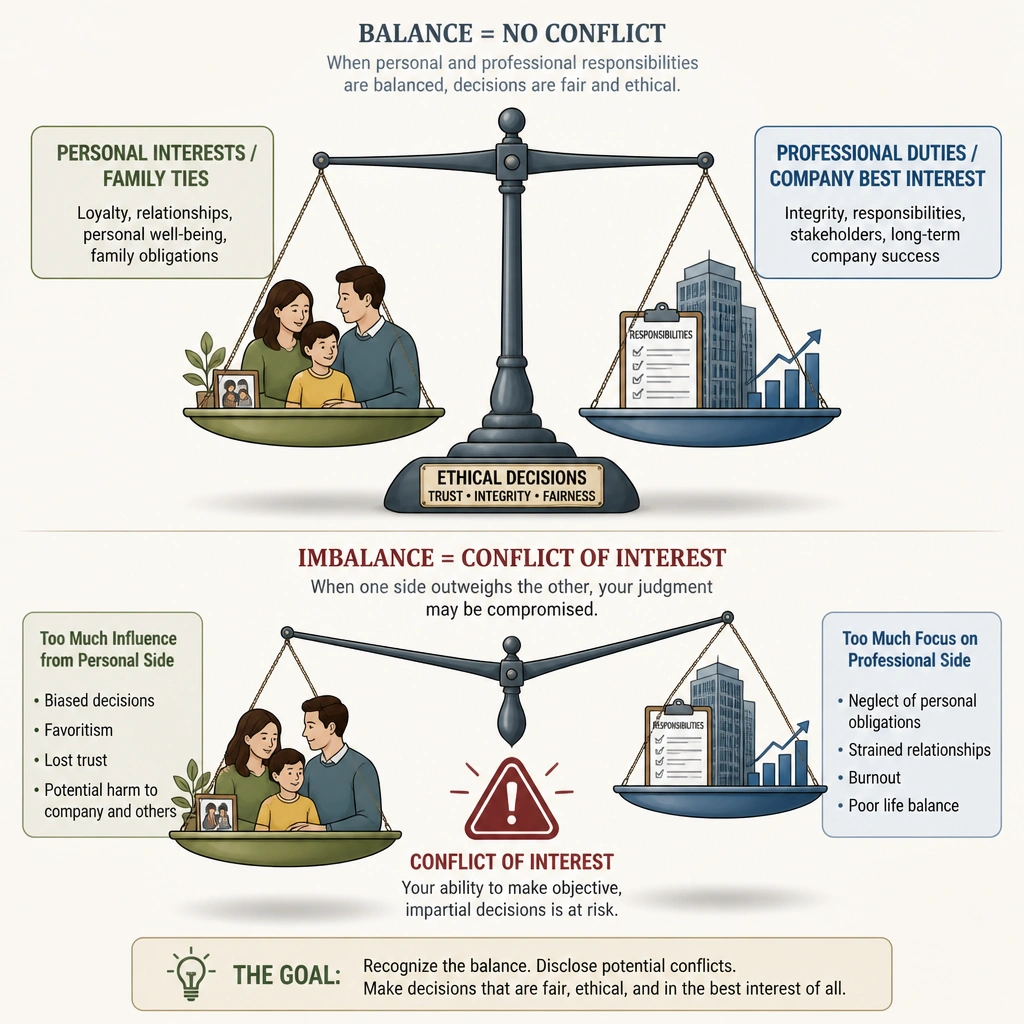
Think of it like this: your purchasing manager is buying parts for your company, and their brother-in-law runs one of the supplier companies. Even if they get a decent deal, can you really trust that they made the best choice for the company? Probably not, and everyone else in the office will think it's a setup. That's a conflict of interest. It compromises professional judgment and creates a bad look—a perception of impropriety. Even if nothing illegal actually happened, the damage to trust and reputation is real. Managing this isn't about accusing people of cheating; it's about keeping the decision-making process clean.
Full explanation below image
Full Explanation
A conflict of interest occurs when an individual's personal relationships, financial interests, or outside activities interfere—or appear to interfere—with their ability to act in the best interest of their employer. Managing these conflicts is a critical part of maintaining corporate integrity. Option B is correct because the primary risk of a conflict of interest is that it undermines the objectivity of business decisions and erodes public and internal trust. The mere appearance of a conflict can be as damaging to an organization's reputation as an actual ethical breach. Compliance programs must implement disclosure and mitigation procedures to preserve organizational integrity and ensure that business choices are made based on merit and company needs. Option A is incorrect because conflicts of interest call an employee's loyalty and judgment into question, making them obstacles to promotion rather than positive indicators of readiness. Option C is incorrect because while conflicts of interest can lead to financial loss (e.g., through overpaying for services or purchasing sub-standard materials from a relative's company), they do not always lead to immediate or measurable cash flow losses. The primary threat is to decision-making integrity and reputation. Option D is incorrect because managing conflicts of interest is a risk management and ethical control, not a commercial strategy designed to increase stock prices or market valuation, though a clean ethical reputation does indirectly support long-term investor confidence. To effectively manage conflicts of interest, organizations typically require annual disclosures where employees must declare any potential conflicts, such as outside employment, family relationships with vendors, or significant financial investments in competitors. Once disclosed, the compliance department can implement mitigation plans, such as recusing the employee from specific purchasing decisions, to ensure transparency and objectivity.