
From a governance perspective, why must a company structure the Chief Compliance Officer (CCO) role with a high degree of independence and institutional authority?
Select an answer to reveal the explanation.
Short Explanation
Think of compliance as the referee, not a player on the field. You need the CCO independent and backed with real authority so they can call violations straight, without pressure from sales, legal, or business units. That independence keeps monitoring objective and unbiased.
Full Explanation
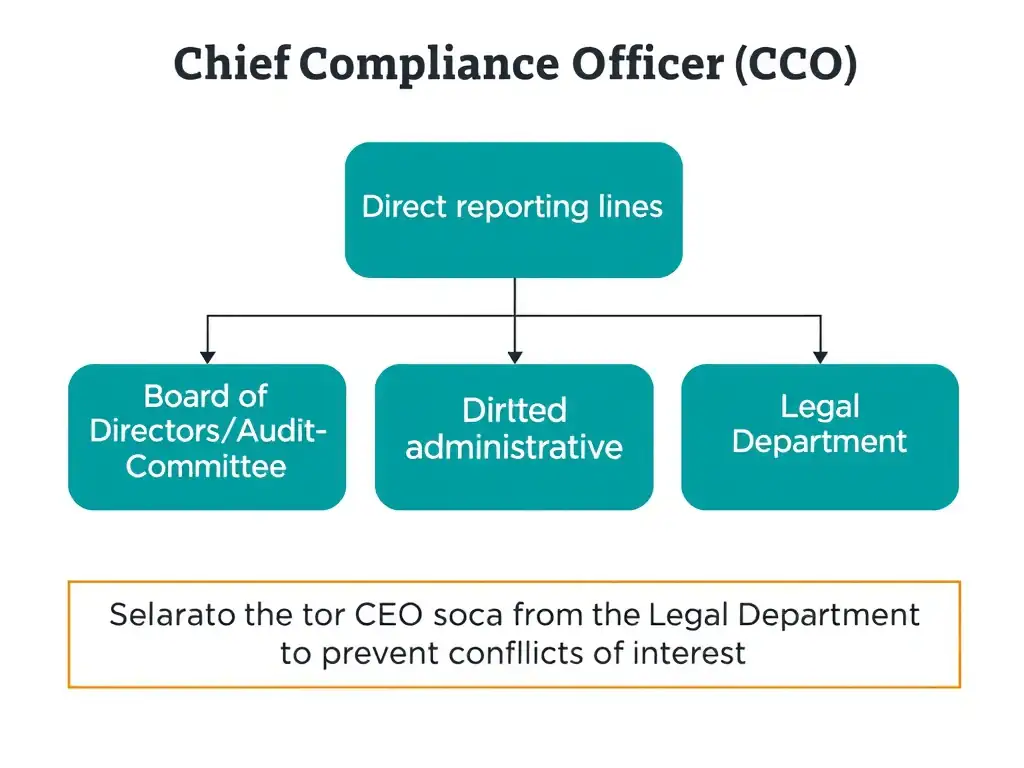
An effective compliance and ethics program requires that the Chief Compliance Officer (CCO) possess sufficient structural independence, authority, and resources to perform their duties. This organizational design is essential to prevent conflicts of interest and ensure that the CCO can conduct objective, unbiased oversight and report potential violations without fear of retaliation or organizational pressure from business leaders. The correct rationale is that independence ensures the compliance officer is not placed in a position where their professional judgment is compromised by competing business objectives, such as revenue generation or product development. By maintaining a distinct and independent role, the CCO can evaluate compliance controls objectively, escalate concerns directly, and ensure that the program's integrity is not compromised. The proposal that the CCO should handle all legal defenses and litigation for the corporation is incorrect because managing legal matters, corporate defenses, and active litigation is the responsibility of the general counsel or the legal department. The legal department focuses on legal advocacy and defending the company, whereas the compliance function is focused on monitoring adherence to laws, regulations, and internal ethical standards. The reporting structure that has the compliance function report exclusively to the CEO for administrative matters is incorrect because, while the CCO should have a strong relationship with senior leadership, reporting exclusively to the CEO can restrict direct access to the board of directors. Best practices and regulatory guidelines suggest that the CCO must have direct reporting access to the board's audit or compliance committee to ensure independent oversight. The proposal that the compliance department should have direct control over hiring, promotion, and termination decisions across all business units is incorrect because the CCO does not hold direct operational authority to hire or fire employees across the organization; these personnel management tasks remain under the purview of line managers and the human resources department.