
When establishing governance for an organization's compliance and ethics initiative, which responsibility falls directly on the board of directors?
Select an answer to reveal the explanation.
Short Explanation
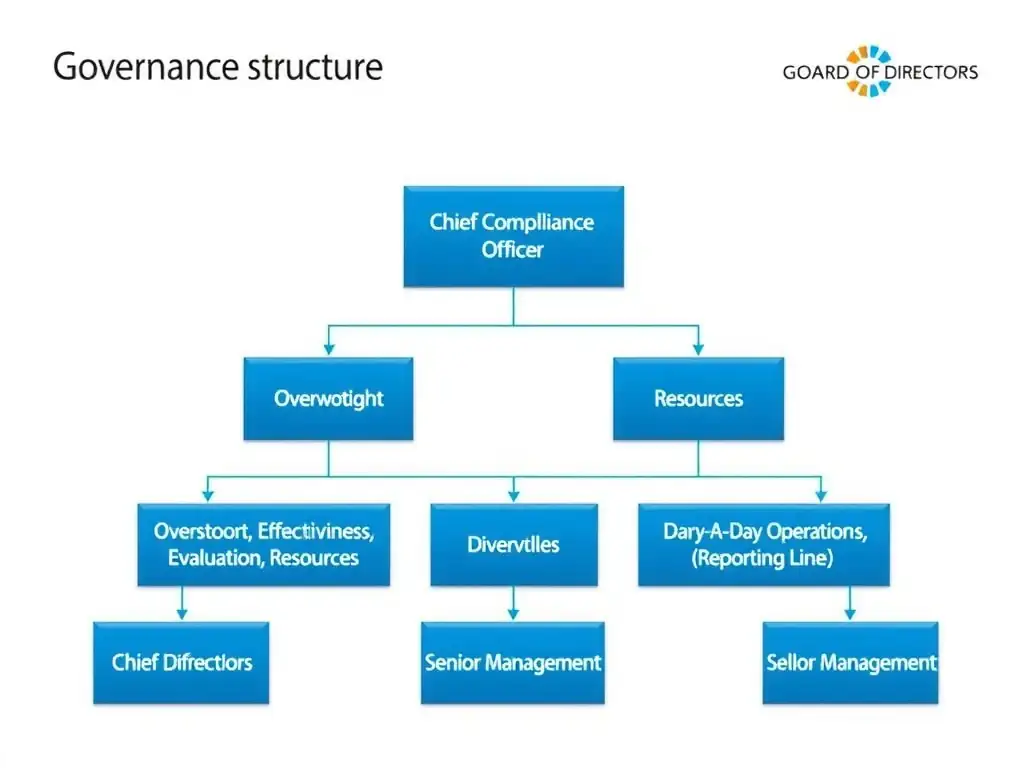
Think of the board of directors like the control tower at a busy airport. They aren't flying the planes or checking bags; that's day-to-day compliance operations. Their job is high-level oversight: making sure the program is designed right, working properly, and has enough resources to do the job.
Full Explanation
Under regulatory standards such as the U.S. Sentencing Guidelines (USSG) and the Department of Justice (DOJ) guidelines for evaluating corporate compliance programs, the board of directors plays a critical governing role that focuses heavily on high-level oversight rather than day-to-day administration. Specifically, governing authority members must be knowledgeable about the content and operation of the compliance and ethics program and must exercise reasonable oversight regarding its implementation, adequacy, and overall effectiveness. The correct responsibility is providing high-level oversight of the program's implementation, design, and overall effectiveness because the board’s primary duty is strategic and supervisory. This involves ensuring that the compliance program is adequately designed, has sufficient funding, is staffed by qualified professionals, and is empowered to prevent and detect corporate misconduct. They must receive regular, direct briefings from the Chief Compliance Officer (CCO) and actively challenge management to ensure compliance controls are functioning. The responsibility involving managing the day-to-day operations and answering routine employee compliance inquiries is incorrect because those tasks, along with administering training programs, are the operational responsibility of the CCO and the compliance staff, not the board of directors. The responsibility involving running the forensic audit teams and conducting standard internal investigations is incorrect because those are operational and tactical duties handled by compliance, internal audit, or legal departments, rather than board-level governing bodies. The responsibility describing the board as a passive entity that only receives reports in the event of a significant regulatory violation is incorrect because the board cannot be a passive observer or limit its involvement to crises or major scandals. Proactive, ongoing governance is required to avoid corporate liability and to ensure that the compliance program is adequate, adaptive, and capable of mitigating risks before they result in significant violations.