What is the primary goal of cultivating a robust "speak-up culture" within an organization's compliance framework?
Select an answer to reveal the explanation.
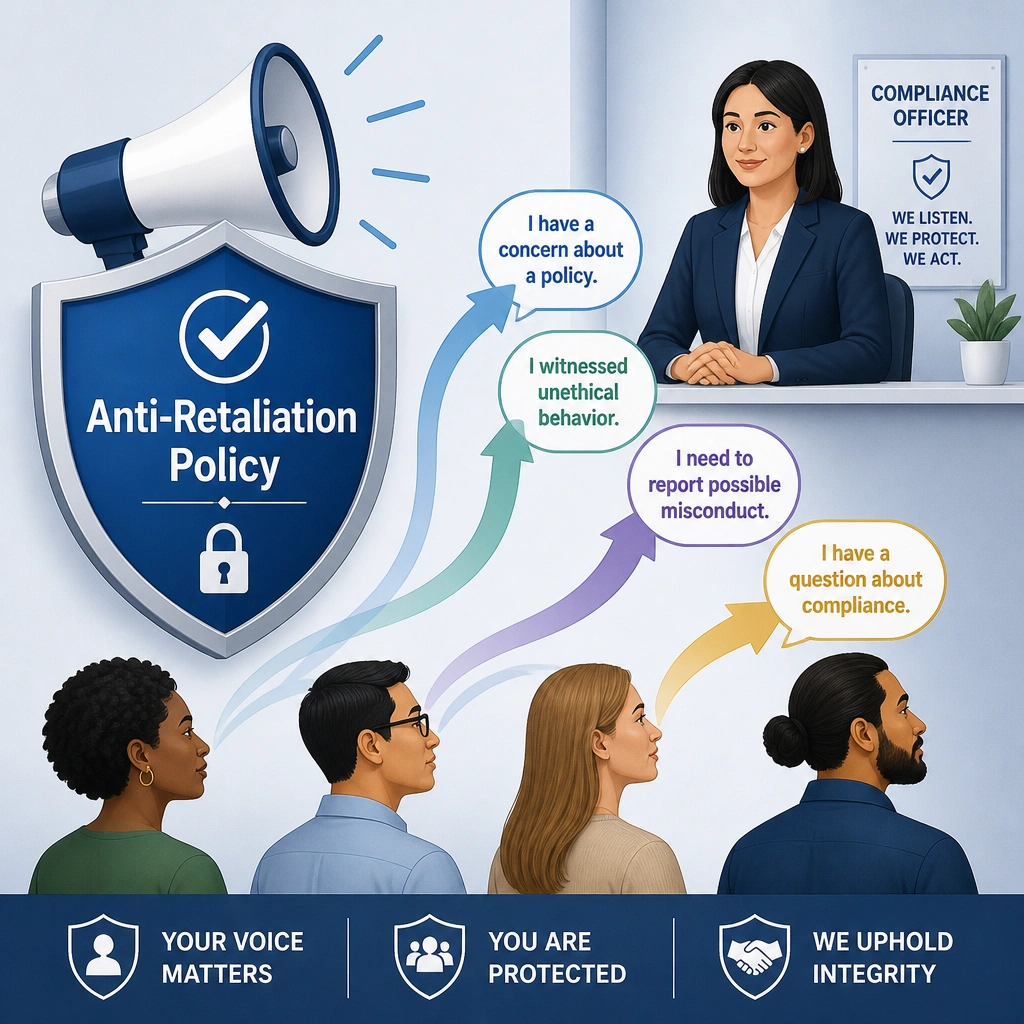
Short Explanation and Infographic
Here's the deal: if your employees see something shady going on, but they're absolutely terrified that talking to compliance will get them fired, demoted, or blacklisted, your program is broken. A "speak-up culture" means creating a space where people can wave a red flag without fearing they'll get stomped on for doing it. That means you have a solid non-retaliation policy and you actually enforce it. If your team trusts that the company has their back, they'll report problems early—before the regulators show up and make it a front-page news story. Trust me, psychological safety is your secret weapon.
Full explanation below image
Full Explanation
A "speak-up culture" (often translated or referred to as a culture of open communication) is a fundamental pillar of any effective compliance program. The primary goal is to foster an organizational environment where employees feel psychologically safe to report potential compliance violations, ethical breaches, or operational concerns. According to regulatory guidance (such as the DOJ's Evaluation of Corporate Compliance Programs), the effectiveness of a compliance program relies heavily on whether employees trust the reporting mechanisms. If employees fear retaliation, they will remain silent, allowing misconduct to persist and grow. Therefore, organizations must couple reporting channels (like anonymous hotlines) with a strict, actively enforced anti-retaliation policy and transparent investigation processes.
Option B is correct because the primary function of a speak-up culture is to establish an environment where employees can raise concerns openly and confidentially, secure in the knowledge that they will not face reprisal or negative career consequences.
Option A is incorrect because a speak-up culture is not about micromanagement or logging mundane daily activities. It focuses on ethical, legal, and policy issues.
Option C is incorrect because a speak-up culture encourages constructive criticism and the challenging of questionable behavior, rather than silencing dissent.
Option D is incorrect because employees should be encouraged to report all levels of compliance concerns. Minor issues often serve as early warning signs of systemic failures, and addressing them early prevents them from escalating into major criminal liabilities.