
Prior to finalizing a merger or acquisition, an organization must conduct thorough compliance and ethics due diligence on the target entity. What is the primary objective of this process?
Select an answer to reveal the explanation.
Short Explanation
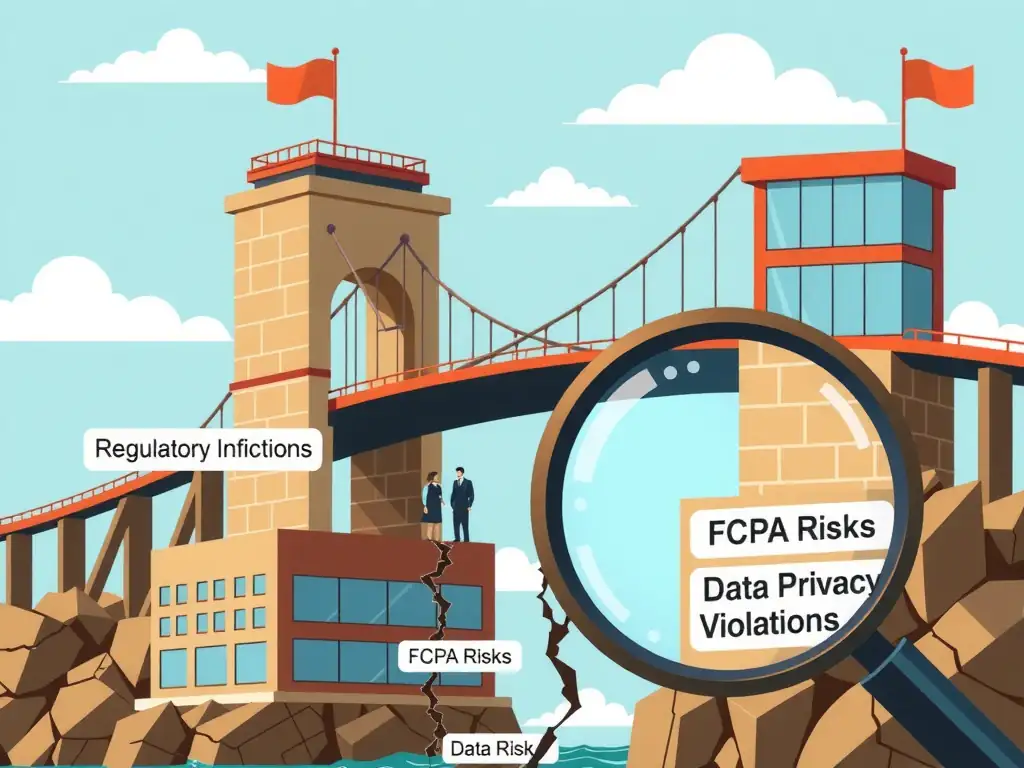
Before you pop the champagne on a merger or acquisition, you need to look under the hood for hidden compliance landmines like bribery, fraud, or toxic culture. The main objective is to spot regulatory, legal, and cultural risks before the deal closes so you can fix, price, or walk away from them.
Full Explanation
In the context of corporate mergers and acquisitions, due diligence is a comprehensive investigation of a target company's business practices, liabilities, and risks. While financial and legal due diligence are standard practices, compliance and ethics due diligence has become increasingly critical. The primary objective of this process is to identify potential compliance and regulatory exposures—such as corruption, data privacy violations, environmental issues, or trade sanctions infractions—before the transaction is finalized. Under successor liability doctrines, an acquiring company can be held criminally and civilly liable for the past misconduct of the acquired entity. Furthermore, identifying these risks pre-acquisition allows the buyer to adjust the purchase price, include protective indemnification clauses, or design a post-acquisition integration plan to remediate issues immediately.
The correct answer is the choice that identifies potential regulatory, legal, and cultural risks before the transaction is completed, because the main goal of compliance due diligence is the comprehensive identification of ethics, regulatory, and legal risks associated with the target before completing the deal.
The choice that focuses exclusively on the target's balance sheet, outstanding debts, and near-term revenue projections is incorrect because focusing only on financial aspects neglects critical operational, legal, and reputational risks. A financially strong company may have severe compliance deficiencies that lead to catastrophic post-acquisition penalties.
The choice that seeks to establish a legal basis for avoiding post-transaction regulatory control over the newly acquired entity is incorrect because due diligence does not shield an acquirer from legal control. In fact, acquiring a company generally establishes legal control and successor liability, making risk identification even more critical.
The choice that aims to systematically uncover reasons to terminate the transaction regardless of the target's strategic value is incorrect because the purpose of due diligence is not to sabotage the deal or look for reasons to cancel it. Rather, it is to provide decision-makers with the necessary information to manage, mitigate, or price the identified risks appropriately.