What is the ultimate objective of establishing a comprehensive compliance and ethics program within an organization?
Select an answer to reveal the explanation.
Short Explanation and Infographic
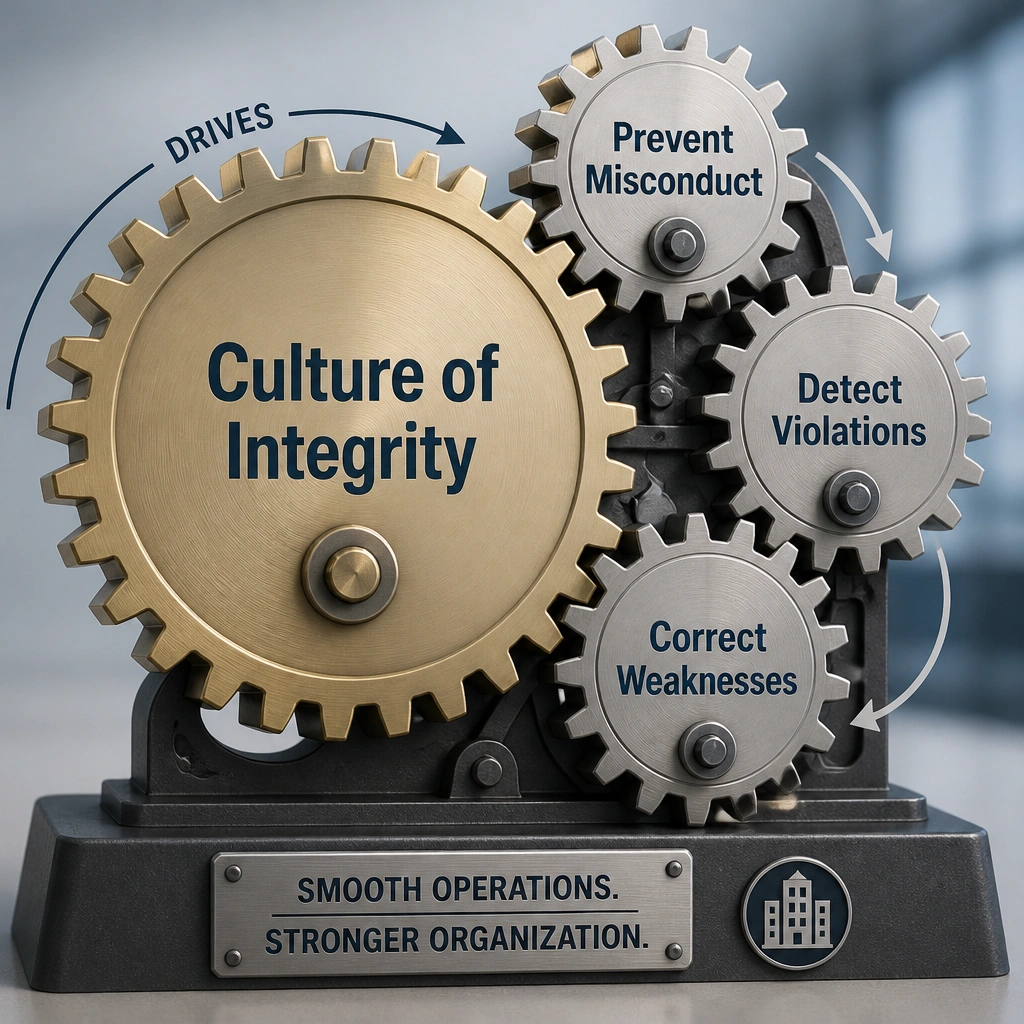
Think of a compliance program like a healthy immune system. Its job isn't to wrap the company in bubble wrap and stop you from taking any business risks at all (Option A)—that's impossible in the real world. Its job is to build a culture of integrity. You want your team to automatically do the right thing because it's the right thing, while having the tools in place to catch and fix bad behavior early. The correct answer is C. We're building a culture that prevents, detects, and corrects wrongdoing. That keeps the regulators happy and, more importantly, keeps your business healthy and built to last. Maxing profits at all costs (Option B) or trying to hide from regulators (Option D) is a surefire way to crash.
Full explanation below image
Full Explanation
The correct answer is C. The ultimate goal of a compliance and ethics program is to foster an organizational culture that values integrity and adheres to legal and ethical standards. Rather than being a mere checklist of rules, an effective program establishes values, expectations, and systems that encourage ethical decision-making. As outlined in international guidelines (such as the US Sentencing Guidelines and ISO 37301), a successful program is designed to prevent misconduct from occurring, detect it quickly if it does occur, and take swift corrective action to remediate the issue.
Let's analyze the incorrect options: - Option A is incorrect because a business cannot eliminate all risks. Risk-taking is inherent in business enterprise. The compliance program's role is to manage and mitigate compliance and legal risks, not to eliminate all commercial or operational risk. - Option B is incorrect because compliance programs are designed to ensure profits are made ethically and legally, not to find loopholes or maximize revenue at all costs. - Option D is incorrect because a compliance program does not eliminate regulatory oversight or the need for audits; instead, it prepares the organization to meet regulatory expectations and cooperate transparently with external auditors.
A culture of compliance protects the organization's reputation, builds trust with stakeholders, and reduces the likelihood of catastrophic legal penalties. By integrating compliance into the daily workflow and training, organizations move from a reactive policing model to a proactive, integrity-driven culture.