
Why do modern international compliance programs place such a high priority on implementing and maintaining anonymous reporting channels, such as hotlines or web portals?
Select an answer to reveal the explanation.
Short Explanation
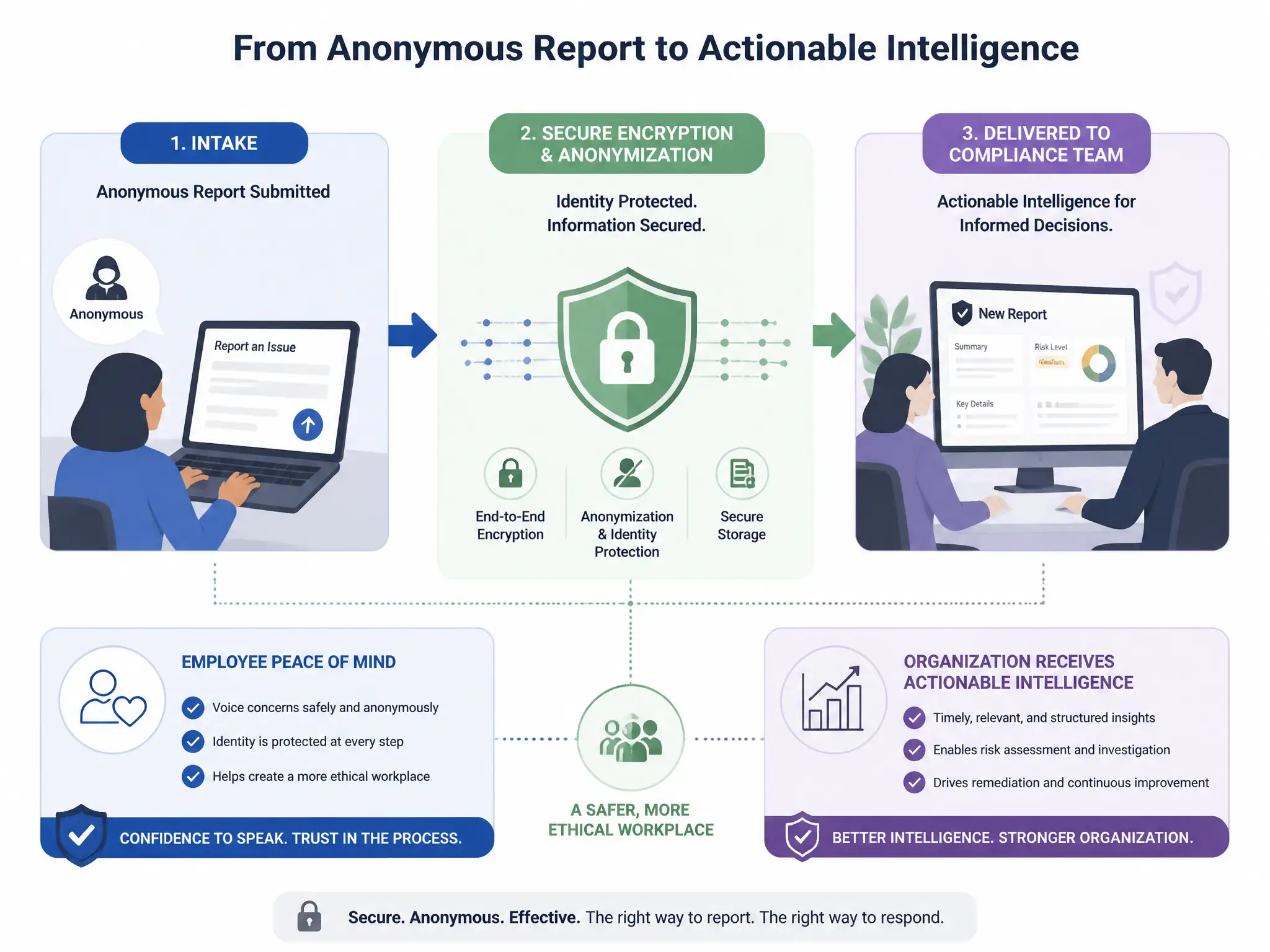
Here's the deal: even with a 'No Retaliation' policy, people still fear putting their name on a report. Anonymous hotlines and portals lower that fear, so you get critical warnings you'd otherwise miss.
Full Explanation
The correct answer is the choice stating that anonymous channels encourage employees who might otherwise stay silent due to fear of reprisal to report suspected wrongdoing. Secure compliance hotlines, web-based intake portals, or physical drop boxes are vital tools for lowering the barriers to reporting compliance violations. While a non-retaliation policy provides legal and structural protections, many employees remain hesitant to speak up due to perceived social or professional risks, such as being labeled a whistleblower or facing subtle social exclusion from peers. Providing anonymity offers an additional layer of security that encourages individuals to share sensitive information that they might otherwise withhold out of fear of reprisal.
The choice about filtering out reports concerning senior executives or major financial crimes is wrong because anonymous hotlines should never filter out reports based on the severity of the issue or the seniority of the accused. On the contrary, catching high-level misconduct, executive fraud, and major financial infractions is one of the most critical functions of an intake system.
The choice about limiting internal investigations only to matters that can be verified without interviewing witnesses is wrong because anonymous reporting does not restrict investigations to cases verified without witness interviews; while anonymous tips can be more challenging to investigate because follow-up questions can be difficult, they often serve as the initial spark that uncovers systemic issues that the compliance team can verify through independent audits.
The choice about mandating that employees disclose all personal credentials and organizational relationships before filing a complaint is wrong because mandating the disclosure of personal identity completely defeats the definition and purpose of an anonymous reporting mechanism, rendering it useless for individuals seeking confidentiality.
From a regulatory standpoint, international standards expect organizations to provide a confidential and anonymous channel to ensure that internal intelligence is gathered and addressed proactively.