
An organization implements a robust "No Retaliation" policy within its compliance program. What is the primary objective of establishing and enforcing this policy?
Select an answer to reveal the explanation.
Short Explanation
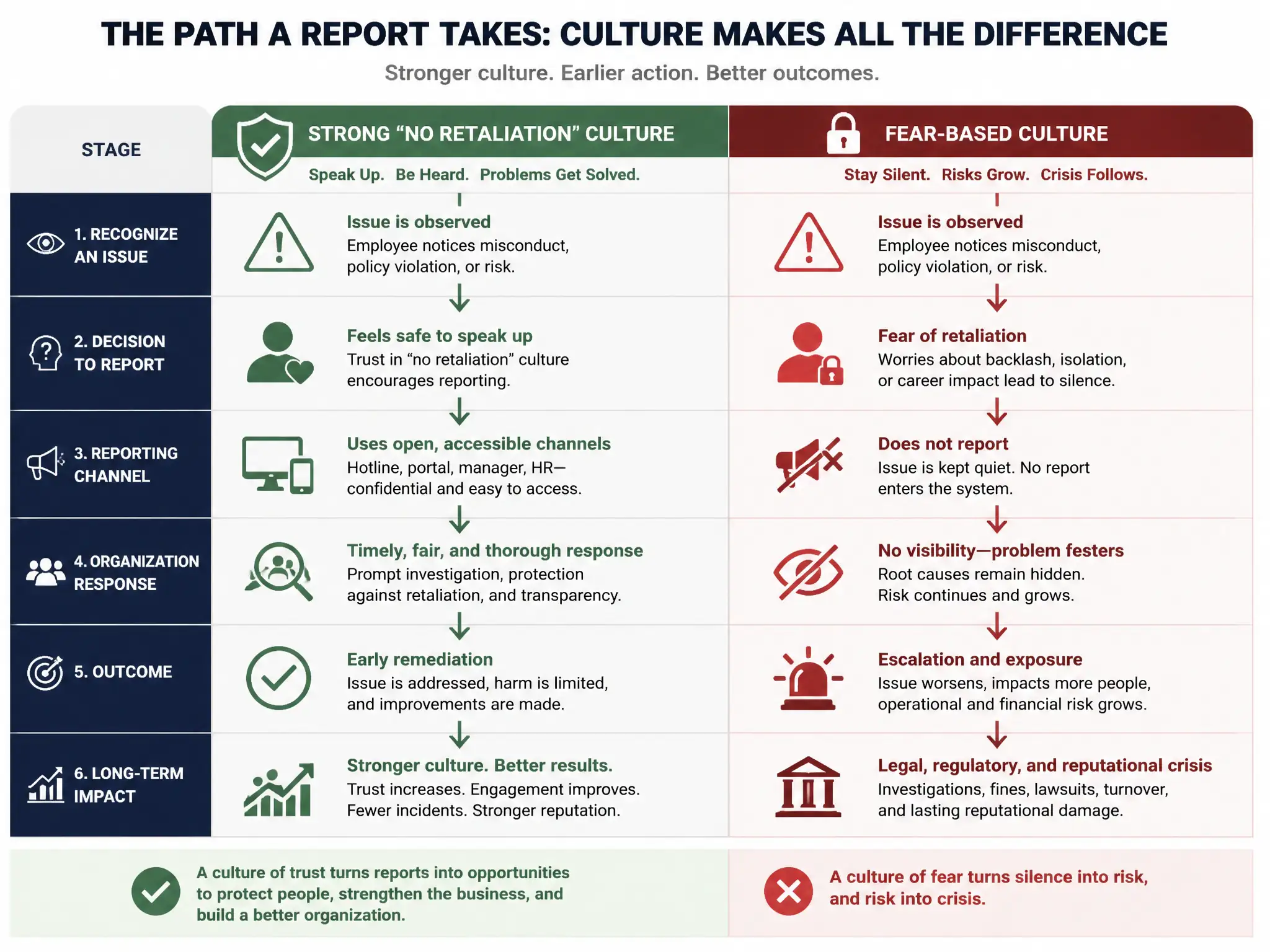
Think of a 'No Retaliation' policy like the safety net in a high-wire act. If your team members see something shady but think speaking up will get them fired, demoted, or treated like pariahs, they'll keep their mouths shut. So you protect employees who report suspected compliance violations in good faith from adverse employment actions, harassment, or marginalization.
Full Explanation
The correct choice is the policy that protects employees who report suspected compliance violations in good faith from adverse employment actions, harassment, or marginalization. A robust 'No Retaliation' policy is a fundamental pillar of any effective compliance and ethics program, as strongly emphasized by international compliance frameworks, including the US Sentencing Guidelines and the ISO 37301 standard. The primary objective is to foster an open, transparent reporting culture where employees feel safe to raise concerns about potential misconduct, policy breaches, or illegal activities without fearing negative personal or professional consequences. When employees fear retaliation, they are highly unlikely to report wrongdoing internally. This silence prevents the organization from identifying, investigating, and remediating compliance failures early, allowing minor issues to balloon into massive systemic crises.
Let's analyze why the other choices are incorrect: - The choice about restricting employees from discussing internal operational challenges or proprietary information with third parties is incorrect because preventing discussions about operational challenges or sharing information is related to confidentiality agreements, non-disclosure agreements, or restrictive covenants, rather than non-retaliation policies. Overly broad communication restrictions can actually suppress legitimate whistleblowing and expose the company to regulatory criticism. - The choice about insulating the compliance department and senior management from legal liability arising from standard employee disciplinary actions is incorrect because a non-retaliation policy is designed to protect whistleblowers, not to shield the compliance department or executives from liability arising from normal, performance-based employee disciplinary actions. - The choice about preventing whistleblowers from filing lawsuits or seeking financial compensation through external government regulatory bodies is incorrect because non-retaliation policies do not exist to block whistleblowers from filing lawsuits or seeking financial compensation through external government regulatory bodies, such as the U.S. Securities and Exchange Commission or the Environmental Protection Agency. Legally, organizations are prohibited from restricting employees from contacting government regulatory agencies.
Ultimately, protecting whistleblowers ensures that the compliance department receives the critical intelligence needed to maintain organizational integrity and mitigate risks before they escalate.