
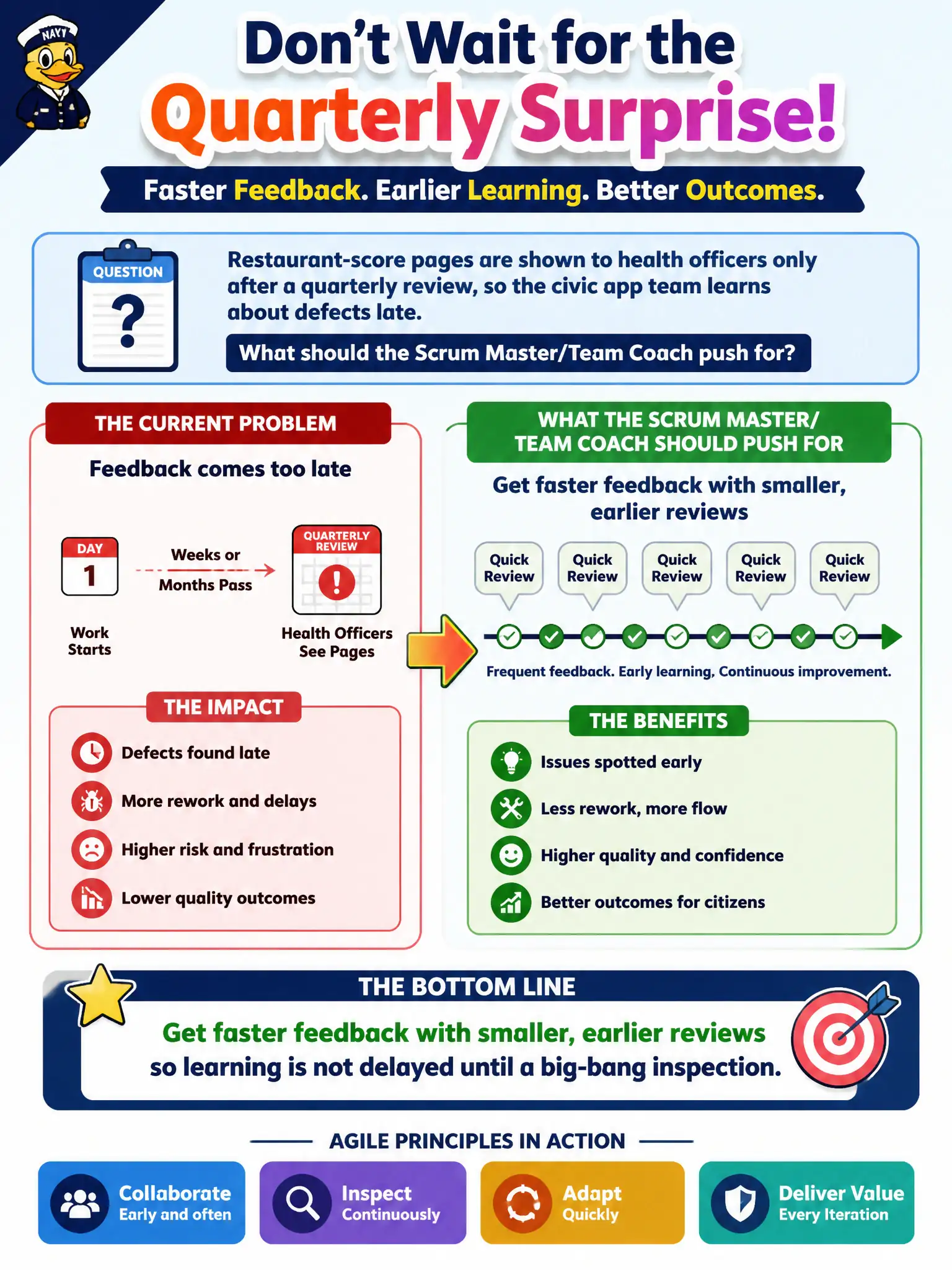
Restaurant-score pages are shown to health officers only after a quarterly review, so the civic app team learns about defects late. What should the Scrum Master/Team Coach push for?
Select an answer to reveal the explanation.
Short Explanation
Waiting a quarter to show health officers the restaurant scores is like inspecting the kitchen after the dinner rush. The mess is already baked in. Get a smaller plate in front of them sooner so the team can fix the recipe while it still matters.
Full Explanation
Faster feedback loops are a core SAFe flow practice. Showing restaurant-score pages to health officers only after a quarterly review delays learning until defects are expensive and baked into the civic app. The Scrum Master/Team Coach should push smaller, earlier reviews so officers see thin slices sooner and the team can correct course while change is still cheap—inspection after the dinner rush is too late for the kitchen.
Keeping and lengthening the quarterly review fails by concept: bigger late inspection still learns late and creates a rework spike. Hiding unfinished pages until the PI ends fails by concept by maximizing feedback delay for public-health stakeholders. Replacing officer review with a single director sign-off at go-live fails by concept because it removes domain feedback from the people who use restaurant scores operationally.
Exam caveat: built-in quality and frequent integration/review beat big-bang inspection; stakeholder demos and examples should be continuous, not a quarterly civic ritual. Early review does not mean releasing unfinished regulatory content to the public—it means controlled feedback from health officers inside the development loop.
Operational check: schedule thin-slice reviews with health officers inside the iteration, capture defects found earlier versus only at quarterly review, and adjust the Definition of Ready/Done so officer feedback is a normal step rather than a quarter-end gate.