
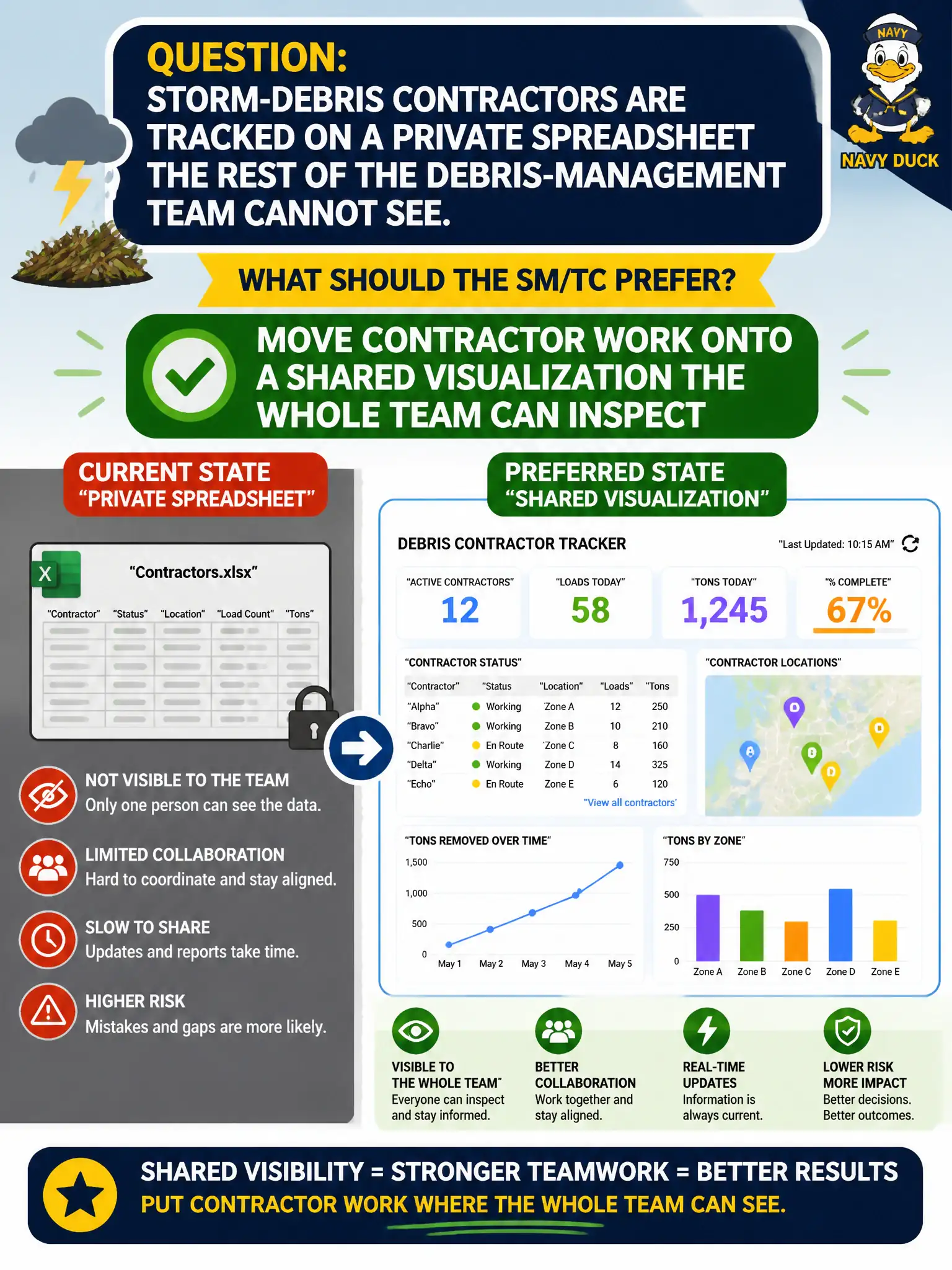
Storm-debris contractors are tracked on a private spreadsheet the rest of the debris-management team cannot see. What should the SM/TC prefer?
Select an answer to reveal the explanation.
Short Explanation
A private contractor spreadsheet is a scoreboard in a locked locker. The debris team cannot manage flow it cannot see. Shared visualization is the point.
Full Explanation
Contractor work that consumes team capacity on a debris-removal or similar effort should move onto a shared visualization the whole team can inspect. A private contractor spreadsheet is a scoreboard in a locked locker. The team cannot manage flow it cannot see, and residents experience the combined system whether or not the spreadsheet is shared.
Keeping the spreadsheet private so contractor SLAs stay a management secret fails because secrecy blocks team flow management. Reporting contractor status only at the PI System Demo fails because waiting for a PI event leaves daily pull blind. Duplicating the spreadsheet into a director-only dashboard while leaving the team board empty fails because leadership theater without team visibility still breaks pull.
Exam caveat: vendors and contractors in the value stream belong on the team's visible workflow when they consume capacity or gate Done. Operational check: integrate contractor states into the shared board, define handoff policies, review vendor waits in team sync, and stop treating contractor status as management-only information. Shared contractor visibility is also an accountability tool when vendors gate Done for debris or infrastructure recovery.