
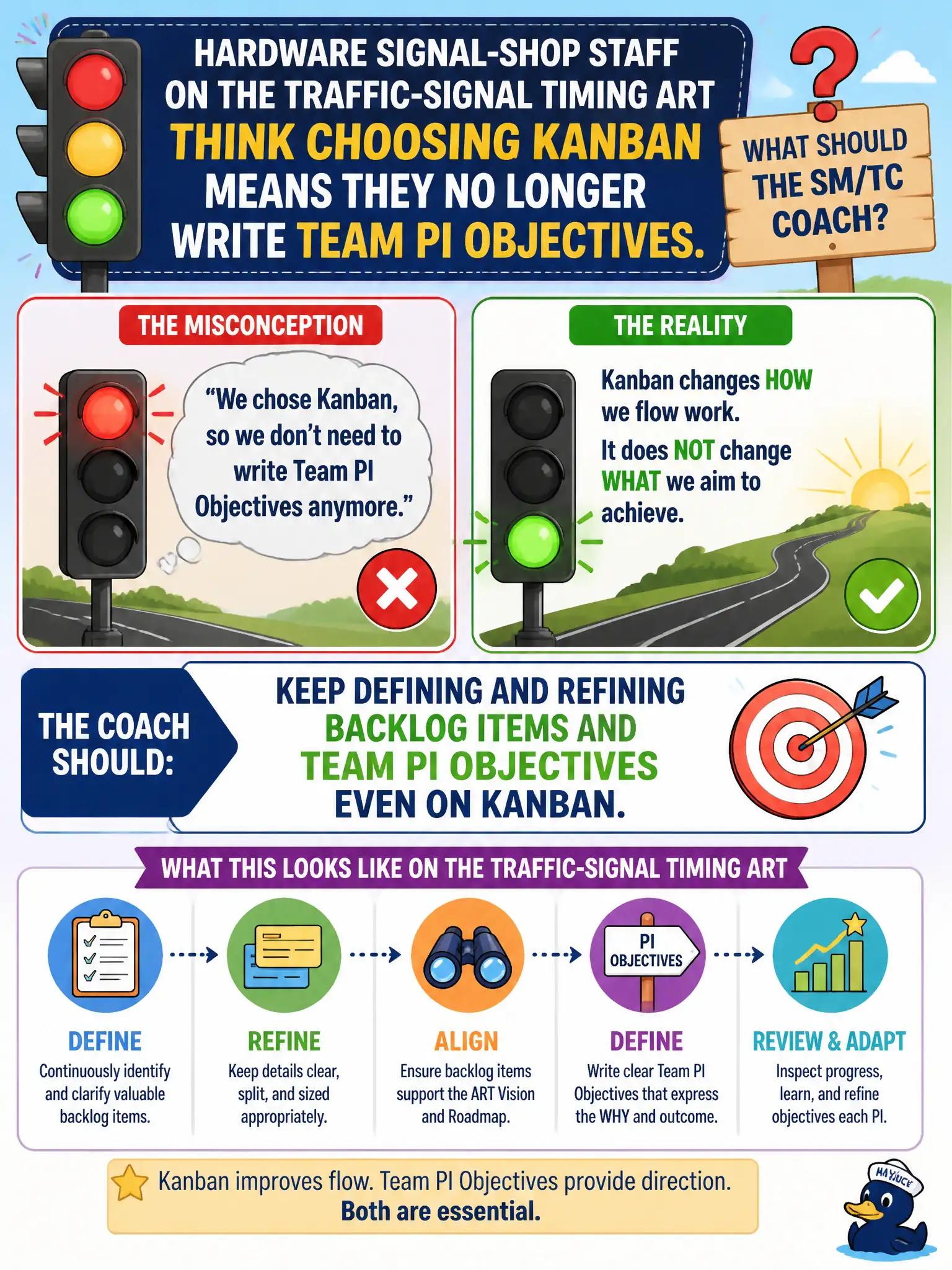
Hardware signal-shop staff on the traffic-signal timing ART think choosing Kanban means they no longer write Team PI Objectives. What should the SM/TC coach?
Select an answer to reveal the explanation.
Short Explanation
Kanban is not 'we just flip cards until the PI ends.' Signal-shop crews still say what outcomes they will shoot for this PI. Objectives keep the hardware work connected to the train, not just busy.
Full Explanation
Hardware signal-shop staff on a traffic-signal timing ART who think choosing Kanban means they no longer write Team PI Objectives need coaching to keep defining and refining backlog items and Team PI Objectives even on Kanban. Kanban is not "we just flip cards until the PI ends." Objectives keep hardware outcomes connected to the train, not merely busy.
Dropping PI Objectives and reporting only cards completed fails because card counts without outcome commitments weaken alignment and inspection. Letting the RTE write the shop's PI Objectives so the team can "stay on flow" fails because outsourcing objectives removes team ownership. Replacing PI Objectives with a hardware bill of materials fails because a parts list is not an outcome commitment for the PI.
Exam caveat: Team Kanban changes how work is pulled during the PI; it does not remove SAFe alignment artifacts. Operational check: facilitate backlog refinement and Team PI Objective creation with the signal shop, keep objectives visible beside the Kanban system, refuse card-count-only reporting as a substitute, and connect shop outcomes to ART PI intent. Signal timing outcomes still need PI-level intent so cities can inspect whether hardware work advanced safety and mobility goals, not merely card throughput.