
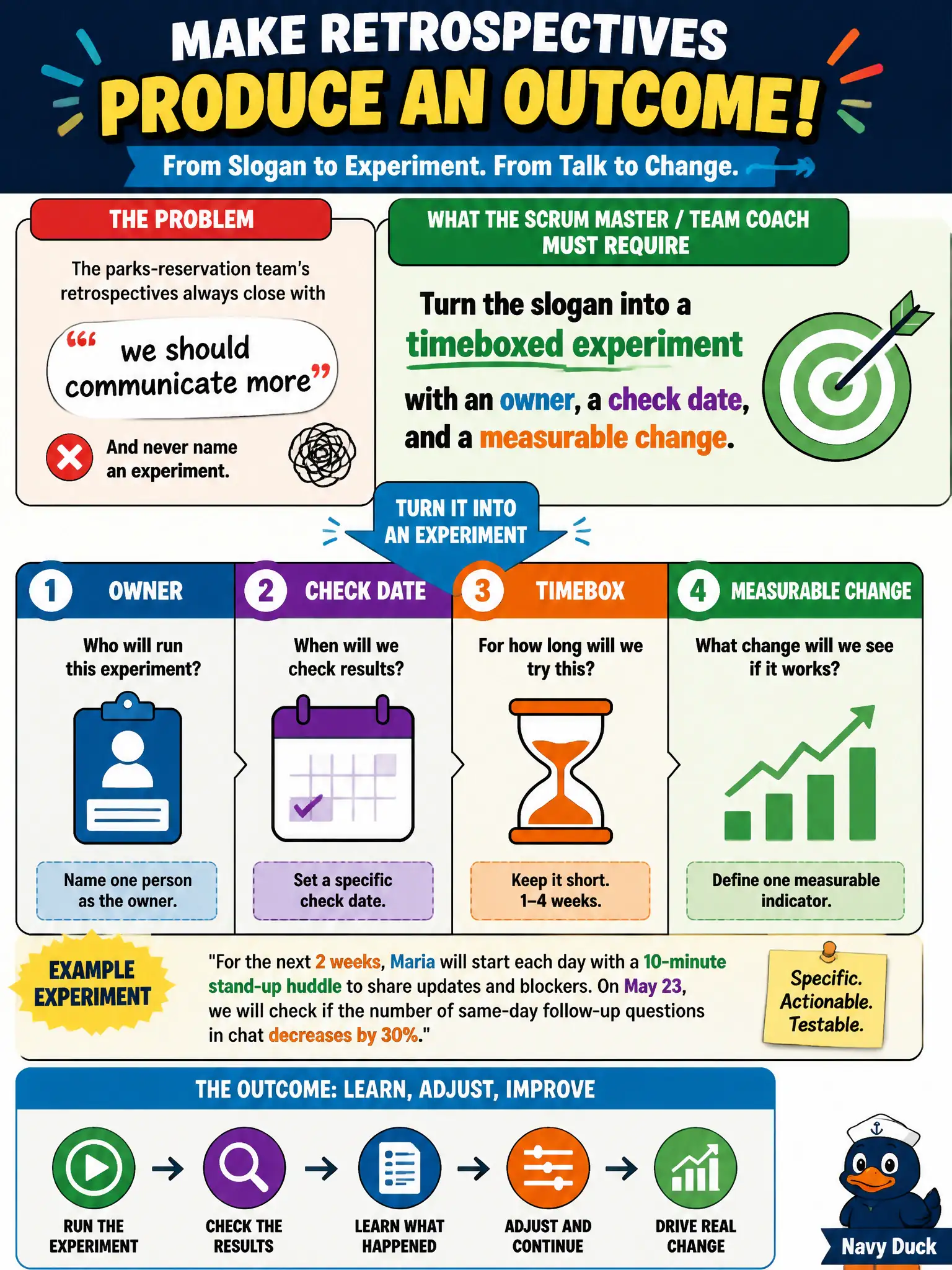
The parks-reservation team's retrospectives always close with "we should communicate more" and never name an experiment. What should the Scrum Master / Team Coach require so the event produces an outcome?
Select an answer to reveal the explanation.
Short Explanation
"Communicate more" is a bumper sticker, not a parks-desk experiment. A retrospective that cannot name who will try what by when did not produce an outcome. Pin a small test—owner, date, measure—or the calendar slot was just a complaint hour.
Full Explanation
Retrospectives must produce actionable improvement, not slogans. Parks-reservation retros that always close with “we should communicate more” never change the system. The Scrum Master / Team Coach requires a timeboxed experiment with an owner, a check date, and a measurable change—so reservation flow or handoffs actually improve for the public. Slogans filed in a communications plan are not experiments.
Capturing the slogan in the city communications plan marks completion without learning. Canceling team retros until Inspect and Adapt assigns ART-level work removes local improvement cadence. Asking the Product Owner to rank a “communicate more” Feature turns a team experiment into backlog fiction.
Exam caveat: improvement items need owners and checks; vague aspirations fail SASM event-outcome questions. Operational check: refuse to close a parks retro until one experiment is named with owner and check date.
In municipal ARTs, residents experience conflict outcomes as delayed permits, missed benefits, unsafe shelter conditions, or opaque public data—so the Scrum Master / Team Coach keeps facilitation tied to service flow, safety, and transparent inspection rather than positional wins. Document the chosen frame or strategy, the evidence used, and the next check date so the team can see whether the intervention improved civic delivery.