
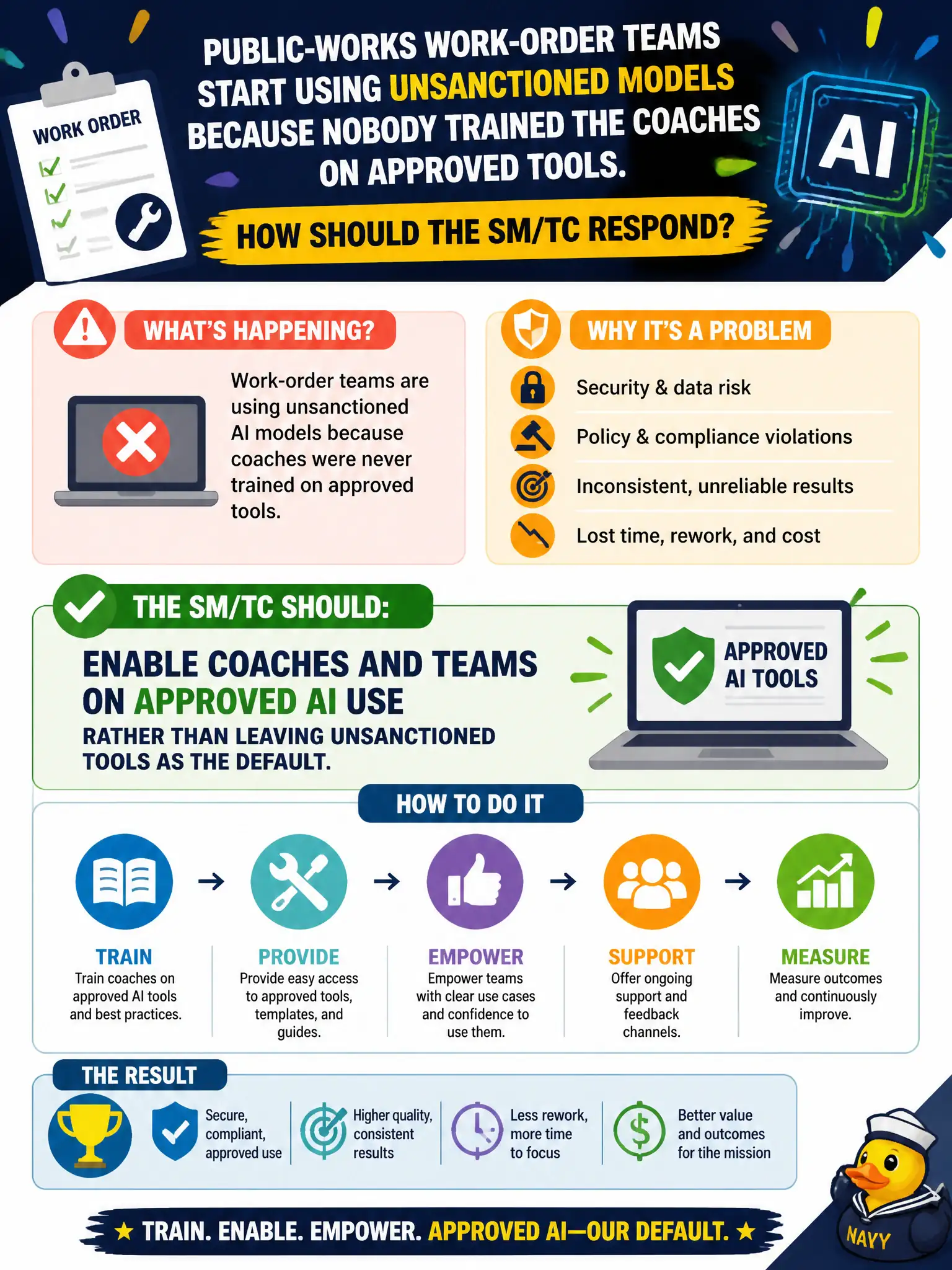
Public-works work-order teams start using unsanctioned models because nobody trained the coaches on approved tools. How should the SM/TC respond?
Select an answer to reveal the explanation.
Short Explanation
When public-works crews grab whatever flashlight is in the truck, it is usually because nobody issued the approved one. Enablement is part of empowering teams with AI — train the coaches, then the teams, on the sanctioned path. Shadow models thrive in a training vacuum.
Full Explanation
When public-works work-order teams start using unsanctioned models because nobody trained coaches on approved tools, the SM/TC should enable coaches and teams on approved AI use rather than leaving shadow tools as the default. Responsible AI on a civic ART includes enablement, not only prohibition. Shadow models thrive in a training vacuum and bypass privacy and quality controls that protect residents and city data.
Ignoring the shadow tools so teams stay unblocked fails because unblocked-and-unapproved still exposes citizen and municipal information. Confiscating laptops until the city attorney writes a 40-page policy fails because freezing work for a legal novel does not teach the approved path people can actually use. Replacing Scrum events with a daily prompt-engineering class fails because enablement should support team events, not displace them.
Exam caveat: train-then-use beats ban-without-alternative for sustaining both safety and flow on public-works teams. Operational check: publish the approved tool list, train work-order coaches on sanctioned prompting and data rules, help teams migrate off shadow models, and verify within one iteration that sanctioned paths are usable enough that people stop improvising.