
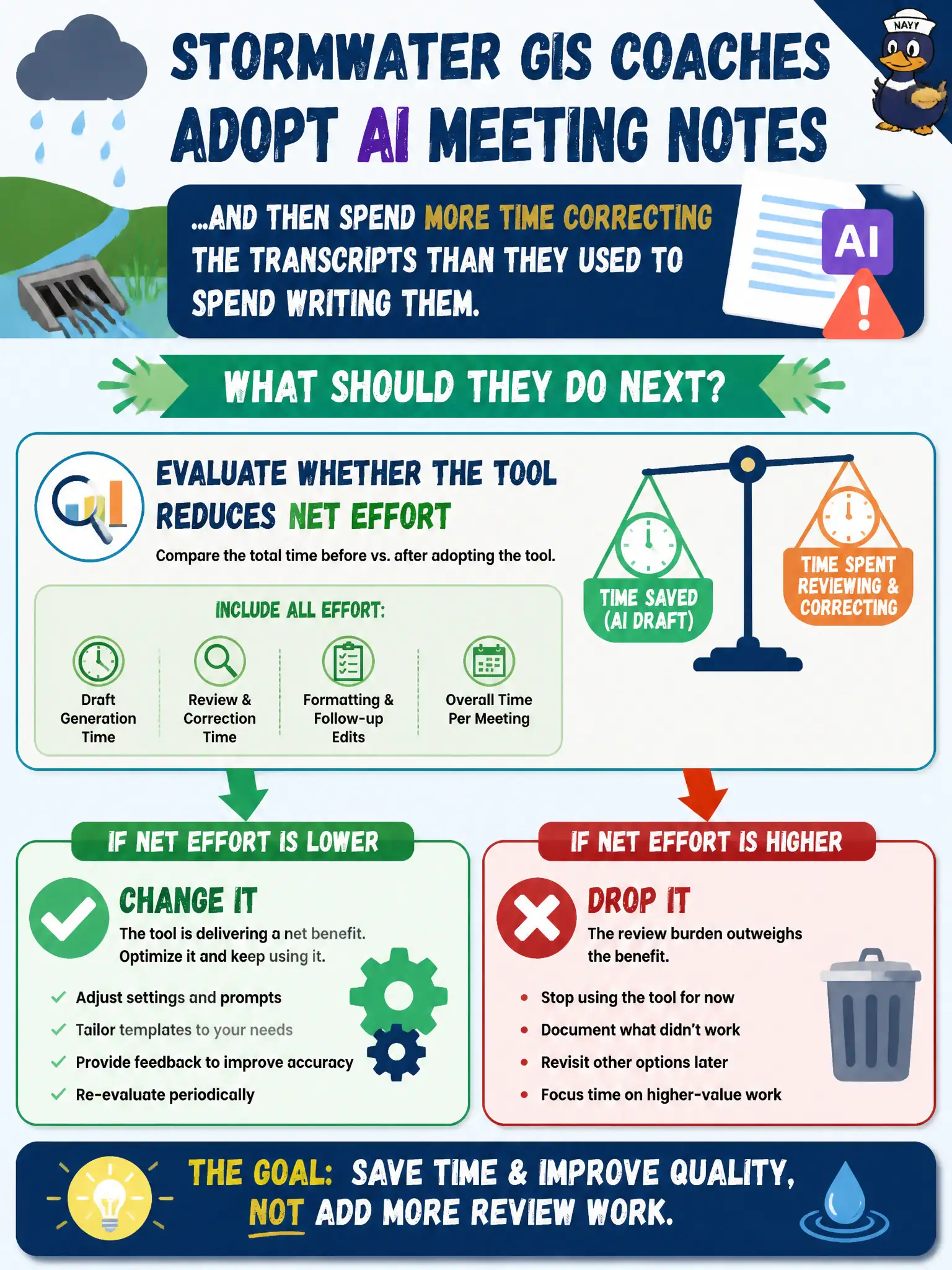
Stormwater GIS coaches adopt AI meeting notes and then spend more time correcting the transcripts than they used to spend writing them. What should they do next?
Select an answer to reveal the explanation.
Short Explanation
If the 'helper' at the stormwater map table creates a bigger cleanup than the original mess, it is not a helper. Coaches should tally net minutes, not brag about having a model. Change the setup or drop the tool when review eats the savings.
Full Explanation
Stormwater GIS coaches who adopt AI meeting notes and then spend more time correcting transcripts than they used to spend writing them should evaluate whether the tool reduces net effort and change or drop it if review burden grew. Empowering teams with AI includes inspecting whether augmentation actually helps the civic workflow. If the helper at the map table creates a bigger cleanup than the original mess, it is not a helper.
Keeping the tool anyway because any AI adoption counts as advanced coaching fails because optics are not a net-effort test and can lock in waste. Requiring every team member to correct the notes as a new Definition of Done item fails because it socializes the burden instead of fixing or retiring a bad tool. Asking the RTE to mandate the same note-taker across the ART fails because sharing a local tooling miss train-wide amplifies waste.
Exam caveat: experiments can fail; advanced coaches stop or redesign losing AI workflows rather than celebrating adoption for its own sake. Operational check: time correction versus prior note-taking for a few stormwater sessions, adjust prompts/settings or discontinue the tool if net minutes worsen, and document the learning so the ART does not mandate a proven drag.