
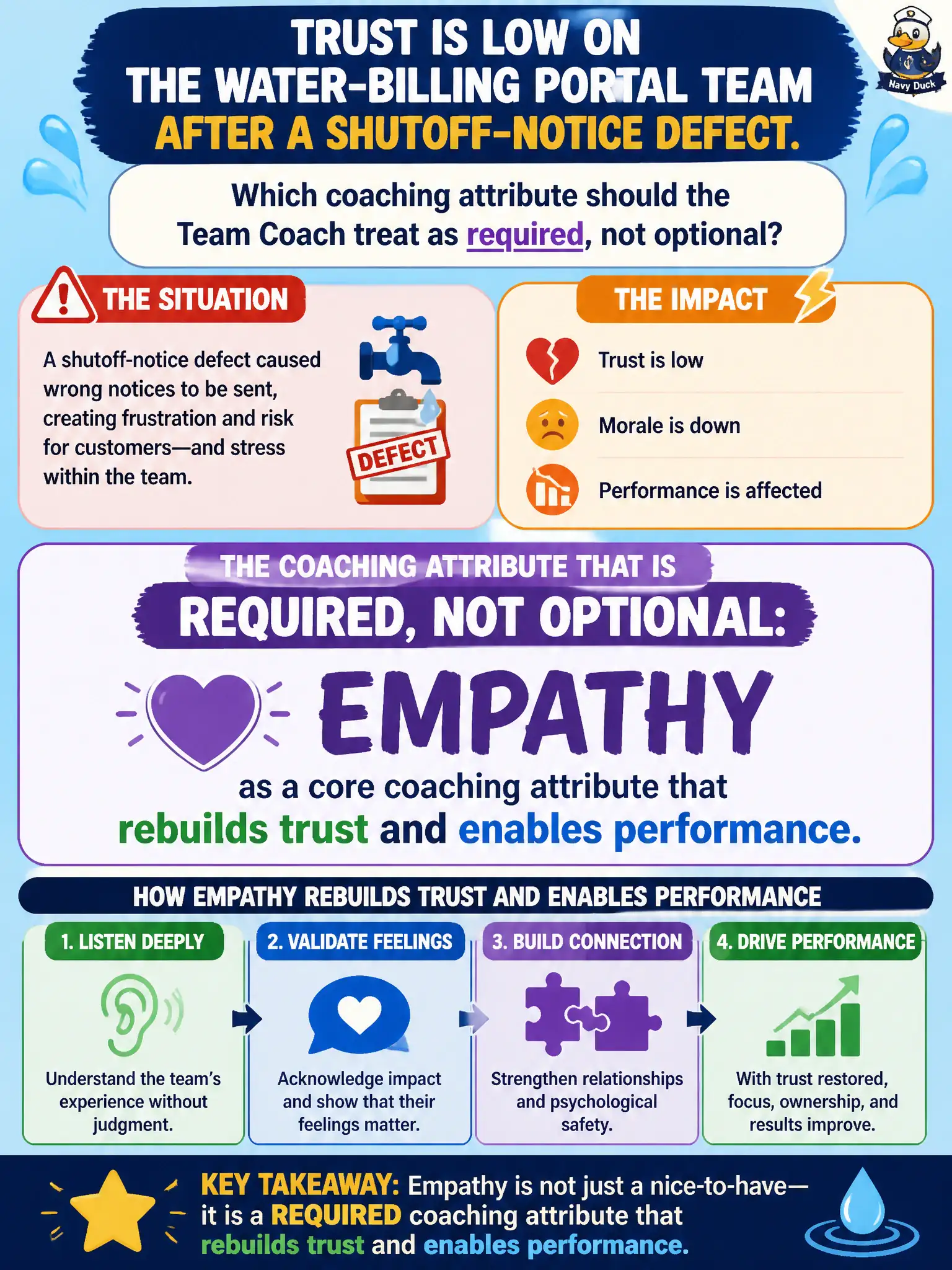
Trust is low on the water-billing portal team after a shutoff-notice defect. Which coaching attribute should the Team Coach treat as required, not optional?
Select an answer to reveal the explanation.
Short Explanation
After a bad shutoff notice, people do not get braver because someone posted a blame chart. Empathy is how the Team Coach gets the room talking again. Without trust, the next defect stays hidden.
Full Explanation
After a shutoff-notice defect on a water-billing portal team, empathy is a required coaching attribute that rebuilds trust and enables performance—not an optional soft skill. Psychological safety determines whether people will surface causes, test fixes, and speak up before the next citizen-facing failure. The Team Coach treats empathy as core to getting the room talking again so billing quality can improve.
Detached scoring of individual defect counts so empathy does not slow accountability fails because blame metrics without safety hide problems and slow learning. Public ranking of who caused the shutoff-notice defect at iteration review fails because public shaming destroys transparency and trust. Replacing team conversations with a scripted checklist that avoids feelings fails because checklist theater cannot restore the collaboration needed to prevent repeat harm to residents.
Exam caveat: empathy does not mean avoiding accountability for outcomes; it means creating conditions where honest inspection is possible. Operational check: open a blameless review of the shutoff-notice defect, coach interpersonal safety norms, focus on system causes and experiments, and verify in subsequent iterations that defects and near-misses are raised early rather than hidden.