
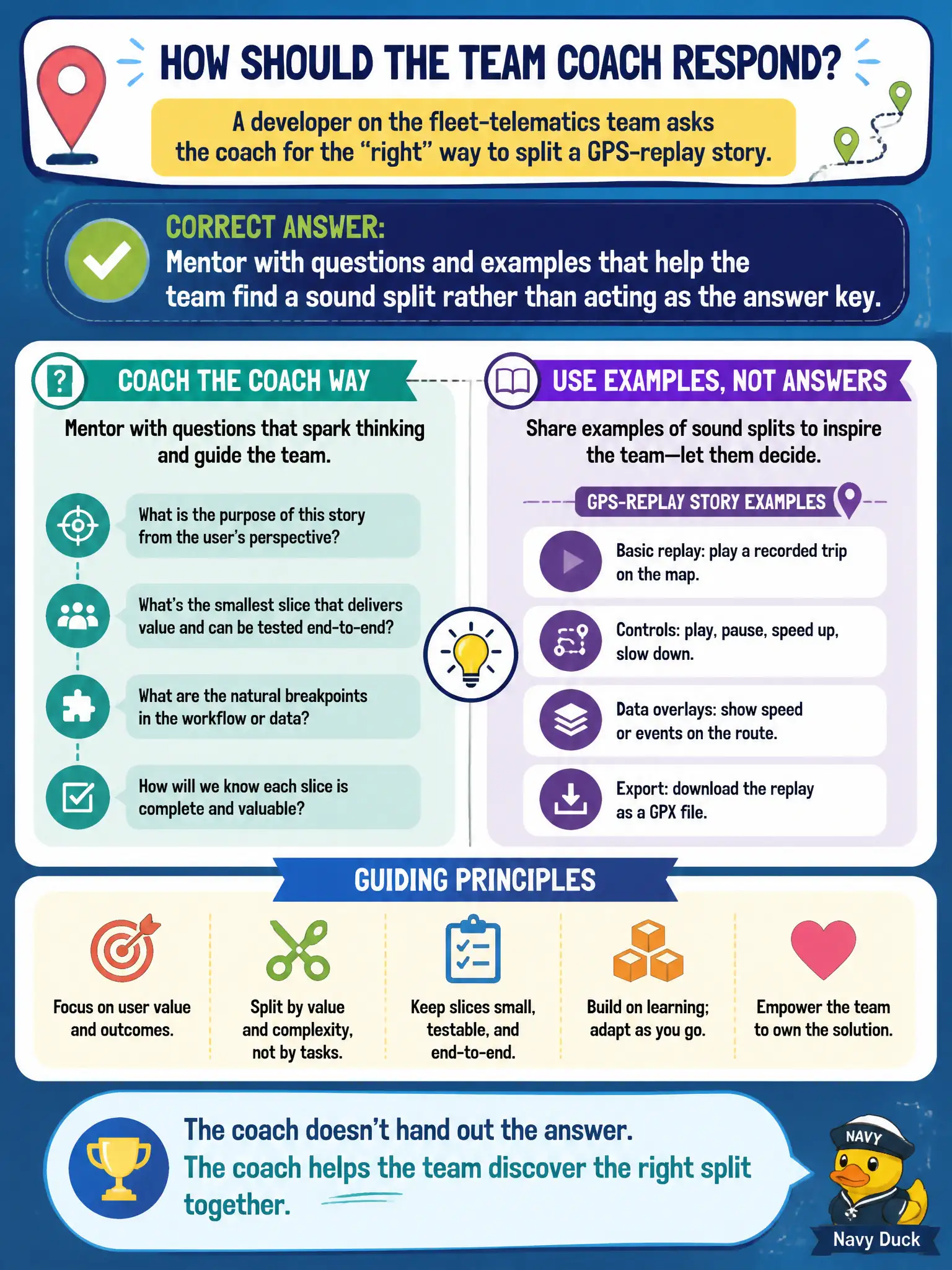
A developer on the fleet-telematics team asks the coach for the “right” way to split a GPS-replay story. How should the Team Coach respond?
Select an answer to reveal the explanation.
Short Explanation
Giving the GPS-replay split is like doing the homework and calling it teaching. Mentoring means questions and examples until the team can slice the next story. The coach is not the answer key.
Full Explanation
When a fleet-telematics developer asks for the "right" way to split a GPS-replay story, the Team Coach should mentor with questions and examples that help the team find a sound split rather than acting as the answer key. Mentoring builds lasting slicing skill so the next thin, testable slice does not require the coach to do the team's homework. That mentor stance is advanced SM/TC practice on technical municipal products.
Handing over a finished split so the developer never learns story slicing fails because it creates dependency and skips skill building. Sending the developer to Product Management and refusing to discuss slicing fails because coaching engagement on how to slice is legitimate SM/TC mentoring even though content priority remains with product roles. Splitting the story on the ART Kanban and assigning both slices before the next team sync fails because the coach becomes unauthorized assigner and skips team learning.
Exam caveat: mentoring is not the same as owning backlog content or assigning work; stay in questions, examples, and facilitation. Operational check: run a short slicing conversation with example splits, let the telematics team choose and refine the GPS-replay slice, confirm readiness with the PO, and watch whether the next similar story needs less coach intervention.