
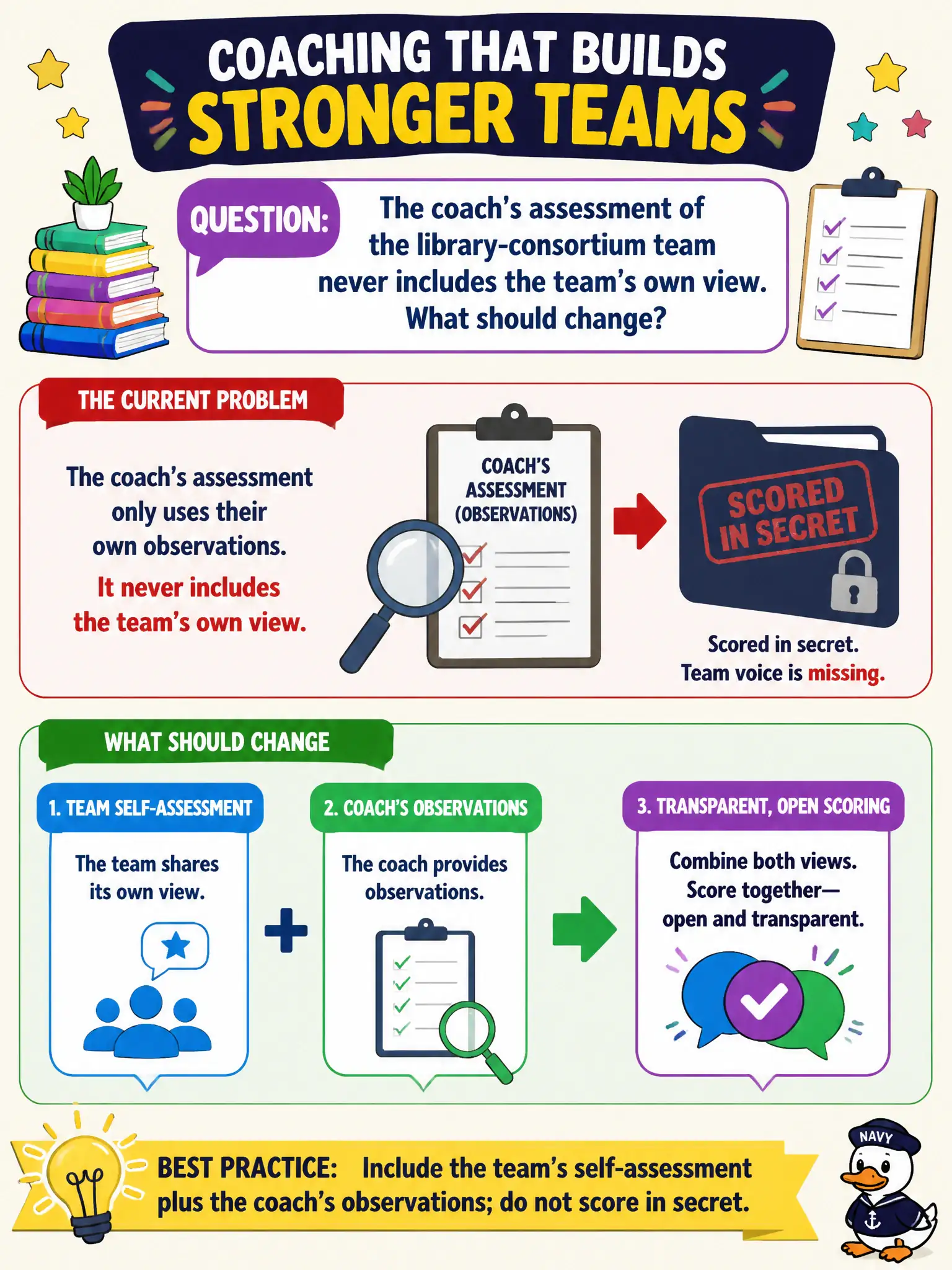
The coach's assessment of the library-consortium team never includes the team's own view. What should change?
Select an answer to reveal the explanation.
Short Explanation
Grading the library team from the hallway is a book report nobody on the team wrote. Self-assessment plus the coach's eyes is how you get a picture that is actually true. Secret scores just teach people to perform for the clipboard.
Full Explanation
Assessment of a library-consortium team should include the team's self-assessment plus the coach's observations; scoring in secret denies the learning loop that makes assessment useful for municipal delivery. People who deliver consortium library services see constraints, vendor quirks, and strengths the coach may miss, and hearing their view builds ownership of improvement rather than compliance to a hidden grade. Keeping scores secret so the team cannot argue with the grade protects the coach's ego and blocks the dialogue advanced Scrum Masters are expected to host. Asking the Release Train Engineer to score the team from PI Planning attendance only reduces performance to ceremony presence and ignores outcomes patrons experience. Replacing assessment with a process-group checklist no one on the team sees imports predictive compliance theater without team engagement. Exam caveat: SASM performance assessment is collaborative and developmental, not a secret coach grade, attendance proxy, or unseen process checklist. Operational check: run a joint review where the library team shares self-assessment, the coach adds observations, agree one or two growth actions tied to patron-facing flow, and verify those actions appear in the next retrospectives. Revisit whether secret scoring habits have crept back before the following PI and confirm the team can explain how assessment changed their working agreement.