
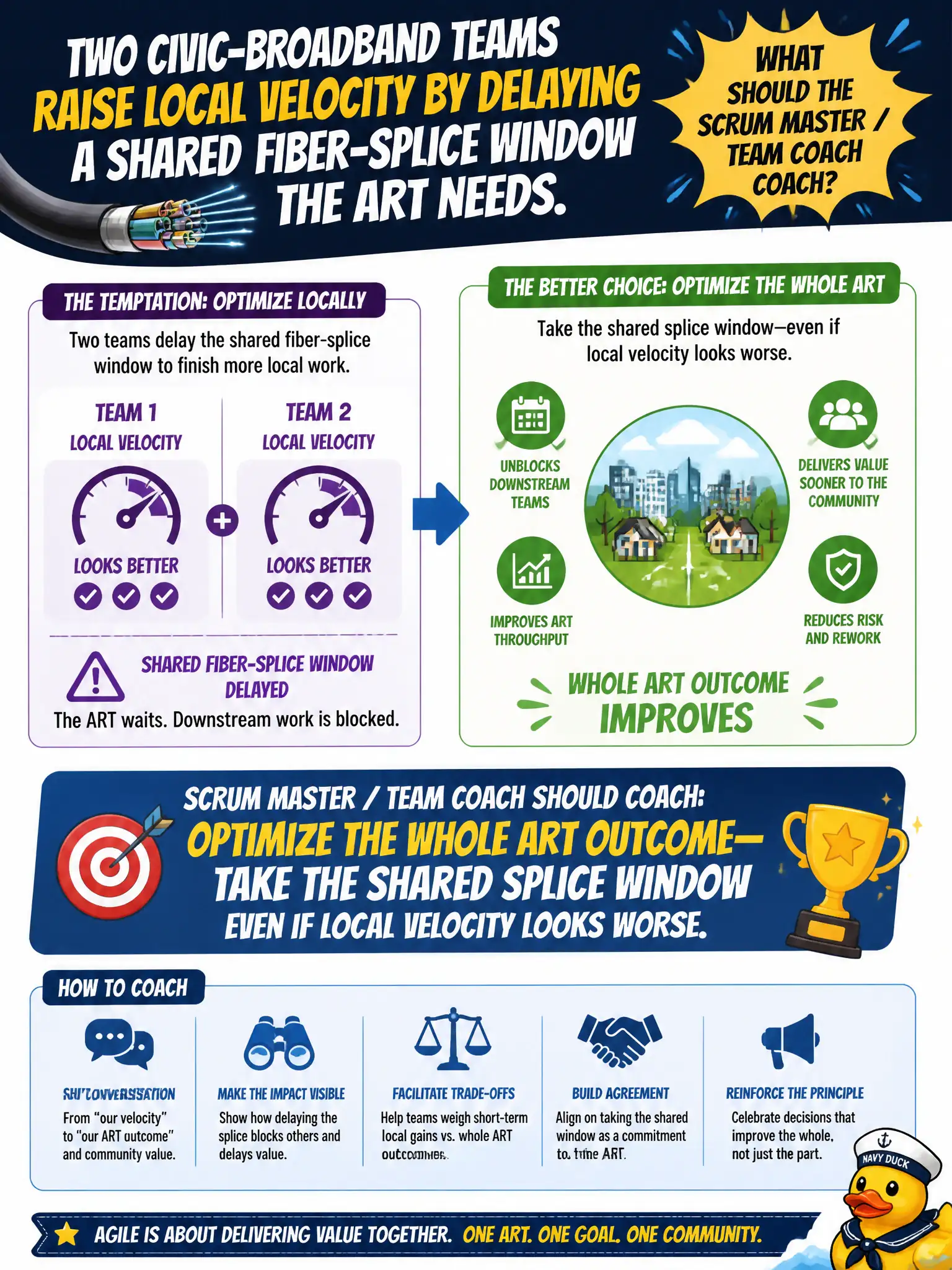
Two civic-broadband teams raise local velocity by delaying a shared fiber-splice window the ART needs. What should the Scrum Master / Team Coach coach?
Select an answer to reveal the explanation.
Short Explanation
Fast local velocity while the shared fiber splice waits is two crews paving their own block and never connecting the street. Residents get broadband when the whole slice works. Give up a pretty team chart for the splice the ART actually needs.
Full Explanation
When two civic-broadband teams raise local velocity by delaying a shared fiber-splice window the ART needs, the Scrum Master / Team Coach should coach optimizing the whole ART outcome—taking the shared splice window even if local velocity charts look worse. Local velocity that starves a shared enabler is suboptimization; residents get broadband only when the shared splice happens. Celebrating local velocity charts while treating the delayed splice as someone else's problem rewards the wrong scoreboard. Letting each team keep its own splice date so neither velocity dips preserves comfort and prolongs the ART blockage. Canceling the fiber work so both teams can close more local stories this iteration maximizes story count while abandoning the civic outcome that justified the train. Exam caveat: SASM performance and collaboration thinking favors ART-level outcomes over local velocity heroics; do not treat velocity as the reason to defer shared enabling work. Operational check: make the shared splice window and its ART impact visible on the planning board, facilitate a trade-off that protects the splice even if one team's velocity dips, confirm the window is staffed and completed, and show leadership the ART outcome (splice done) alongside any local metric movement. Revisit WIP policies that incentivize delaying shared civic infrastructure.