
Public-health immunization and school-nurse roster teams need to learn a shared data contract. How should they collaborate?
Select an answer to reveal the explanation.
Short Explanation
A joint spike is a lab period, not a semester with no final. Immunization and school-nurse data need a timebox and a question they will actually answer. Endless research or two teams guessing apart is how shot records miss the roster.
Full Explanation
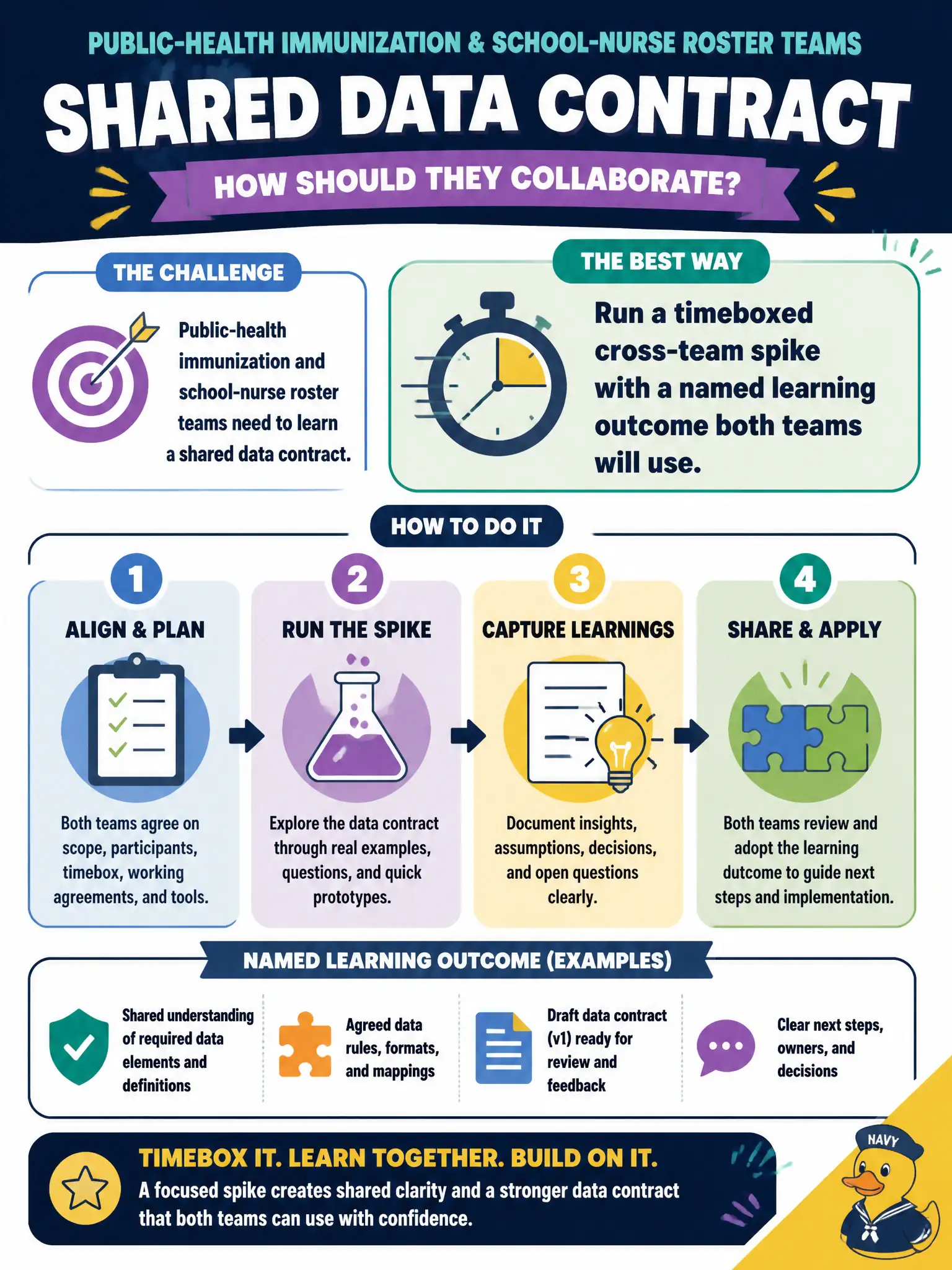
Public-health immunization and school-nurse roster teams that must learn a shared data contract should run a timeboxed cross-team spike with a named learning outcome both teams will use. Spikes create focused learning; without a timebox and a usable outcome, research becomes permanent WIP. An untimeboxed research epic that both teams work forever consumes capacity without forcing a decision residents can benefit from. Assigning the spike solely to the coach keeps teams on feature stories but removes the people who must implement and own the contract from the learning. Skipping the spike and letting each team guess the contract during their own iteration maximizes incompatible assumptions at integration. Exam caveat: SASM treats cross-team spikes as timeboxed learning with shared outcomes, not endless research, coach-only homework, or parallel guessing. Operational check: define the contract question, set a timebox (for example one or two days), name participants from both civic teams, publish the learning outcome and decision, and verify both backlogs adopt the contract in subsequent stories. If the spike fails to answer the question, schedule a follow-up timebox rather than converting it into an endless epic.