
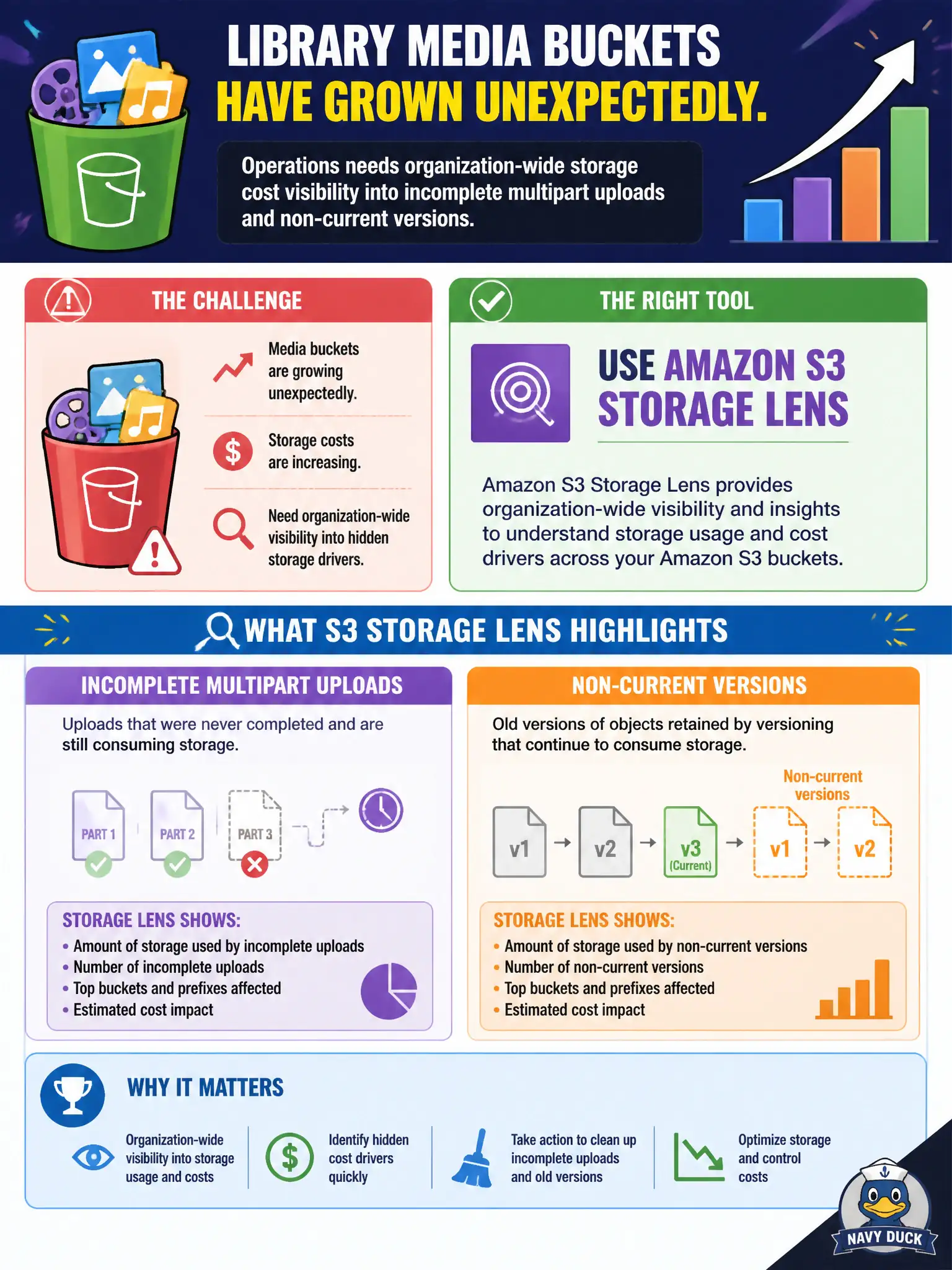
Library media buckets have grown unexpectedly. Operations needs organization-wide storage cost visibility into incomplete multipart uploads and non-current versions. Which tool fits?
Select an answer to reveal the explanation.
Short Explanation
Library video shelves get heavy from leftover boxes and old editions nobody shelved correctly. S3 Storage Lens is the inventory light that shows incomplete multipart uploads and non-current versions driving the bill.
Full Explanation
When library media buckets grow unexpectedly, operations needs organization-wide storage cost visibility into incomplete multipart uploads and non-current versions—exactly the findings Amazon S3 Storage Lens surfaces at prefix and account scale. Storage Lens metrics and recommendations highlight orphaned multipart parts and version sprawl so teams can add abort-incomplete-multipart lifecycle rules, expire non-current versions, and reclaim civic media storage spend without blindly deleting current objects citizens still need.
Disabling versioning metrics and ignoring multipart inventories permanently blinds the organization to two of the most common silent S3 cost drivers. Relying only on EC2 CPU charts cannot explain S3 bill growth because compute utilization is a different resource domain. Deleting CloudWatch entirely so storage KPIs are not collected removes observability rather than solving storage inflation.
Exam caveat: Storage Lens is the organization-scale S3 visibility tool; pair findings with lifecycle automation rather than one-off console cleanup. Operational check: enable Storage Lens with organization scope, open incomplete multipart and non-current version dashboards for the library OU, deploy lifecycle rules that abort stale multiparts and expire old versions, then verify bucket size and cost trends decline over the next billing cycle.