
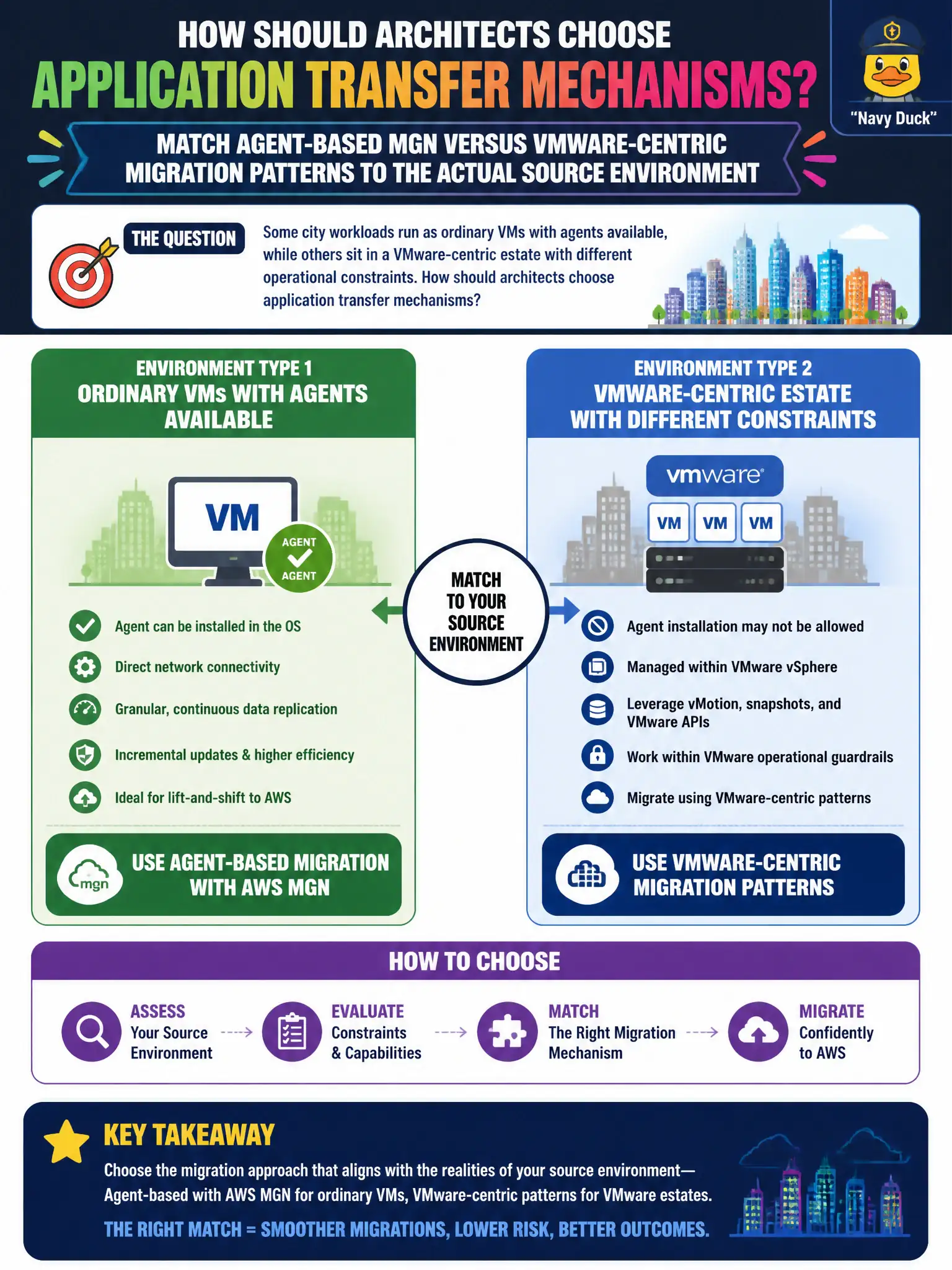
Some city workloads run as ordinary VMs with agents available, while others sit in a VMware-centric estate with different operational constraints. How should architects choose application transfer mechanisms?
Select an answer to reveal the explanation.
Short Explanation
You don't haul a piano the same way you haul a suitcase. Pick agent-based MGN or VMware-centric patterns based on what is actually running—not one hammer for every nail.
Full Explanation
When some city workloads run as ordinary VMs with agents available while others sit in a VMware-centric estate with different operational constraints, architects should match agent-based MGN versus VMware-centric migration patterns to the actual source environment rather than forcing one tool everywhere. That source-aware selection protects timelines for heterogeneous municipal estates. Forcing every workload onto the same transfer tool regardless of source platform fails fit and creates avoidable friction. Using only manual rebuilds for all systems to avoid evaluating source reality fails automation and timeline goals. Prohibiting MGN entirely because one VMware cluster exists somewhere in the county fails by letting a partial estate veto the right tool for agent-friendly VMs. Exam caveat: transfer mechanism selection follows source platform diversity. Operational check: inventory agent-eligible VMs versus VMware-constrained estates, assign MGN or VMware-centric patterns accordingly, pilot each pattern, and document exceptions in the migration playbook. Document the decision in the municipal architecture decision record and re-verify controls after the first production wave so auditors see continuous improvement, not one-time tribal knowledge.