
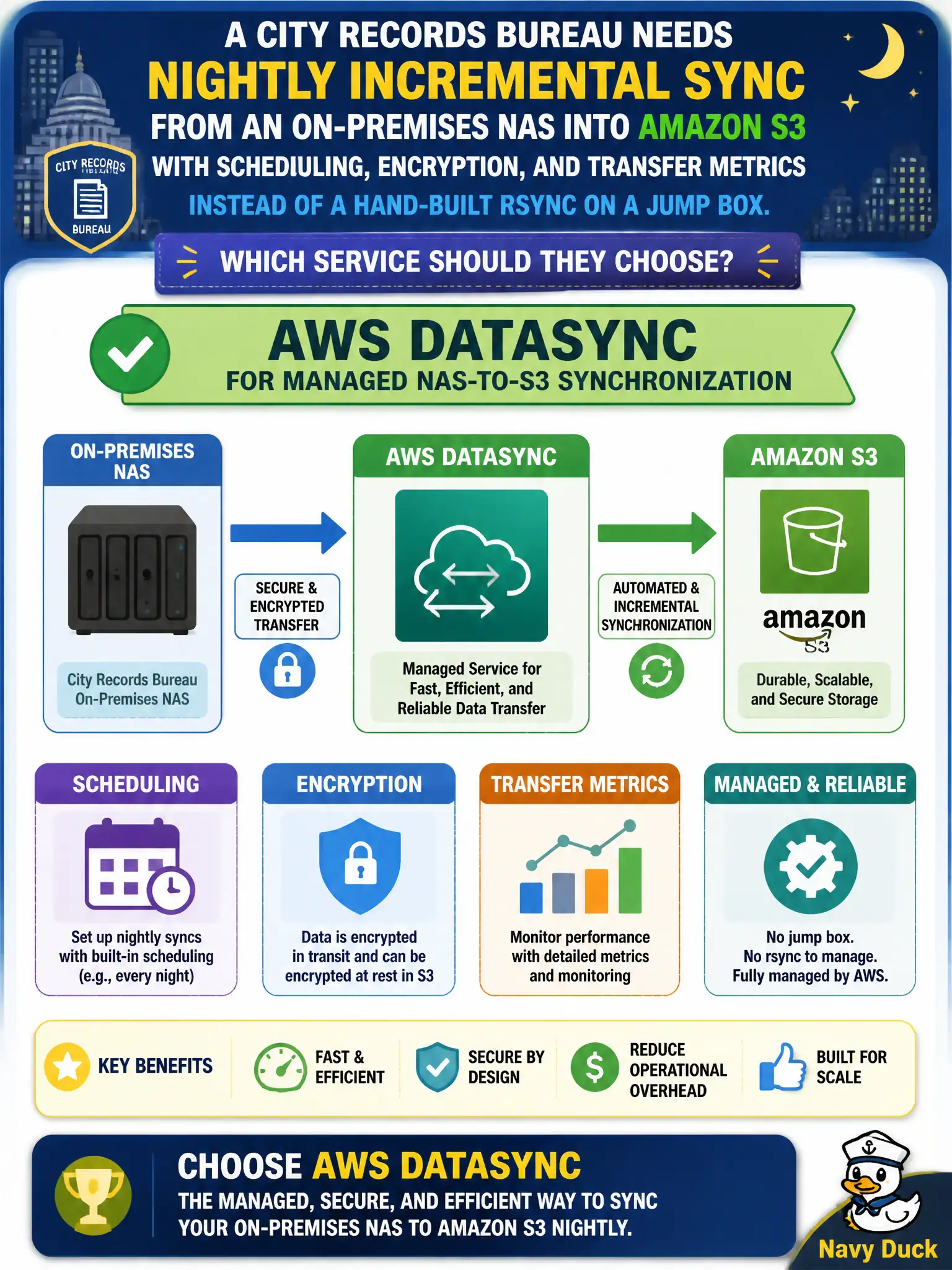
A city records bureau needs nightly incremental sync from an on-premises NAS into Amazon S3 with scheduling, encryption, and transfer metrics instead of a hand-built rsync on a jump box. Which service should they choose?
Select an answer to reveal the explanation.
Short Explanation
Homegrown rsync on a jump box is the duct-tape version of a moving company. DataSync is the managed nightly sync that schedules, encrypts, and reports without you babysitting scripts.
Full Explanation
A city records bureau that needs nightly incremental sync from an on-premises NAS into Amazon S3 with scheduling, encryption, and transfer metrics should choose AWS DataSync rather than hand-built rsync on a jump box. DataSync provides managed NAS-to-S3 synchronization with the operational controls municipal records programs expect, including bandwidth throttling and CloudWatch visibility. Amazon MQ with a custom FTP consumer on a single EC2 host fails as undifferentiated heavy lifting reinventing file transfer poorly for civic archives. AWS Glue crawlers pointed at the NAS SMB share as the primary copy engine fail conceptually: Glue crawlers catalog data sources; they are not the primary NAS file copy plane into object storage. Amazon CloudFront invalidation jobs to pull files from the NAS fail because invalidations manage CDN cache freshness, not NAS ingest into S3. Exam caveat: DataSync is the managed file and object sync service for NAS-to-S3 with scheduling and metrics. Operational check: deploy a DataSync agent near the NAS, configure NAS location and S3 destination with encryption, schedule nightly incrementals, alarm on task failures, review transfer metrics in the records operations dashboard, and retire the jump-box rsync cron after parallel validation succeeds.