
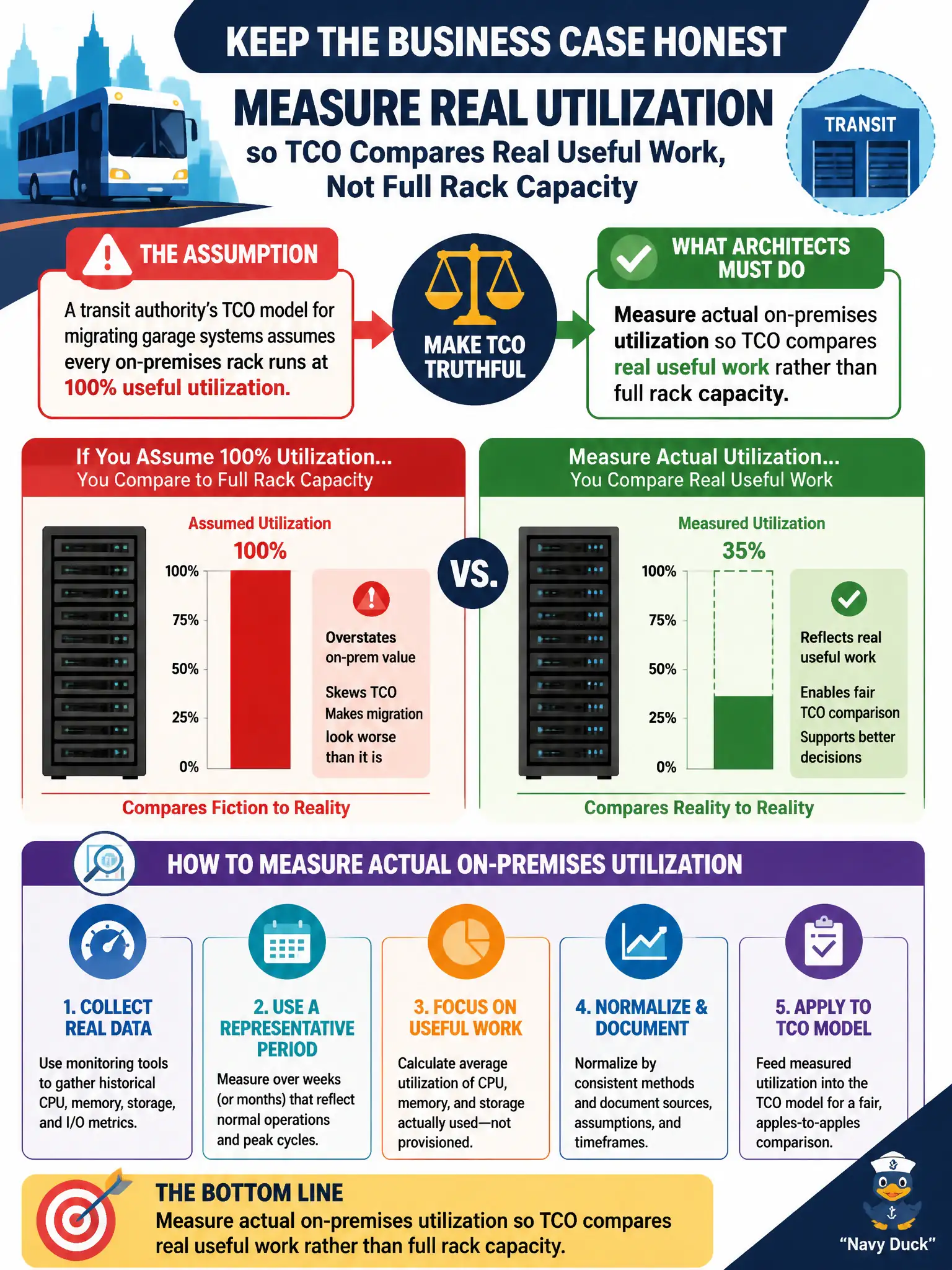
A transit authority's TCO model for migrating garage systems assumes every on-premises rack runs at 100% useful utilization. What must architects do during selection to keep the business case honest?
Select an answer to reveal the explanation.
Short Explanation
Comparing a half-empty parking garage to a full lot will lie about savings. Measure real utilization on those racks so TCO reflects useful work, not fantasy 100% busy hardware.
Full Explanation
A transit authority TCO model that assumes every on-premises rack runs at 100% useful utilization will overstate cloud savings and mislead selection. Architects must measure actual on-premises utilization so TCO compares real useful work rather than full rack capacity, keeping the business case honest for board approval. Multiplying nameplate rack watts by three to inflate cloud savings artificially fails ethics and analysis and will not survive audit. Ignoring on-premises measurements and using only AWS Pricing Calculator list rates fails because one-sided cloud list prices without on-prem reality cannot compare alternatives fairly. Assuming reserved capacity on-premises equals continuous 100% productive work fails the same utilization honesty problem the stem highlights and recreates the flawed model. Exam caveat: honest migration TCO uses measured utilization, not nameplate or 100% assumptions. Operational check: collect CPU, storage, and power utilization samples across garage systems over representative periods, feed real useful capacity into the model, sensitivity-test utilization bands, and present both raw and adjusted savings to the transit board with assumptions documented.