
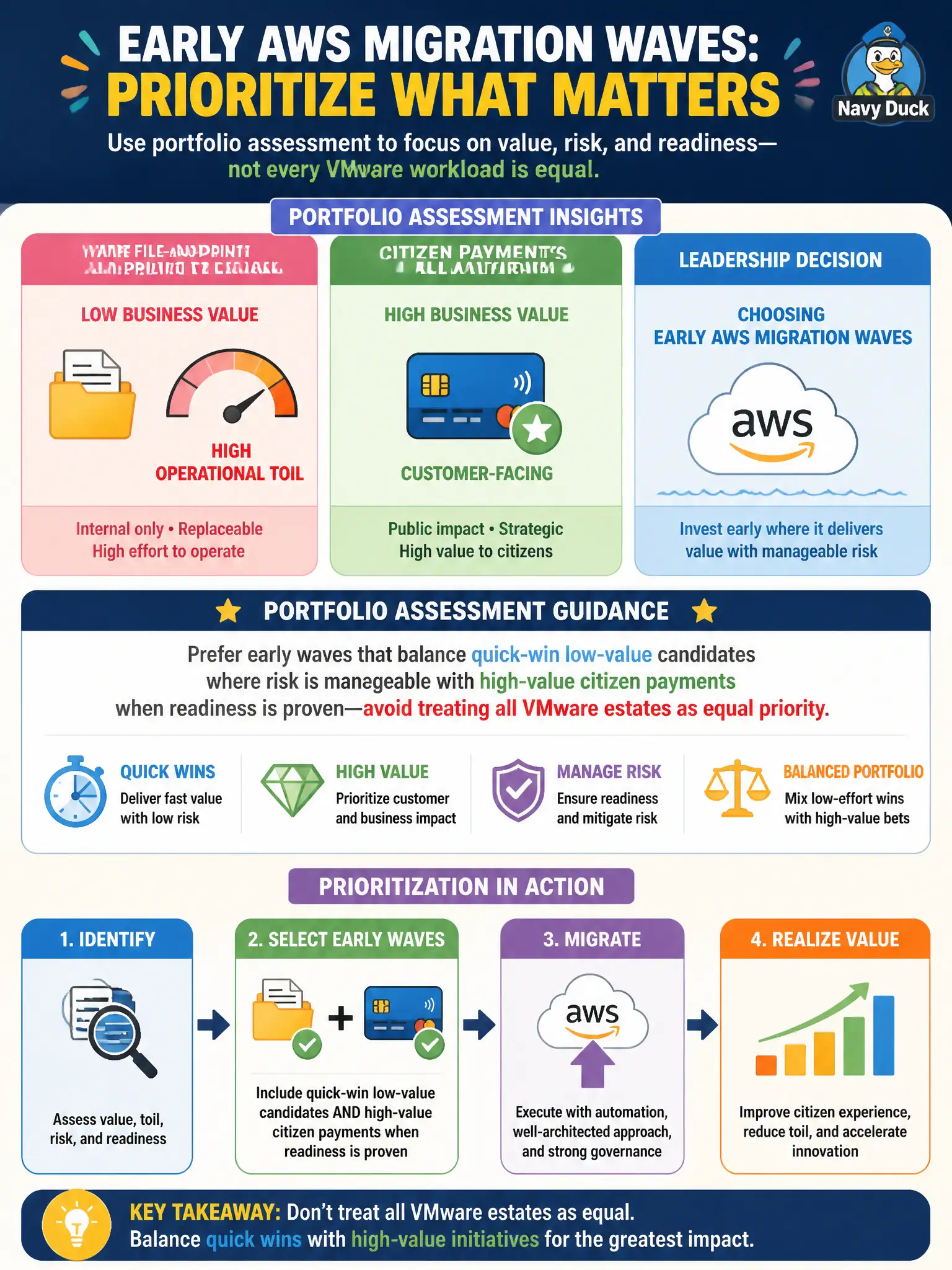
A county portfolio assessment ranks a VMware file-and-print stack as low business value with high operational toil, while the citizen payments platform is high value and customer-facing. Leadership is choosing early AWS migration waves. Which prioritization best reflects portfolio assessment guidance?
Select an answer to reveal the explanation.
Short Explanation
Portfolio assessment is a value-and-readiness sort, not an alphabetical parade. File-and-print may be an easy early win; citizen payments is high value but needs readiness. Don’t start with air-gapped OT just because the user count looks small.
Full Explanation
County portfolio assessment for early AWS migration waves should reflect business value and risk together, not treat every VMware estate as equal priority. Prefer early waves that balance quick-win low-value candidates where risk is manageable—such as a low-value file-and-print stack with high operational toil—with high-value citizen payments when readiness is proven. That sequencing builds municipal migration muscle while protecting the customer-facing payments platform until readiness criteria pass. Migrating the air-gapped OT historian first because it has the fewest users fails conceptually: OT historians often carry safety, isolation, and compliance constraints that make them poor early-wave candidates despite small user counts. Migrating every application alphabetically regardless of business value or technical readiness fails as portfolio guidance—alphabet is not a risk or value model. Deferring all assessments and lifting the entire datacenter in one cutover weekend fails by abandoning wave planning and concentrating civic outage risk. Exam caveat: 7Rs and portfolio questions reward balanced quick wins plus readiness-gated high-value moves, not 'fewest users first' or big-bang lifts. Operational check: score value, risk, and readiness; place manageable low-value toil apps in early waves; gate citizen payments on dependency and DR readiness; publish the wave board to the CIO; and refuse alphabetical or single-weekend megacutovers.