
Architects modeling a new permitting stack find chatty application tiers talking constantly to a database and several AWS APIs. Which design choice most directly reduces data-transfer and NAT charges?
Select an answer to reveal the explanation.
Short Explanation
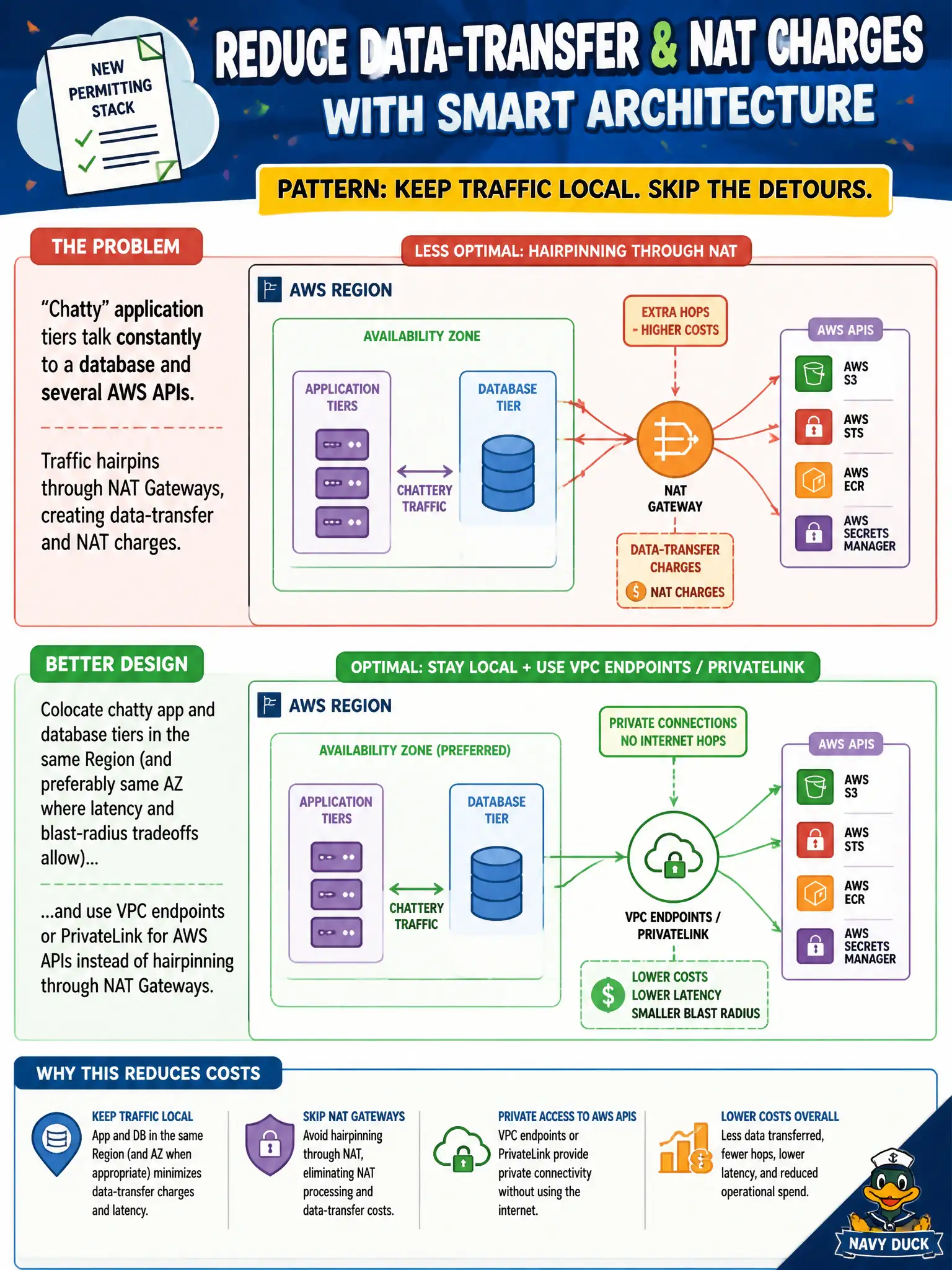
Chatty neighbors should live on the same block—same Region/AZ when you can—and talk to AWS APIs through endpoints, not a tollbooth NAT. Cross-Region gossip and public DB endpoints are how transfer bills (and auditors) get loud.
Full Explanation
Chatty n-tier permitting stacks generate transfer and NAT charges when application tiers, databases, and AWS API calls take expensive paths. Colocating chatty app and database tiers in the same Region—and preferably the same AZ when latency and blast-radius tradeoffs allow—keeps most conversation on cheap local paths. Gateway and interface VPC endpoints (PrivateLink) send S3, DynamoDB, and other AWS API traffic over the Amazon network instead of hairpinning through NAT Gateways, cutting data-processing charges and often improving privacy posture. Forcing every database query across Regions for unneeded geo diversity fails because cross-Region transfer premiums accumulate on every chatty call when RTO does not require active multi-Region traffic. Sending all private-subnet AWS API calls only through a public NAT Gateway without endpoints fails by design: NAT meters processing on traffic that VPC endpoints could keep private and cheaper. Mirroring the production database to the internet with public IPs fails conceptually on security and governance grounds and does not solve VPC transfer economics—it expands attack surface while bypassing controls. Exam caveat: same-AZ placement reduces transfer and latency but concentrates blast radius; multi-AZ remains appropriate for HA even if it incurs some cross-AZ charges—optimize chatty pairs without abandoning resilience requirements. Operational check: map top talkers with VPC Flow Logs or service metrics, enable needed interface/gateway endpoints, compare NAT Gateway ProcessedBytes before and after, and confirm app-to-DB latency under the colocated design during peak permit filing hours.