
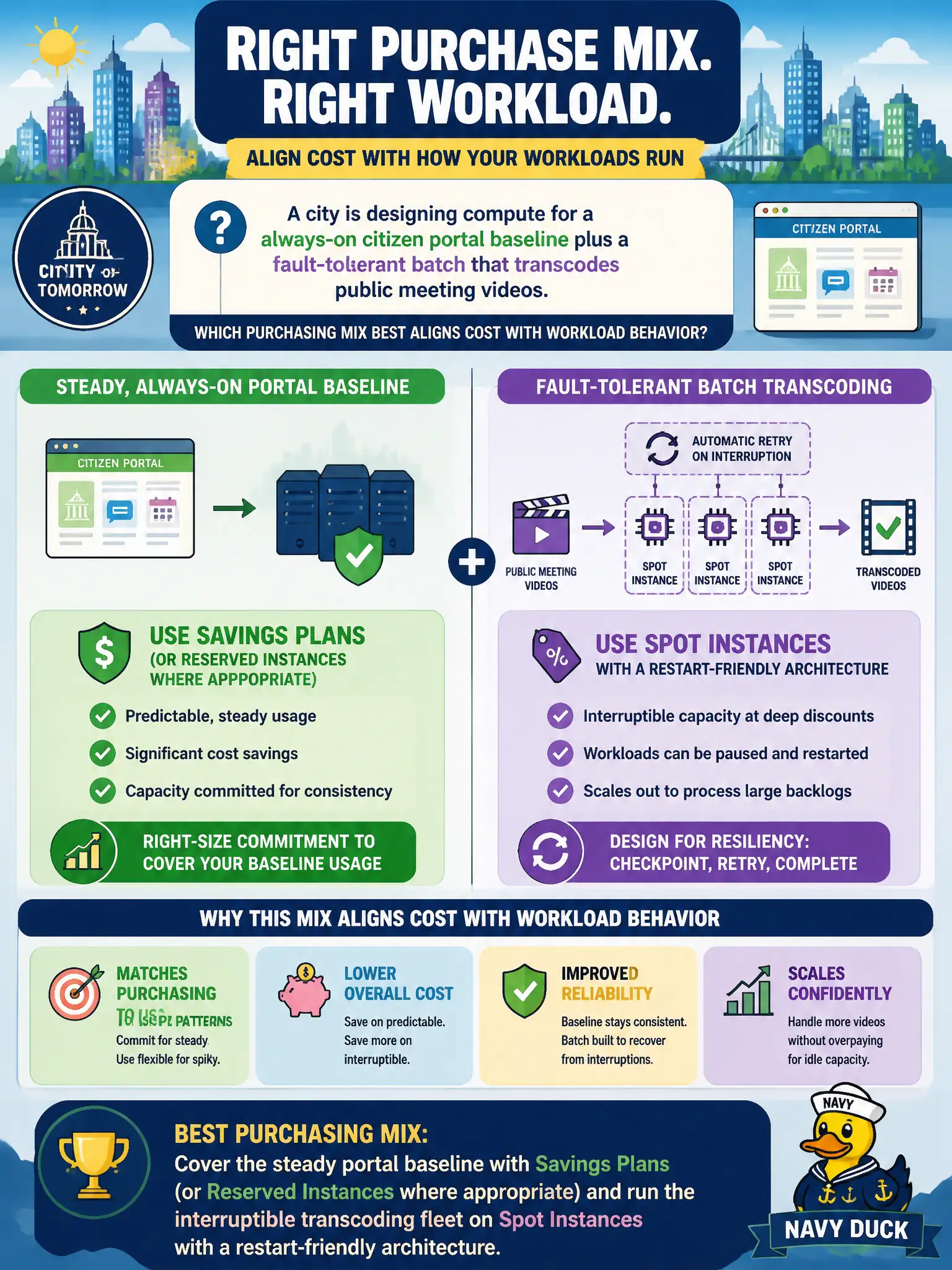
A city is designing compute for a always-on citizen portal baseline plus a fault-tolerant batch that transcodes public meeting videos. Which purchasing mix best aligns cost with workload behavior?
Select an answer to reveal the explanation.
Short Explanation
Steady lights-on portal hours love Savings Plans; flaky-but-restartable video jobs love Spot. Locking RIs onto a weekend-only transcoder—or putting the whole citizen site on naked Spot—is the expensive (or embarrassing) mix-up.
Full Explanation
Aligning purchase instruments to workload shape lowers unit cost without sacrificing citizen-facing availability. A steady always-on portal baseline is a natural fit for Savings Plans or Reserved Instances because predictable continuous hours convert commitment discounts into real TCO reduction. Interruptible public-meeting video transcoding fits Spot when the pipeline checkpoints, retries, and tolerates reclamation, which is the economic purpose of Spot for fault-tolerant batch. Buying three-year All Upfront Reserved Instances for a sparse nightly transcoder fails because commitment value collapses when capacity sits idle most of the month—you prepay for unused hours. Running both portal and transcoding exclusively On-Demand with no Spot ignores known baseline hours and forgoes legitimate discounts the city could lock for continuous portal capacity. Placing the citizen portal only on Spot without capacity backups fails conceptually because interruption becomes an availability outage for public users, violating municipal uptime expectations. Exam caveat: Savings Plans cover eligible usage flexibly across instance families more than classic RIs in many designs, but Spot still requires architecture that survives reclamation—commitment and Spot are complements, not substitutes for HA. Operational check: separate Cost Explorer by portal vs transcoder tags, confirm portal baseline hours before buying a Savings Plan coverage target, and verify transcoder jobs resume from checkpoints after a Spot interruption drill.