
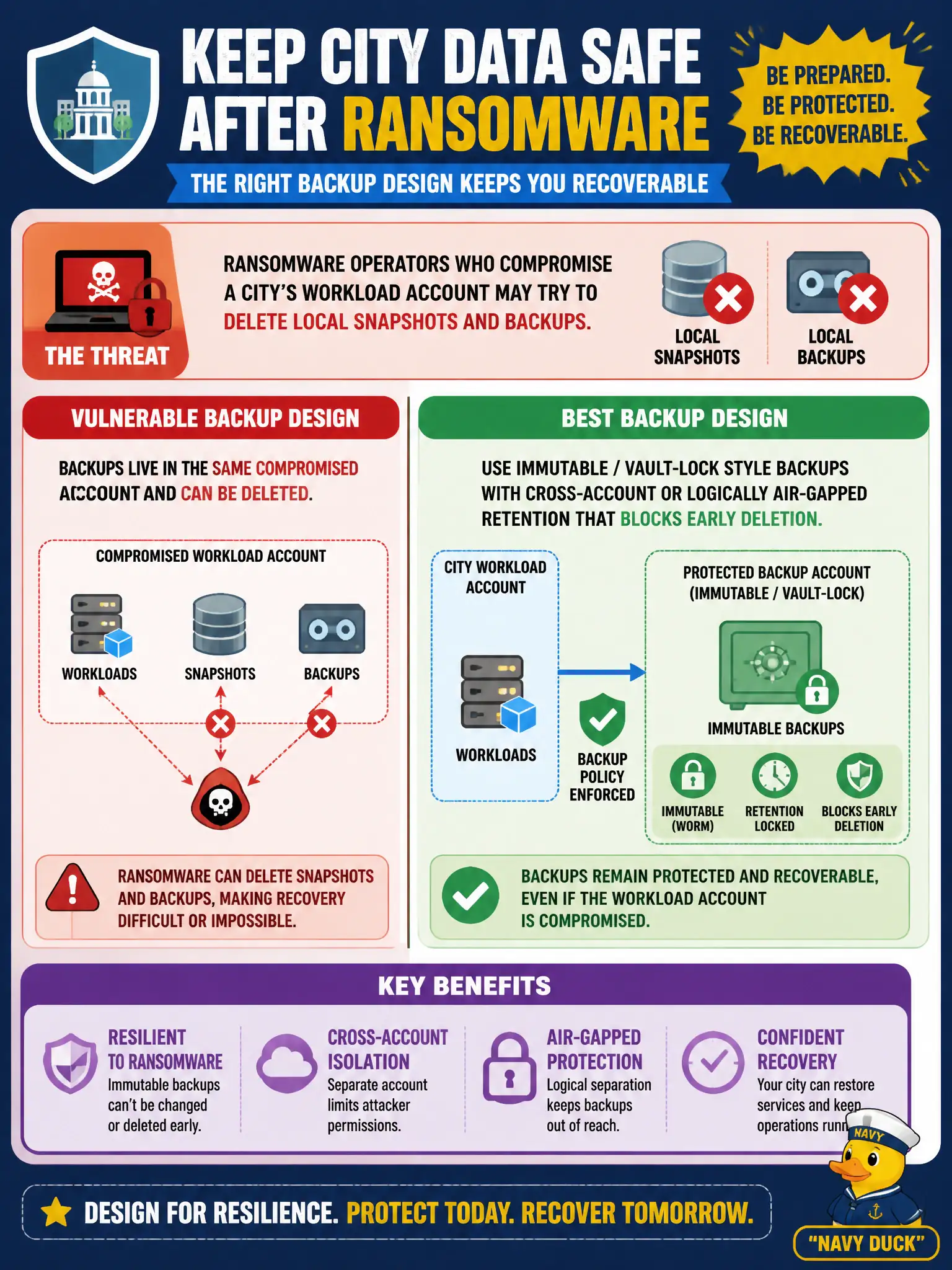
Ransomware operators who compromise a city's workload account may try to delete local snapshots and backups. Which backup design best keeps archives recoverable after that pattern?
Select an answer to reveal the explanation.
Short Explanation
If the burglars get the building keys, ordinary snapshots in that same building can vanish. Immutable vault locks—and ideally a copy the attackers cannot erase—keep the archive recoverable.
Full Explanation
Ransomware that compromises a city's workload account often tries to delete local snapshots and backups, so recovery copies must resist early deletion. Immutable or vault-lock backups such as AWS Backup Vault Lock, preferably with cross-account or logically air-gapped retention, block premature deletion even when ordinary operator roles are abused. Snapshots only in the same compromised account with unrestricted delete rights stay inside the blast radius. Disabling backups to reduce attacker targets abandons recoverability. Nightly dumps emailed to a shared mailbox fail confidentiality, integrity, and reliable restore. Exam caveat: vault lock timing and mode matter—test deny-delete before relying on ransomware narratives. Operational check: place critical backups in a locked vault or secondary account, attempt deletion with a normal workload role, confirm denial, and restore a sample to a clean account. In municipal cloud governance, record the owners, success metrics, and rollback or restore contacts beside this technical choice so the next incident, budget review, or audit does not rediscover the decision from scratch under time pressure. In municipal cloud governance, record the owners, success metrics, and rollback or restore contacts beside this technical choice so the next incident, budget review, or audit does not rediscover the decision from scratch under time pressure.