
A city wants monthly showback so each municipal department sees its own AWS spend by application tag rather than a single opaque IT bill. Which approach best investigates Cost and Usage Reports at a granular level for that showback?
Select an answer to reveal the explanation.
Short Explanation
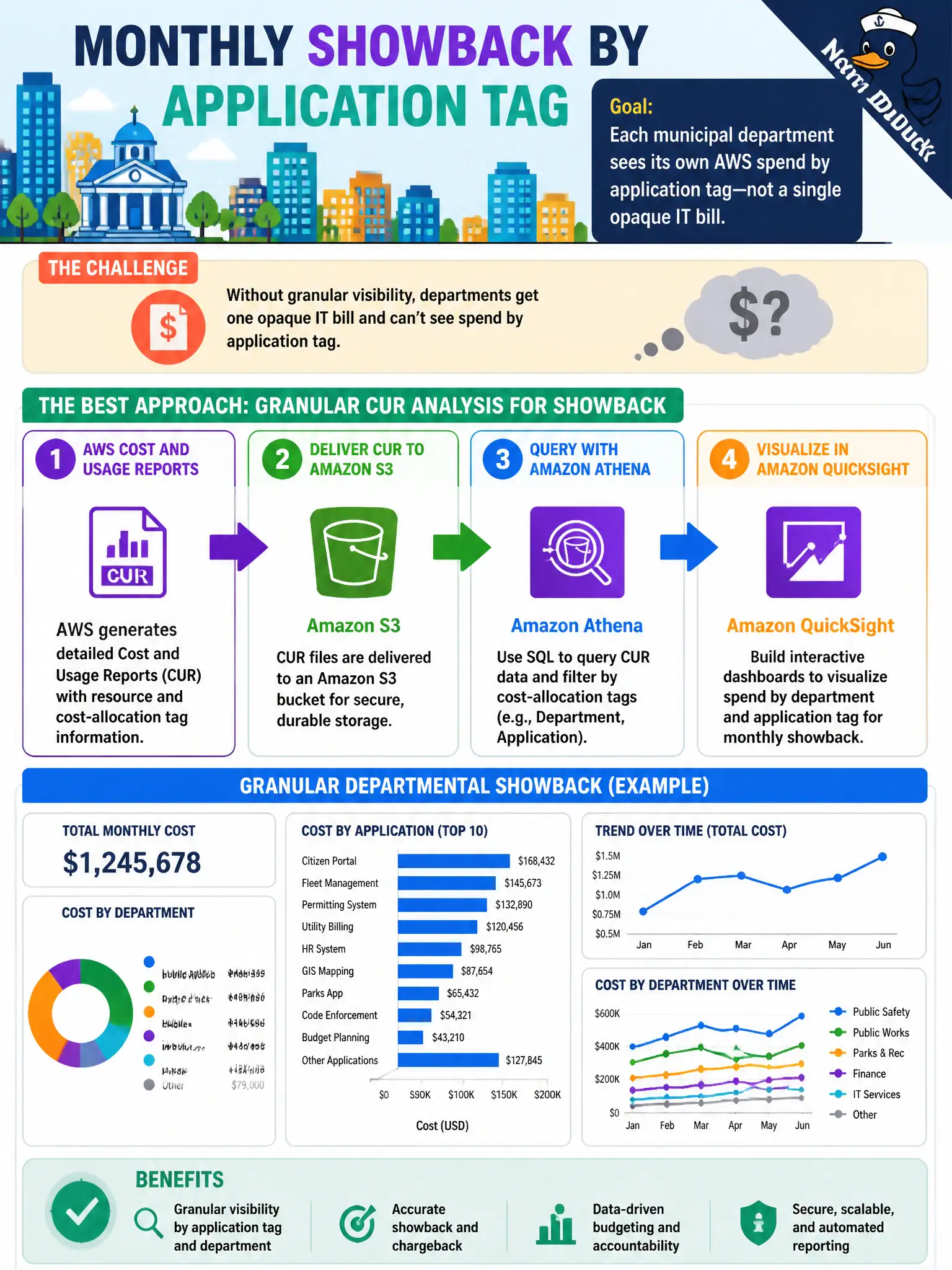
Dump CUR to S3, let Athena slice by the department tag, and put QuickSight on top—that’s municipal showback you can defend in a council meeting. A payer homepage screenshot teaches nobody which app burned the budget.
Full Explanation
Municipal showback only works when each department can see its own AWS spend by application tag instead of an opaque IT bill. The granular investigation pattern is to deliver Cost and Usage Reports to Amazon S3, query tagged line items with Amazon Athena filtered by cost-allocation tags, and visualize departmental showback in Amazon QuickSight so council and department heads can defend or challenge spend with evidence. That stack turns CUR into an auditable civic ledger. Emailing each department a screenshot of the payer-account AWS billing home page without tags fails because a payer homepage lacks tag dimensions and teaches nobody which application burned the budget. Disabling cost-allocation tags so CUR rows stay smaller and easier to read in Excel fails on concept: removing tags destroys allocation fidelity and makes showback impossible even if files are smaller. Using only On-Demand Capacity Reservation counts as the departmental chargeback metric fails because reservation counts are a capacity construct, not a complete map of departmental service spend across storage, networking, and managed services. Exam caveat: SAP-C02 FinOps items expect the CUR→S3→Athena→QuickSight pattern for granular allocation; screenshots and single metrics are distractors. Operational check: activate cost-allocation tags for CostCenter and Application, verify they appear in CUR, schedule Athena queries and QuickSight dashboards per department, publish monthly showback packets, and track untagged residual until it is small enough for finance policy.