
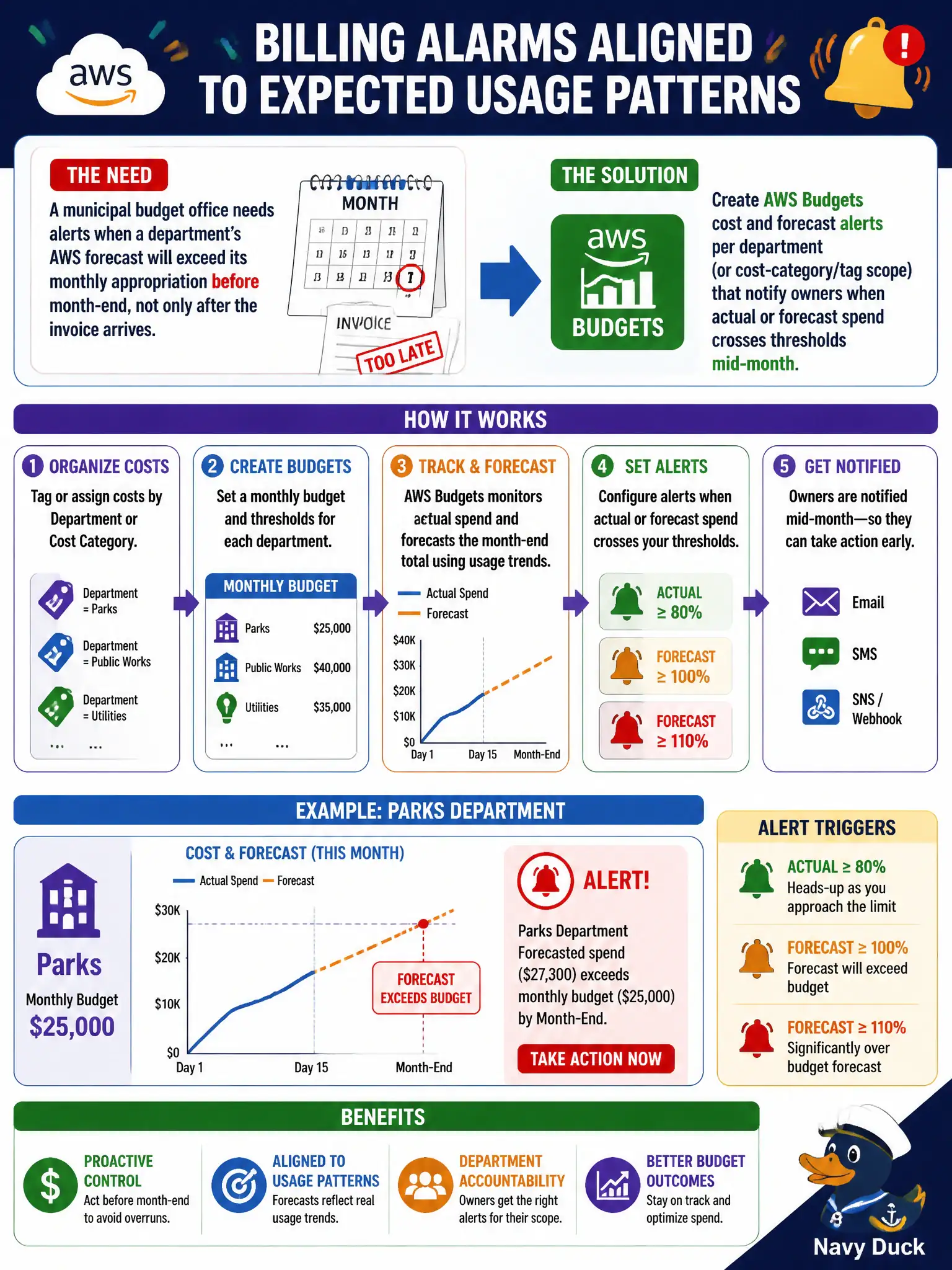
A municipal budget office needs alerts when a department’s AWS forecast will exceed its monthly appropriation before month-end, not only after the invoice arrives. Which design best implements billing alarms aligned to expected usage patterns?
Select an answer to reveal the explanation.
Short Explanation
Budgets with forecast alerts are the early-warning siren for a department burning cash mid-month. You want the page before the invoice, scoped by tag or cost category. Flow Logs and blanket RunInstances denials are not a FinOps forecast.
Full Explanation
A municipal budget office that must learn mid-month when a department's AWS forecast will exceed its monthly appropriation needs billing alarms aligned to expected usage, not a post-invoice autopsy. AWS Budgets cost and forecast alerts scoped per department, cost category, or cost-allocation tags notify owners when actual or forecast spend crosses thresholds before month-end, giving civic finance time to throttle sandboxes, postpone noncritical launches, or reallocate. That design matches appropriation control to cloud elasticity. Waiting for the consolidated monthly invoice and opening a ticket only if the total exceeds the annual capital plan fails because the signal arrives after spend has already occurred and annual capital thresholds are the wrong granularity for monthly department appropriations. Turning on detailed CloudWatch Logs Insights queries for every VPC Flow Log as a substitute for cost forecasting fails conceptually: flow logs explain network traffic, not forecasted dollar burn against budgets. Applying a Service Control Policy that denies all RunInstances whenever any OU is over budget fails as an alerting design—it is a hazardous hard stop that can freeze citizen services without the graduated FinOps workflow of notify, investigate, and remediate. Exam caveat: distinguish preventive budget alerts from punitive org-wide compute denials; exams often bait 'stop everything with SCP' as cost control. Operational check: create Budgets per department tag or cost category with actual and forecast thresholds, route SNS or email to department owners and the budget office, rehearse a mid-month response runbook, and confirm alerts fire in a test account before relying on them for appropriation season.