
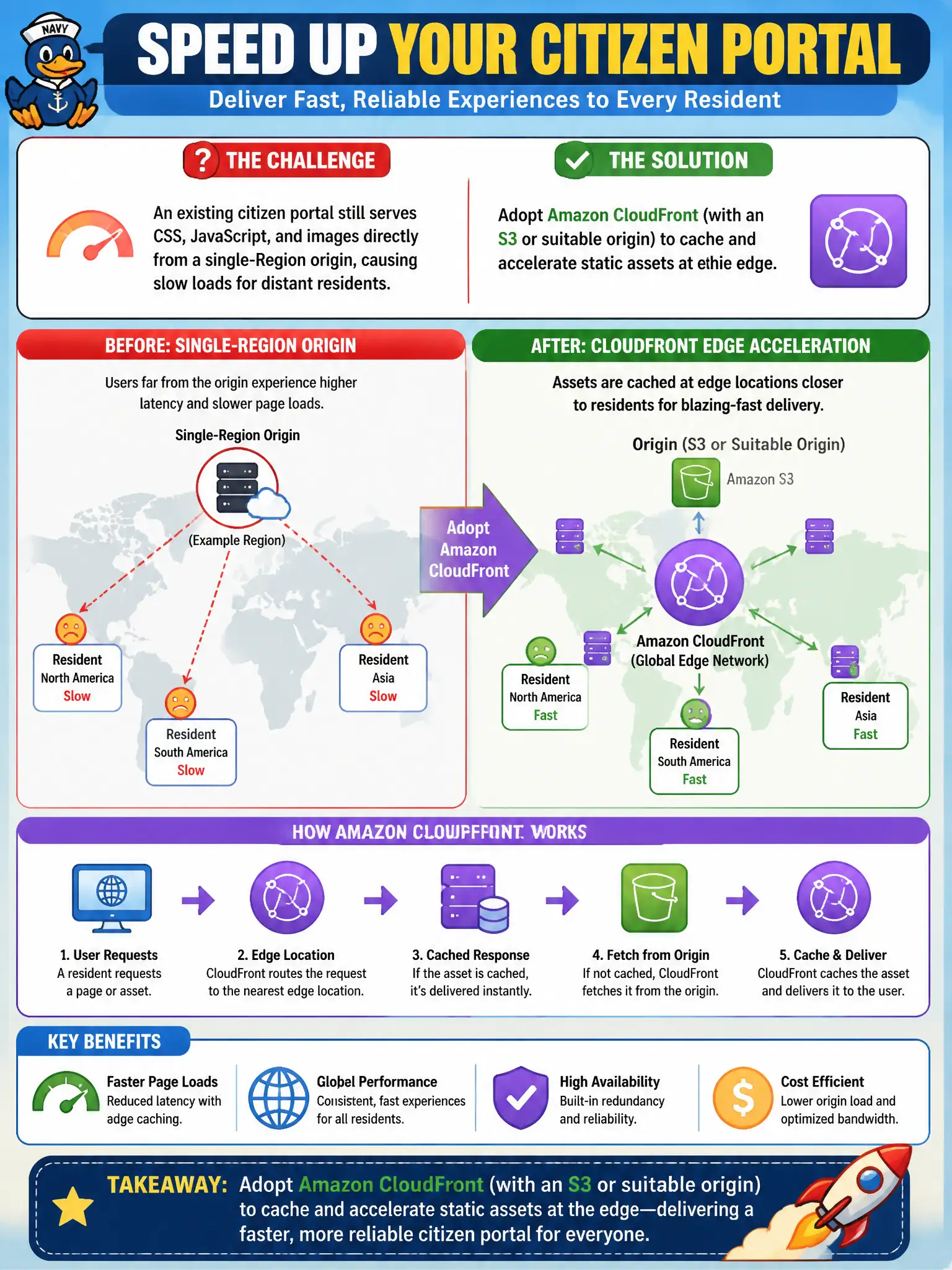
An existing citizen portal still serves CSS, JavaScript, and images directly from a single-Region origin, causing slow loads for distant residents. Which managed performance adoption should architects propose?
Select an answer to reveal the explanation.
Short Explanation
Hauling every stylesheet from one Region origin is like mailing library books from a single warehouse for every request. CloudFront parks copies at the edge so phones stop waiting on cross-country hops. Static assets love CDNs; give them one.
Full Explanation
An existing citizen portal that still serves CSS, JavaScript, and images directly from a single-Region origin forces distant residents through long round trips. Adopting Amazon CloudFront with an S3 or suitable origin caches and accelerates static assets at the edge, improving perceived performance nationally without rewriting the app tier. That managed adoption works because static assets are highly cacheable and dominate mobile page weight for civic portals. Moving all static assets onto a single on-premises file server closer to city hall only fails remote residents and concentrates a SPOF. Disabling HTTP caching headers and forcing every asset to revalidate on the origin fails conceptually by maximizing origin load and latency. Terminating TLS on each resident’s browser using self-signed certificates fails trust and does not create an edge cache. Exam caveat: set cache policies carefully for HTML versus versioned static assets; HTML often needs shorter TTL or versioned references to avoid sticky deploys. Operational check: place versioned static assets on S3 behind CloudFront, measure p95 asset load time for distant synthetic clients before/after, and document invalidation or versioning ownership for releases.