
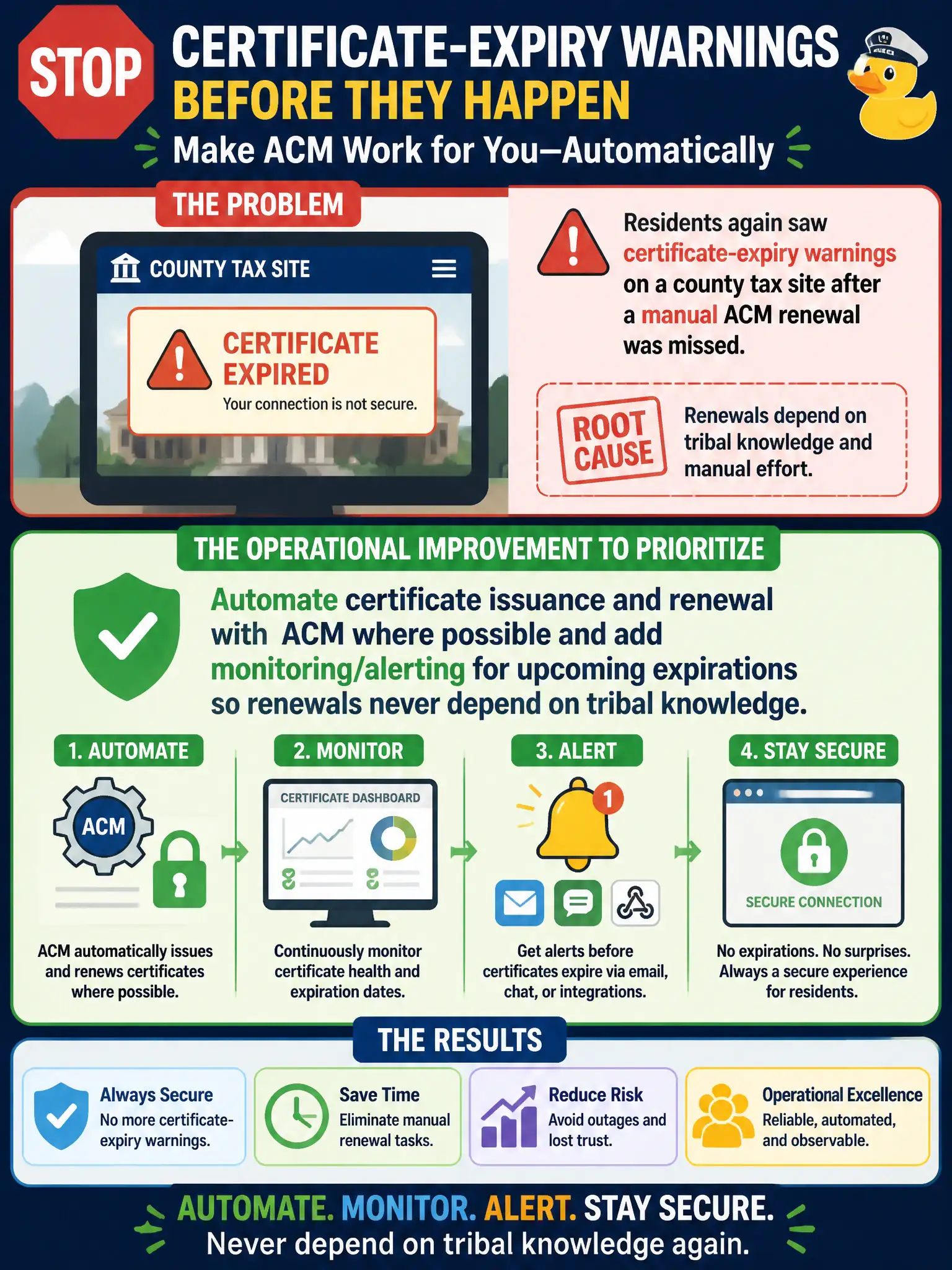
Residents again saw certificate-expiry warnings on a county tax site after a manual ACM renewal was missed. Which operational improvement should the team prioritize?
Select an answer to reveal the explanation.
Short Explanation
Missed cert renewals are the classic sticky-note-on-the-fridge failure—until the fridge dies. ACM auto-renewal plus expiry alarms turns toil into a machine job. Residents should never be the ones who notice the padlock broke.
Full Explanation
Residents seeing certificate-expiry warnings on a county tax site after a missed manual ACM renewal is a preventable operational failure. Automating certificate issuance and renewal with ACM where possible, plus monitoring and alerting for upcoming expirations, removes dependence on tribal knowledge and calendar volunteers. That improvement works because TLS continuity for public civic sites should be a machine-enforced lifecycle, not a quarterly wiki chore. Documenting renewal in a wiki with a rotating volunteer checking calendar reminders fails when humans miss the window—as already demonstrated. Disabling HTTPS during renewal windows fails conceptually by replacing a warning with an insecure public tax site. Purchasing multi-year third-party certificates and installing them by hand on every ALB without monitoring fails as manual toil without expiry telemetry. Exam caveat: ACM automation covers integrated AWS listeners well; third-party or imported certs still need explicit expiry alarms—do not assume every certificate path is fully hands-free. Operational check: inventory listeners and certificate ARNs, enable ACM renewal where eligible, create expiry alarms at 30/14/7 days, test alarm routing, and remove the volunteer calendar as the primary control.