
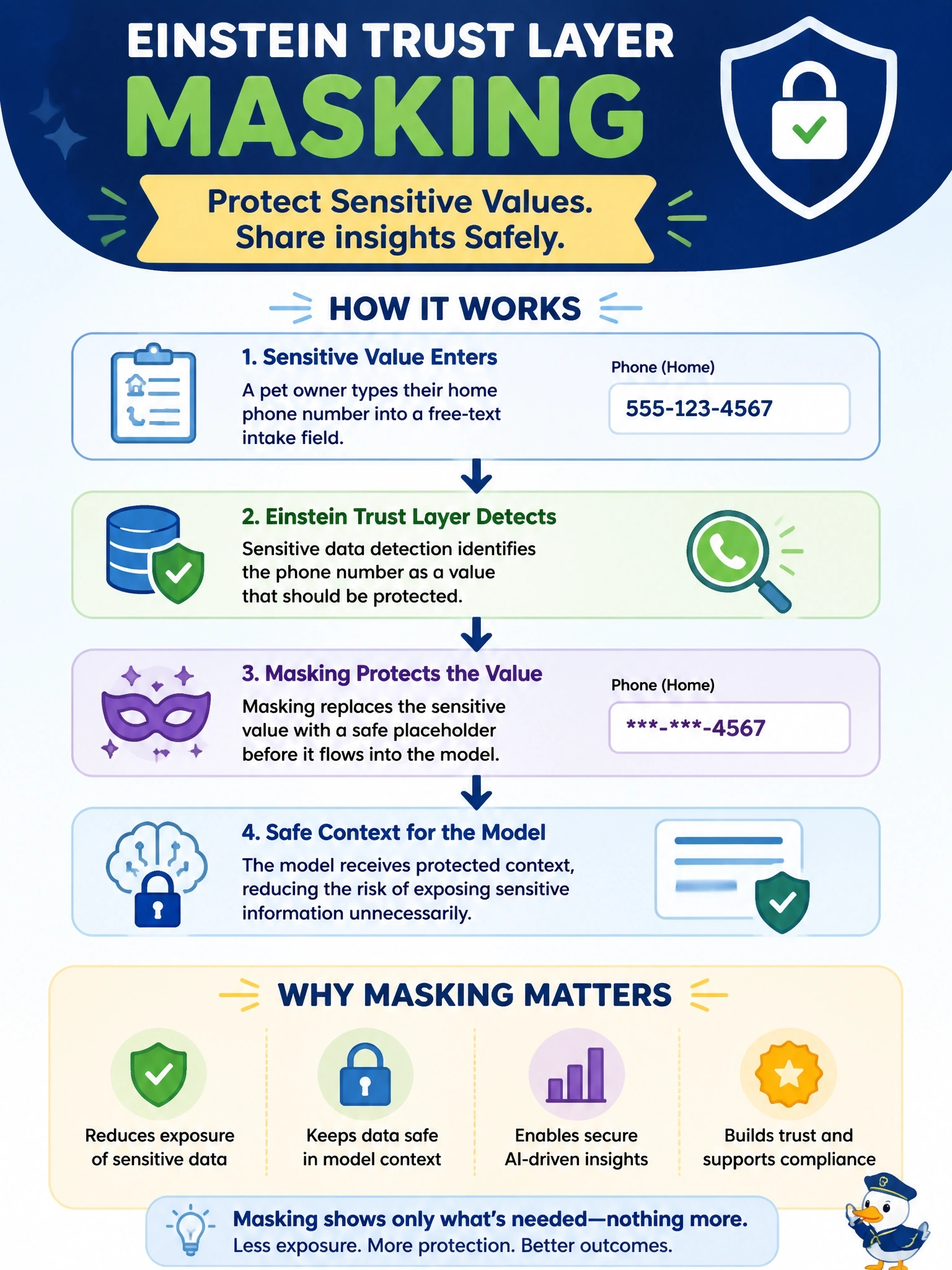
A pet owner's request to a prompt template includes their home phone number typed directly into a free-text intake field, which then flows into the model as part of the grounding context. Which Einstein Trust Layer capability is specifically designed to reduce the risk of that sensitive value being exposed unnecessarily?
Select an answer to reveal the explanation.
Short Explanation
Masking is the Trust Layer feature built specifically to detect and obscure sensitive values like phone numbers before they're sent along, which is exactly the risk in this scenario.
Full Explanation
The correct answer is masking, which is the Trust Layer capability specifically built to detect categories of sensitive information - such as a phone number appearing in free text - and obscure it before it is sent to or returned from the underlying model, directly addressing the exposure risk described. Toxicity detection is a different Trust Layer capability focused on identifying harmful, abusive, or inappropriate language in prompts or responses, which is unrelated to protecting a sensitive data value like a phone number. Zero data retention refers to the Trust Layer's guarantee that prompt and response data isn't retained by the underlying LLM provider beyond what's needed to service the request - it's about retention policy, not about actively detecting and obscuring sensitive values within the content itself. The audit trail is a logging and review capability that records prompt/response activity for compliance purposes; it documents what happened, but it does not prevent or reduce the exposure of a sensitive value in the first place. The exam-relevant mapping to remember is: masking protects specific sensitive values in content, toxicity detection screens for harmful language, zero retention governs data persistence, and the audit trail supports after-the-fact review.