
A prompt author wants a lab-result follow-up template to consistently avoid stating a diagnosis, even when the grounded lab values look clearly abnormal. Which instruction-writing practice best achieves this?
Select an answer to reveal the explanation.
Short Explanation
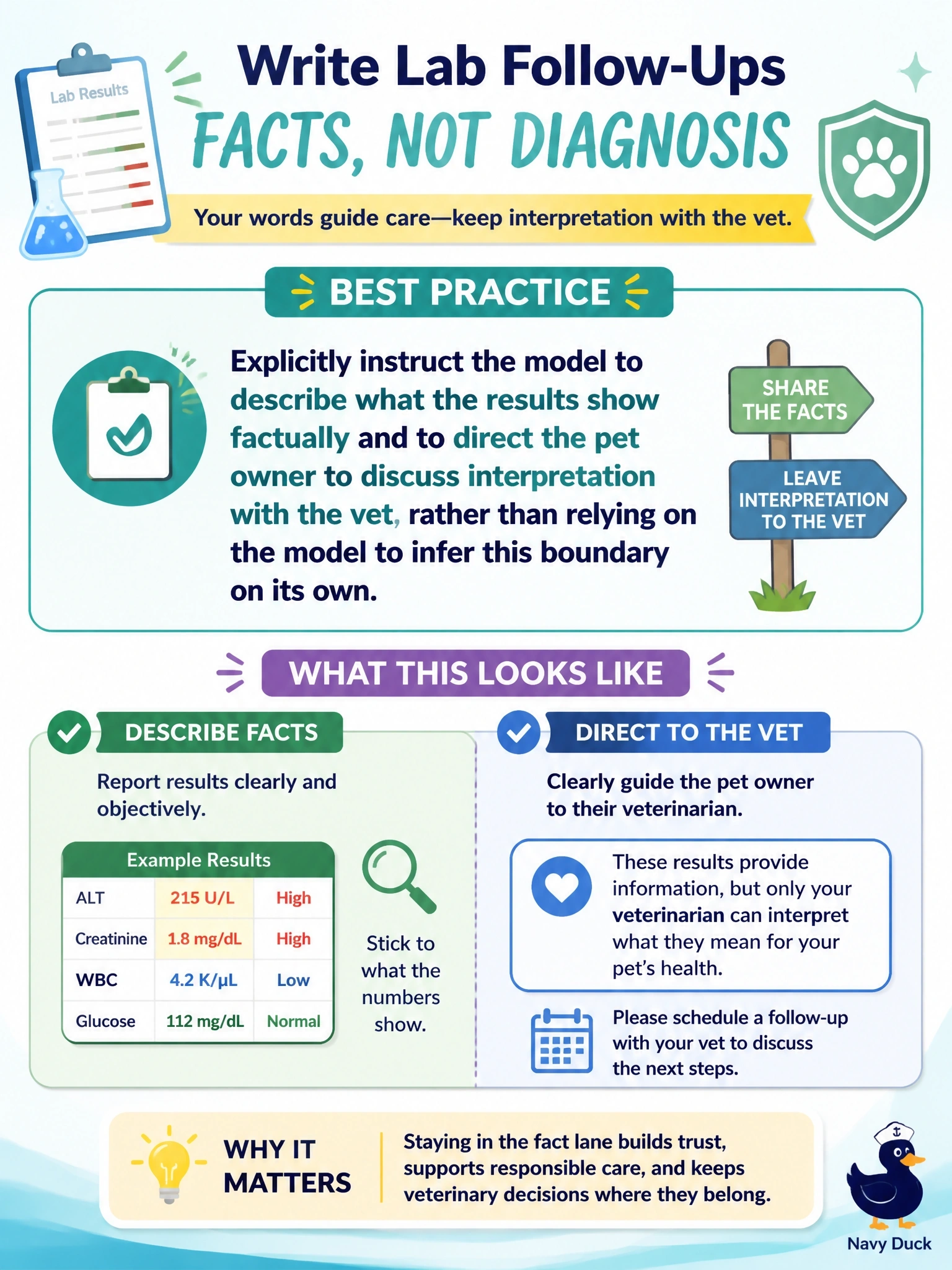
You can make the boundary reliable by stating it directly: describe the results factually, avoid diagnosing, and send interpretation to the vet. Explicit instructions shape the response better than hoping the model will infer the limit on its own.
Full Explanation
The instruction to describe the results factually and direct the pet owner to discuss interpretation with the vet is correct because it tells the model both what to do and where its role ends. Explicitly stating the boundary is more reliable than expecting the model to infer it, even when grounded lab values look abnormal. Omitting the abnormal lab values from grounding removes information the follow-up is meant to convey; it does not teach the model how to discuss those results without diagnosing. Trusting that the model will naturally avoid diagnosis leaves the boundary unstated, so the response may not consistently follow the desired practice. Adding a disclaimer only at the end does not shape the body of the response, which could still state or imply a diagnosis; a closing disclaimer is not a substitute for instructions governing the content itself. One exam caveat is that factual description of abnormal results is not the same as giving a diagnosis: the instruction should preserve the results while routing interpretation to the vet. As a practical check, review the template and confirm it explicitly requests factual description, prohibits diagnosis, and directs the owner to the vet for interpretation.