
An architect is choosing between a flex template and a field generation template for a new requirement: drafting a short, friendly appointment-confirmation text that references the pet's name, the appointment time, and a location-specific parking note, to be inserted into three different outbound channels with slightly different formatting per channel. Which factor most strongly favors flex here?
Select an answer to reveal the explanation.
Short Explanation
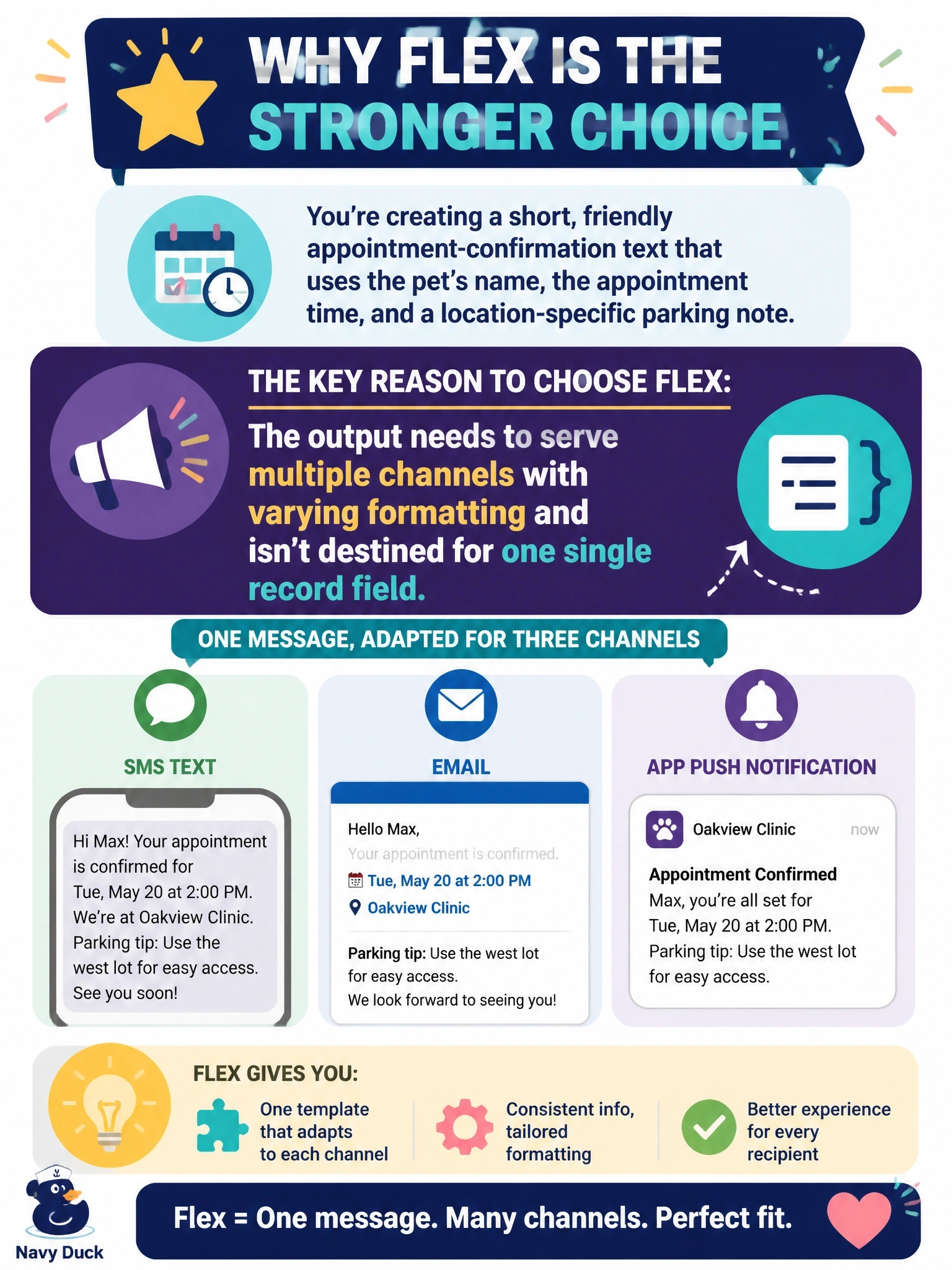
You need the same appointment message to work across channels with different formatting, rather than fill one specific record field. Flex is the better fit for that output shape and destination.
Full Explanation
The output needs to serve multiple channels with different formatting, rather than fill one single record field, so a flex template is the right fit: it supports a more open-ended output shape and destination than field generation. The claim that flex templates always execute faster regardless of prompt complexity, channel count, or retrieved data is not a meaningful distinguishing factor; template choice depends on the output’s shape and destination, not an assumed speed advantage. The claim that field generation templates cannot merge in the pet’s name is false: they can use a pet’s name or another field value as grounding, so that capability alone does not rule them out. The claim that flex is required whenever more than one grounding source is used is also false; multiple grounding sources do not by themselves force a flex template. The exam caveat is to distinguish the need for flexible, multi-channel output from the number of data sources or a presumed performance difference. As a practical check, ask whether the generated text must be formatted for several destinations or instead written into one specific record field.