
A clinic operations director is deciding who should be allowed to activate a newly built prompt template that emails discharge instructions directly to pet owners, given that activation makes the template available for live execution across the org. What is the best practice for this activation decision?
Select an answer to reveal the explanation.
Short Explanation
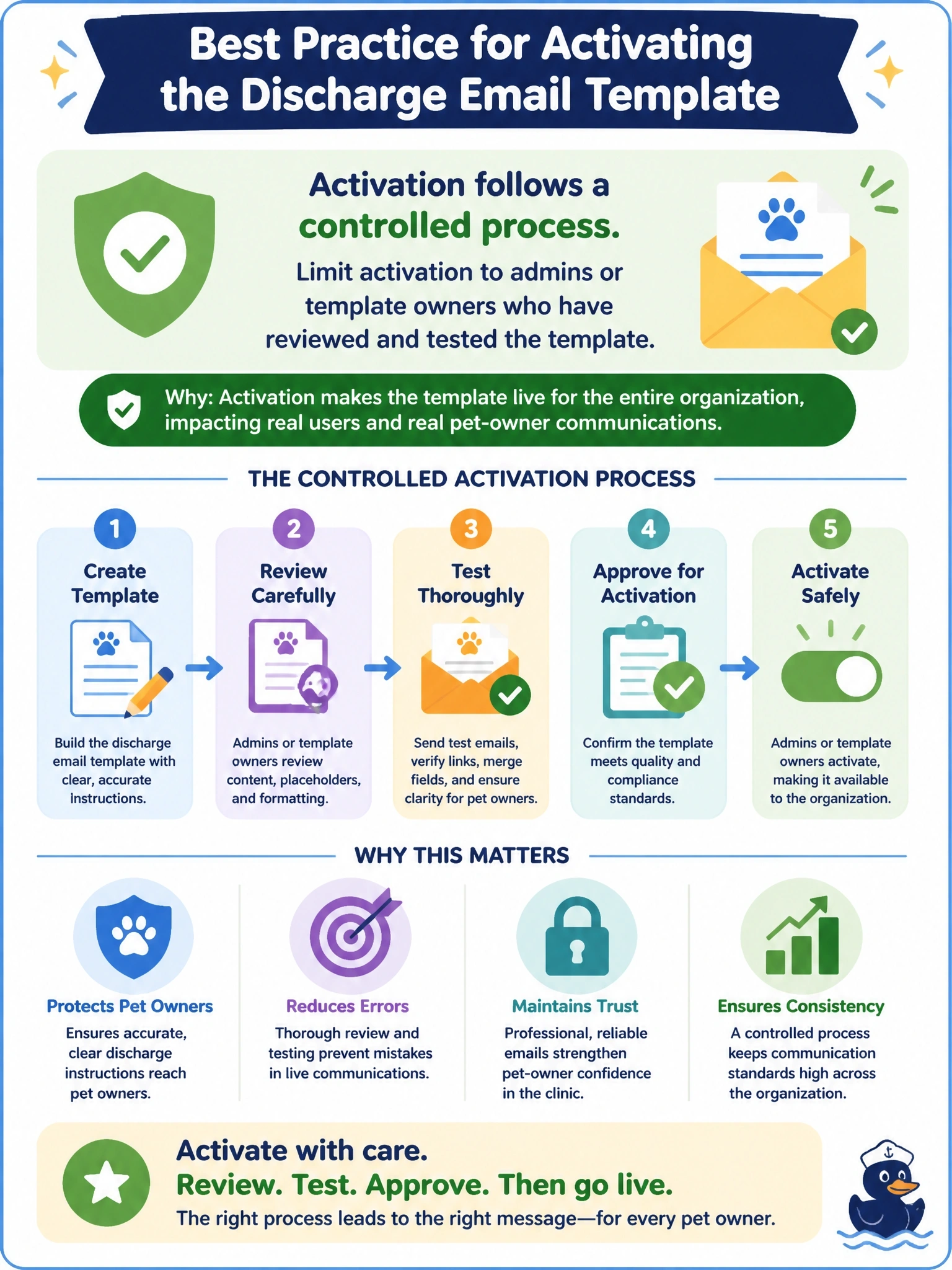
Activation takes a template from a draft to something available for live execution across your organization, including emails to real pet owners. You should treat that as a go-live decision and require review and testing before activation.
Full Explanation
Activation makes a template available for live execution across the organization, and this template can send discharge instructions directly to pet owners. That makes activation a consequential go-live decision, so the sound practice is a controlled review-and-test process, typically limited to admins or template owners who have checked the template. Allowing the original author to activate without additional review removes the checkpoint between creating a draft and exposing it to real users and communications. The claim that activation is irreversible and should never be attempted in a sandbox gets the lifecycle backwards: sandbox testing before production activation is a best practice, and activation is something to test toward rather than avoid testing. Execute permission alone also does not establish authority to activate; execution is typically the narrower, delegated permission, while create, edit, and activate rights are more privileged and restricted. A useful exam caveat is that exact role names and permission boundaries can vary by system, but the principle is to separate routine execution from controlled go-live authority. In practice, verify that the template has been tested with representative discharge content in a sandbox, that its recipients and message are correct, and that an authorized reviewer approves activation before it can reach real pet owners.